
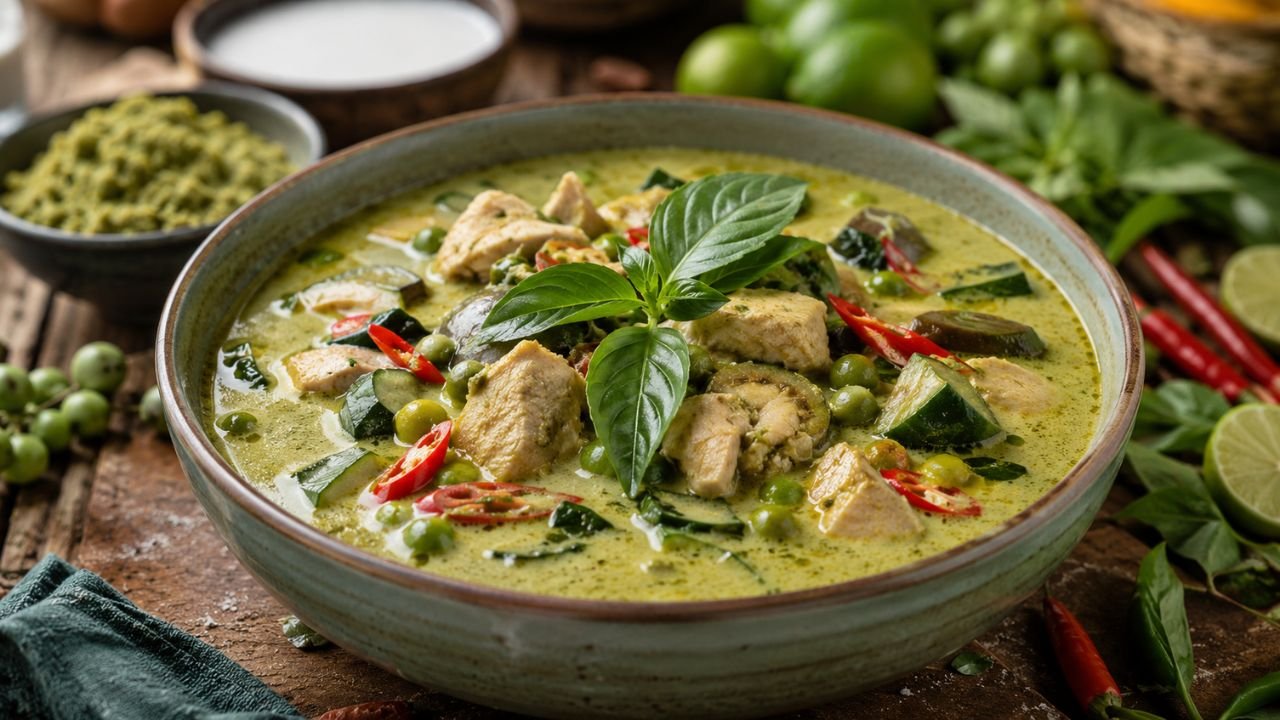
Yash Thakur Loves This Aromatic Thai Green Curry is a simple yet flavorful recipe that brings restaurant-style taste to your home. Made with green curry paste, creamy coconut milk, fresh vegetables, and herbs, this curry is aromatic, comforting, and easy to prepare. It pairs perfectly with steamed rice or noodles and is a great choice for lunch, dinner, or a special family meal.
This Thai green curry has a lively taste that feels both fresh and creamy. The curry paste gives the dish its main character, while coconut milk softens the spice and creates a smooth sauce. Vegetables such as bell peppers, baby corn, beans, zucchini, and mushrooms make the curry colorful and hearty. You can also add tofu, paneer, chicken, or shrimp depending on your preference. The goal is to create a curry that is aromatic, balanced, and full of texture. A good Thai green curry should not taste flat or overly heavy. It should have a gentle sweetness, a little saltiness, a mild sharp note, and a fresh finish from basil or coriander. This recipe helps you build those layers step by step so the final bowl tastes complete and comforting.
Recipe Information
This aromatic Thai green curry is a main course recipe inspired by traditional Thai flavors but designed for easy home cooking. It uses common ingredients that are simple to find in most grocery stores, while still keeping the soul of the dish intact. The preparation time is 15 minutes, and the cooking time is 25 minutes. The total time is 40 minutes, which makes it suitable for busy days when you want something flavorful without spending hours in the kitchen. The recipe serves 4 people and works well as a lunch or dinner option. It is creamy, mildly spicy, fresh, and satisfying, especially when served hot with rice.
The recipe category is main course, and the cuisine is Thai. The main flavor comes from green curry paste, coconut milk, vegetables, and fresh basil. If you want a vegetarian version, you can keep it fully vegetable-based or add tofu for protein. If you prefer a non-vegetarian version, chicken pieces or prawns can be cooked in the curry sauce. The recipe is naturally rich because of coconut milk, but it does not feel too heavy when balanced with vegetables and herbs. A serving gives a good mix of fats, carbohydrates, and protein, especially if tofu, chicken, or paneer is included. The estimated nutrition per serving is realistic for a creamy curry served without rice.
- Preparation Time: 15 minutes
- Cooking Time: 25 minutes
- Total Time: 40 minutes
- Recipe Category: Main Course
- Recipe Cuisine: Thai
- Recipe Yield: 4 servings
- Best Served With: Steamed jasmine rice, plain rice, or rice noodles
- Flavor Profile: Creamy, aromatic, mildly spicy, fresh, and savory
Ingredients
The ingredients for this Thai green curry are chosen to create a rich, fragrant, and balanced sauce. Green curry paste is the heart of the recipe, so using a good-quality paste makes a big difference. Coconut milk gives the curry its creamy body and gentle sweetness. Vegetables add freshness, color, and bite. Fresh basil, lime juice, and a small amount of sugar help complete the taste. If you are using store-bought curry paste, check the salt and spice level before adding too much seasoning because some pastes are already quite salty and spicy. The ingredients below are measured for 4 servings, but you can easily double the recipe for a larger group.
- 2 tablespoons green curry paste
- 1 tablespoon oil
- 1 small onion, thinly sliced
- 3 garlic cloves, finely chopped
- 1 teaspoon grated ginger
- 400 ml full-fat coconut milk
- 1 cup vegetable stock or water
- 1 cup mixed bell peppers, sliced
- 1 cup zucchini, cut into half-moons
- 1 cup mushrooms, sliced
- 1/2 cup baby corn, sliced
- 1/2 cup green beans, cut into small pieces
- 200 g tofu, paneer, chicken, or shrimp, based on preference
- 1 tablespoon soy sauce
- 1 teaspoon sugar or palm sugar
- 1 tablespoon lime juice
- 1/2 cup fresh basil leaves
- 2 tablespoons chopped coriander
- Salt as needed
- Fresh red chili slices for garnish, optional
- Steamed rice for serving
Preparation
Start by heating oil in a deep pan or wok over medium heat. Add the sliced onion and cook for 2 to 3 minutes until it becomes soft and lightly translucent. Add the chopped garlic and grated ginger, then stir for about 30 seconds. Do not let the garlic burn because burnt garlic can make the curry taste bitter. Now add the green curry paste and cook it in the oil for 1 to 2 minutes. This step is important because heating the curry paste releases its aroma and deepens the flavor. You should smell a strong herbal and spicy fragrance at this stage.
Pour in half of the coconut milk and stir well so the curry paste mixes smoothly into the liquid. Let it simmer gently for 2 minutes. This helps the sauce become fragrant and slightly thicker. Add the remaining coconut milk along with the vegetable stock or water. Stir again and bring the mixture to a gentle simmer. Keep the heat medium-low because coconut milk should not be boiled too harshly. A slow simmer keeps the sauce smooth and creamy. If the sauce looks too thick, add a little more stock or water. If it looks too thin, simmer uncovered for a few extra minutes.
Add the protein of your choice at this point. If you are using chicken, add it now and cook for 6 to 8 minutes until it is fully cooked. If using tofu or paneer, add it and simmer for 4 to 5 minutes so it absorbs the sauce. If using shrimp, wait until the vegetables are almost done before adding it. After adding the protein, add baby corn, beans, mushrooms, and zucchini. Let them cook for a few minutes, then add the sliced bell peppers. Bell peppers cook quickly and taste better when they keep a little crunch. Stir gently so the vegetables stay whole and the curry remains attractive.
Add soy sauce, sugar, and salt as needed. Taste the curry before adding too much salt because curry paste and soy sauce both contain salt. The sugar does not make the curry sweet in a dessert-like way; it simply balances the heat and saltiness. Let the curry simmer for another 5 minutes until the vegetables are cooked but still colorful. Turn off the heat and add lime juice, fresh basil leaves, and chopped coriander. Stir gently and let the curry rest for 2 minutes before serving. This resting time allows the herbs to release their aroma into the sauce.
Serve the Thai green curry hot with steamed jasmine rice, plain basmati rice, or rice noodles. Spoon enough sauce over the rice so every bite has a creamy, fragrant taste. Garnish with fresh basil, coriander, or thin red chili slices if you like extra color. The curry should taste creamy first, then spicy, then fresh and slightly tangy. If the curry tastes too spicy, add a little more coconut milk. If it tastes too mild, add a small spoon of curry paste cooked separately in oil, then mix it in. If it tastes flat, a little lime juice or soy sauce usually fixes the balance.
- Heat oil and soften onion gently.
- Add garlic, ginger, and green curry paste.
- Cook the paste until fragrant.
- Add coconut milk and stock slowly.
- Simmer the sauce without boiling too hard.
- Add protein and vegetables in stages.
- Season with soy sauce, sugar, and salt.
- Finish with lime juice, basil, and coriander.
- Serve hot with rice or noodles.
Tips
The most important tip for a good Thai green curry is to cook the curry paste properly before adding all the liquid. If the paste is added and immediately diluted, the flavor may remain weak. Cooking it in oil for a short time helps release the aroma of herbs, chilies, lemongrass, garlic, and spices. Another useful tip is to use full-fat coconut milk when possible. Light coconut milk can work, but it creates a thinner sauce and may not give the same creamy restaurant-style texture. If you want a lighter curry, use part full-fat coconut milk and part stock instead of using only light coconut milk.
Do not overcook the vegetables. Thai green curry is best when vegetables remain colorful and slightly crisp. Soft, dull vegetables can make the dish feel heavy and less fresh. Add firmer vegetables first and quick-cooking vegetables later. Mushrooms release water, so cook them long enough to soften but not so long that the curry becomes watery. If using tofu, lightly pan-fry it before adding it to the curry for a better texture. If using chicken, avoid large pieces because they take longer and can become dry on the outside before cooking fully inside.
Balance is the heart of this recipe. Thai green curry should not be only spicy or only creamy. It needs a balance of heat, salt, sweetness, and freshness. Soy sauce gives saltiness and depth, sugar softens sharp edges, lime juice adds brightness, and basil gives a fresh finish. Always taste the curry near the end and adjust slowly. Add seasoning in small amounts because it is easier to add more than to fix an overly salty curry. If the curry becomes too salty, add more coconut milk or vegetables. If it becomes too thick, add stock. If it becomes too thin, simmer it uncovered until it reduces.
- Use good-quality green curry paste for the best aroma.
- Cook the curry paste in oil before adding liquid.
- Use full-fat coconut milk for a rich sauce.
- Add vegetables in the correct order to avoid overcooking.
- Finish with fresh herbs for a brighter taste.
- Add lime juice after turning off the heat.
- Taste and adjust seasoning before serving.
- Serve immediately for the best texture and fragrance.
Variations
This Thai green curry is easy to adjust based on what you have in your kitchen. For a vegetarian version, use tofu, paneer, or only vegetables. Tofu is a great choice because it absorbs the curry sauce beautifully. Paneer gives a richer and slightly Indian-inspired touch while still working well with coconut and curry paste. For a chicken version, use boneless chicken thighs if you want more tenderness, or chicken breast if you prefer a leaner option. For a seafood version, shrimp is excellent because it cooks quickly and pairs well with coconut milk and lime.
You can also change the vegetable mix. Eggplant, bamboo shoots, carrots, broccoli, spinach, and snow peas all work well. Traditional Thai green curry often includes Thai eggplant and bamboo shoots, but the recipe remains delicious with common vegetables. If you like a stronger herbal taste, add more basil or a few torn kaffir lime leaves while simmering. If you like extra heat, add fresh green chilies or a little more curry paste. If you prefer a mild curry, reduce the curry paste and add more coconut milk. The recipe can also be made slightly sweeter with palm sugar if you enjoy a softer, rounder flavor.
- Vegetarian Variation: Use tofu, paneer, or mixed vegetables.
- Chicken Variation: Use thin boneless chicken pieces and simmer until cooked.
- Shrimp Variation: Add shrimp near the end and cook just until pink.
- Extra Creamy Variation: Add more coconut milk and reduce the stock.
- Spicy Variation: Add fresh green chilies or extra green curry paste.
- Light Variation: Use more vegetables and less coconut milk.
- Herbal Variation: Add extra basil and coriander before serving.
Conclusion
Yash Thakur Loves This Aromatic Thai Green Curry You Must Try is a recipe worth keeping in your regular cooking list because it delivers big flavor with a simple method. The creamy coconut sauce, fragrant green curry paste, fresh vegetables, and bright herbs make every spoonful comforting and exciting. It is rich without feeling too heavy, spicy without being harsh, and flexible enough for different diets. You can prepare it with tofu, paneer, chicken, shrimp, or only vegetables, and it will still taste satisfying when the sauce is balanced properly.