
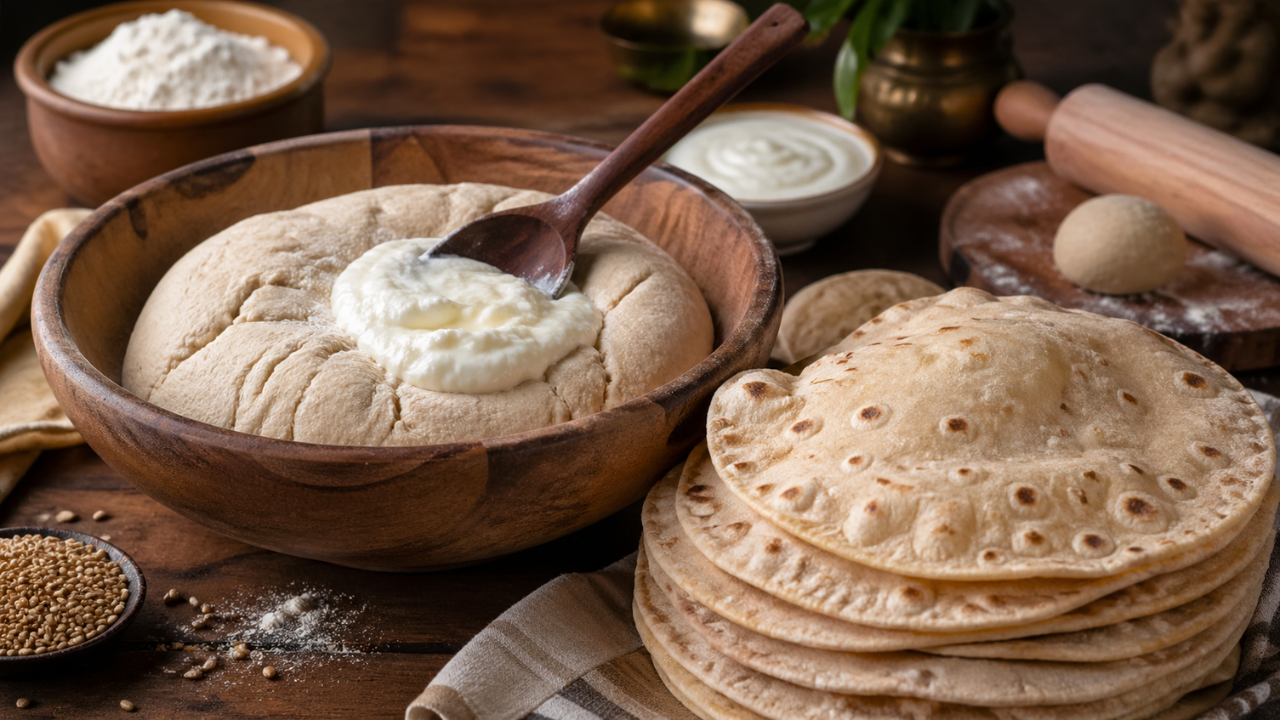
There is a quiet beauty in a roti that stays soft even after it leaves the tawa. It bends gently, carries warmth beautifully, and tears without stiffness. The simple act of adding curd to the dough may feel small, but in everyday cooking, it is often these small details that change the entire character of a meal.
I Add 1 Spoonful of Curd to My Roti Dough is not just a kitchen trick; it is a thoughtful way of improving texture, taste, and comfort. Curd brings mild acidity, gentle moisture, and a soft richness to wheat flour. It helps the dough feel smoother under the palm and gives the finished roti a tender bite that works beautifully with dals, sabzis, pickles, and even a simple spoon of ghee.
This recipe is especially useful for home cooks who want rotis that remain pleasant for lunch boxes, family dinners, or slow meals where everyone does not eat at the same time. The curd does not make the roti taste sour when used carefully. Instead, it gives the dough balance, softness, and a refined homemade finish.
Recipe Information
- Recipe Name: Curd Soft Roti Dough
- Description: A soft Indian whole wheat roti made by adding one spoonful of curd to the dough for a smoother texture, tender bite, and better softness after cooking.
- Servings: 8 medium rotis
- Preparation Time: 15 minutes
- Cooking Time: 20 minutes
- Total Time: 35 minutes
- Resting Time: 20 minutes
- Difficulty: Easy
- Recipe Category: Indian flatbread
- Cuisine: Indian home cooking
Ingredients
For the Roti Dough
- 2 cups whole wheat flour, plus extra for dusting
- 1 tablespoon fresh curd, preferably thick and not too sour
- 3/4 cup water, added gradually as needed
- 1/2 teaspoon salt, optional
- 1 teaspoon oil or ghee, optional, for extra softness
For Cooking and Finishing
- Extra whole wheat flour for rolling
- Ghee, optional, for brushing cooked rotis
Kitchen Tools
- Large mixing bowl
- Measuring cups and spoons
- Flat rolling board
- Rolling pin
- Tawa or flat skillet
- Clean kitchen towel or roti box
- Tongs
Preparation
Mixing the Dough
- Start with the flour: Place the whole wheat flour in a wide mixing bowl. If using salt, mix it into the flour first so it spreads evenly through the dough. This gives every roti a balanced taste without making the dough heavy.
- Add the curd: Add one tablespoon of fresh curd to the flour. Use your fingertips to rub it gently into the flour before adding water. This small step helps the curd coat the flour evenly and gives the dough a more uniform texture.
- Add water slowly: Pour in water a little at a time and begin bringing the flour together. Avoid adding all the water at once, because whole wheat flour absorbs liquid gradually. The dough should feel soft but not sticky. If it feels dry, add a spoonful more water. If it feels too wet, sprinkle in a little flour.
- Knead with patience: Knead the dough for 5 to 7 minutes until it becomes smooth, soft, and elastic. Texture check: A well-kneaded curd roti dough should feel supple under the palm and should not crack at the edges when pressed.
Resting the Dough
- Rest the dough: Cover the dough with a clean damp cloth or a lid and let it rest for 20 minutes. This resting time is separate from the total time, but it is important for softness. It allows the flour to hydrate fully and makes rolling much easier.
- Final knead: After resting, knead the dough lightly for 30 seconds. If using oil or ghee, you may rub a small amount over the surface at this stage. The dough should now feel smoother and more relaxed than when first mixed.
Rolling the Rotis
- Divide evenly: Divide the dough into 8 equal balls. Keep them covered while working so they do not dry out. Dry dough often leads to hard edges, so covering is a simple but important habit.
- Dust lightly: Take one dough ball, flatten it gently, and dust it with flour. Roll it into a medium round roti using gentle, even pressure. Avoid pressing too hard, as this can make the roti dense.
- Keep the thickness balanced: Roll the roti neither too thin nor too thick. A medium thickness works best for soft rotis because it allows the inside to cook properly while still staying tender.
Cooking the Rotis
- Heat the tawa: Place the tawa over medium-high heat and let it become properly hot before adding the first roti. A lukewarm tawa can make the roti dry, while an overly hot tawa may brown it too quickly without cooking the inside.
- Cook the first side: Place the rolled roti on the hot tawa. Let it cook until small bubbles begin to appear and the color changes slightly. This usually takes 30 to 40 seconds.
- Flip and cook: Turn the roti over and cook the second side until brown spots appear. Press gently with a clean cloth or spatula if needed. Tip: Gentle pressure helps the roti puff and cook evenly without making it tough.
- Finish carefully: Flip once more and cook briefly until both sides have light golden spots. Do not overcook, as extra time on the tawa can remove moisture and make the roti firm.
- Keep warm: Transfer the cooked roti to a clean cloth-lined container. Brush lightly with ghee if desired. Cover immediately so the steam keeps the rotis soft.
Serving Suggestions
These soft curd rotis are best served warm, soon after cooking, when their texture is at its most tender. They pair beautifully with everyday dishes such as dal tadka, aloo tamatar, paneer curry, bhindi masala, or a simple bowl of curd and pickle. Their gentle softness also makes them ideal for children’s lunch boxes or for meals where comfort matters more than richness.
For a refined home-style presentation, stack the rotis in a clean cotton cloth and serve them in a covered basket. A light brush of ghee adds fragrance and gives the surface a graceful sheen. If serving with a festive meal, keep the rotis slightly smaller and softer, so they can be enjoyed with multiple dishes without feeling heavy.
Chef Tips
Use Fresh Curd
Fresh curd gives the best result because it adds softness without an overly sharp flavor. Very sour curd can change the taste of the roti, especially when the dough rests for longer. Thick homemade curd or plain yogurt works well.
Do Not Overdo the Curd
The title says one spoonful for a reason. Too much curd can make the dough sticky or slightly tangy. A single tablespoon is enough for 2 cups of flour and gives the right balance of moisture and tenderness.
Control the Heat
A properly heated tawa is one of the secrets behind soft rotis. Medium-high heat allows the roti to cook quickly while keeping moisture inside. If the flame is too low, the roti spends too much time on the pan and becomes dry.
Kneading Matters
Curd in roti dough works best when the dough is kneaded well. The curd helps with softness, but kneading creates structure. Together, they produce rotis that feel tender yet strong enough to hold curries and fillings.
Storage and Make-Ahead Tips
Cooked rotis can be stored for 6 to 8 hours at room temperature when wrapped in a clean cloth and placed in a covered container. For best results, avoid leaving them uncovered, as exposure to air makes them dry. If packing for lunch, let the rotis cool slightly before closing the box, so they stay soft without becoming soggy.
The dough can be prepared a few hours ahead and kept covered in the refrigerator. Before rolling, bring it close to room temperature and knead it lightly. If the dough feels firm after chilling, dampen your fingers and knead for a minute to restore softness. Avoid storing curd-based dough for too long, as the flavor may become more tangy over time.
To reheat rotis, warm them briefly on a tawa or wrap them in a cloth and heat gently. Do not overheat them directly on a strong flame, because reheating for too long can make even soft rotis turn dry.
Additional Information
In many Indian kitchens, roti is more than a side dish. It is a daily rhythm, a familiar comfort, and often the measure of a cook’s care. Every home has its own small technique: a touch of ghee, warm water, longer kneading, or careful resting. Adding curd belongs to this same family of quiet kitchen wisdom.
The idea behind I Add 1 Spoonful of Curd to My Roti Dough is rooted in balance. Curd brings gentle acidity, which helps soften the dough, while its natural creaminess improves the mouthfeel. It does not transform roti into something unfamiliar; it simply makes the everyday version more tender, more forgiving, and more satisfying.
This method is especially relevant for modern home cooking because rotis are often made ahead for busy schedules. A dough that produces softer rotis can make packed meals feel fresher and family dinners feel more cared for. It is a small adjustment, but one that respects both tradition and practical cooking.
Ultimately, this recipe celebrates the elegance of simplicity. With flour, water, a spoonful of curd, and a little attention, the humble roti becomes softer, warmer, and more memorable. It is proof that good cooking does not always depend on complicated methods; sometimes, it begins with understanding one ingredient just a little better.