
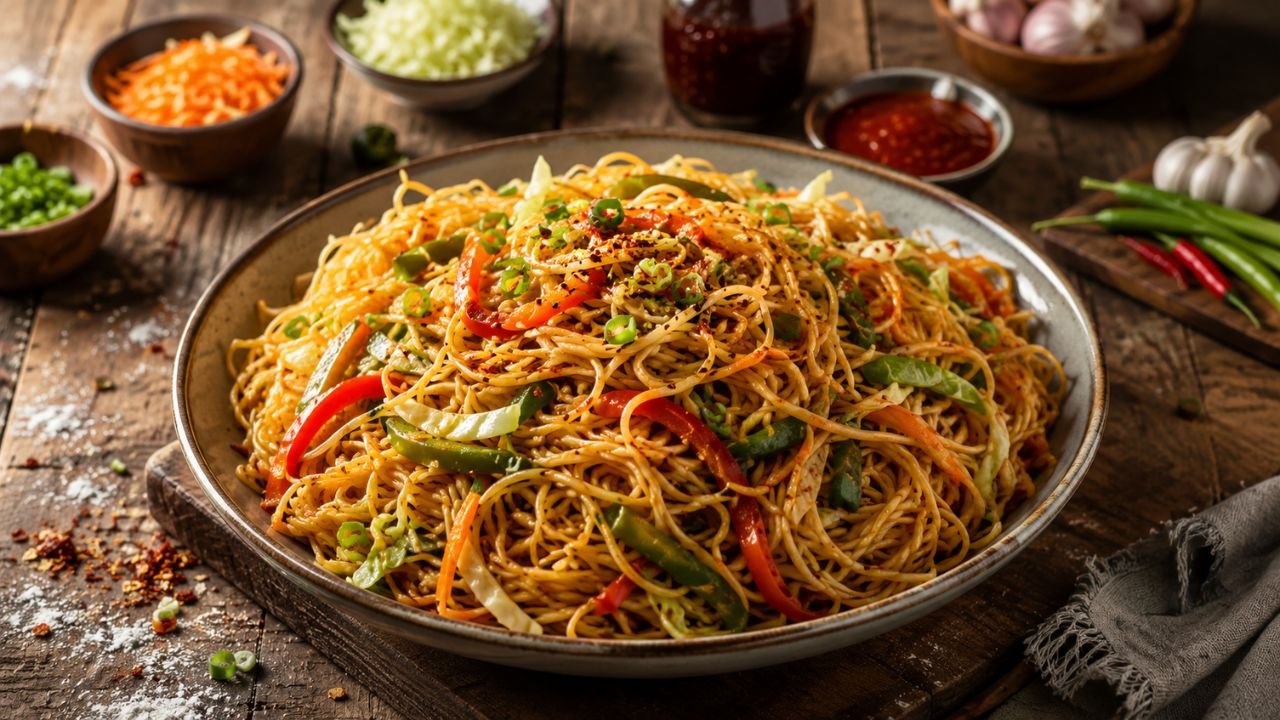
Hakka Noodles Recipe with Bold Indo-Chinese Flavor and Crunchy Veggies is the kind of dish that instantly brings street-style excitement to the table. This popular Indo-Chinese favorite is loved for its smoky aroma, colorful vegetables, springy noodles, and the perfect balance of savory, spicy, and slightly tangy flavors. While it is often associated with restaurant meals and roadside food stalls, it is surprisingly easy to prepare at home with everyday ingredients and the right cooking method. The beauty of this recipe lies in its speed, texture, and versatility. Crisp cabbage, sweet carrots, tender capsicum, and fresh spring onions come together with perfectly cooked noodles and bold sauces to create a dish that feels lively in every bite.
One of the reasons Hakka noodles are so popular is the contrast they offer. The noodles stay soft yet separate, while the vegetables remain crunchy and fresh. The sauces coat everything lightly rather than making the dish heavy or sticky. This balance is what makes the recipe satisfying as a quick lunch, weeknight dinner, party side, or even a complete one-pan meal. The key is high heat, quick tossing, and preparing every ingredient in advance before cooking begins. Once the wok or pan is hot, the dish comes together fast, which helps preserve the color, bite, and natural flavor of the vegetables.
This homemade version focuses on that classic Indo-Chinese character: bold flavor, gentle heat, a touch of soy, the warmth of garlic and ginger, and the slight sweetness that naturally comes from stir-fried vegetables. It is designed for home cooks who want restaurant-style results without complicated techniques. Whether you are cooking for family, meal-prepping for the week, or making something crowd-pleasing for guests, this recipe delivers reliable flavor and texture. With a few practical tips and the right ingredient order, you can make Hakka noodles that taste vibrant, fresh, and full of irresistible wok-style appeal.
Recipe Information
- Preparation time: 20 minutes
- Cooking time: 15 minutes
- Total time: 35 minutes
- Recipe category: Main course
- Servings: 4
- Cuisine: Indo-Chinese
- Dish type: Vegetarian
Hakka noodles are different from heavily sauced noodle dishes because the emphasis is on light seasoning and quick cooking. Instead of drowning the noodles in sauces, this recipe uses measured amounts so the noodles remain flavorful without becoming greasy or overly salty. The vegetable cut also matters. Thin, even slices cook rapidly and blend beautifully with the noodles. A large wok works best, but a broad heavy pan will also do a great job if you keep the heat high and avoid overcrowding. Keeping everything ready before you begin ensures the stir-fry process stays quick and controlled.
Ingredients
- 250 grams Hakka noodles or any thin wheat noodles
- 6 cups water for boiling noodles
- 1 teaspoon salt for boiling
- 1 teaspoon oil for boiling noodles
- 2 tablespoons oil for stir-frying
- 1 tablespoon finely chopped garlic
- 1 teaspoon finely chopped ginger
- 2 green chilies, thinly sliced
- 1 medium onion, thinly sliced
- 1 cup shredded cabbage
- 1 medium carrot, julienned
- 1 small red bell pepper, thinly sliced
- 1 small green bell pepper, thinly sliced
- 8 to 10 French beans, thinly sliced
- 3 spring onions, whites and greens separated, sliced
- 1 tablespoon soy sauce
- 1 tablespoon green chili sauce
- 1 tablespoon red chili sauce
- 1 teaspoon vinegar
- 1 teaspoon tomato ketchup
- 1/2 teaspoon black pepper powder
- Salt to taste
- Optional pinch of sugar to balance flavors
The ingredient list is simple, but each element contributes to the signature flavor and texture of the dish. Garlic and ginger create the aromatic base. Green chilies add warmth and freshness. Onion brings sweetness once slightly softened, while cabbage, carrots, beans, and capsicum provide color and crunch. Spring onion whites deepen the stir-fry flavor, and the greens are perfect as a finishing touch. Soy sauce gives umami, chili sauces build the Indo-Chinese identity, vinegar adds brightness, and a little ketchup rounds the sharper edges without making the dish sweet. Black pepper adds a final layer of mild heat and depth.
Use fresh vegetables for the best texture. Pre-cut packaged vegetables can save time, but they should still be crisp and dry before going into the wok. Avoid watery vegetables that can release too much moisture and make the noodles soggy. Thin noodles work best because they absorb seasoning quickly and toss well with the vegetables. If using regular noodles instead of Hakka noodles, cook them just until done and rinse lightly to stop further cooking. A drizzle of oil after draining helps keep them separate.
Preparation
Begin by bringing 6 cups of water to a boil in a large pot. Add 1 teaspoon salt and 1 teaspoon oil. Drop in the noodles and cook according to package instructions until just tender. The goal is to cook them until done but not soft or mushy. Once cooked, drain immediately and rinse briefly under running water to stop the cooking process. Toss the drained noodles with a few drops of oil so they remain separate while you prepare the stir-fry. Set them aside.
While the noodles are boiling, wash and prepare all the vegetables. Slice the onion thinly, shred the cabbage, julienne the carrot, slice the bell peppers into thin strips, and cut the beans finely. Separate the spring onion whites from the greens because they are used at different stages. Finely chop the garlic and ginger and slice the green chilies. Once the cooking starts, everything moves quickly, so keeping the ingredients arranged in the order they will be used makes the process much easier.
Heat a wok or wide pan on high heat. Add 2 tablespoons oil and let it get hot without smoking heavily. Add the chopped garlic, ginger, and green chilies. Stir-fry for a few seconds until fragrant. Do not let the garlic brown too much, or it may turn bitter. Add the sliced onion and the spring onion whites. Toss for about 30 seconds until they begin to soften slightly but still retain some bite.
Next, add the beans and carrots because they take a little longer to cook than the softer vegetables. Stir-fry on high heat for 1 to 2 minutes. Then add the cabbage and both bell peppers. Keep tossing continuously so the vegetables cook evenly without steaming. The idea is not to fully soften them but to retain their fresh crunch. High heat helps the vegetables stay vibrant and prevents moisture from pooling in the pan. If your pan feels crowded, cook in batches or use a wider surface to maintain that stir-fry effect.
Once the vegetables are slightly tender yet still crisp, add soy sauce, green chili sauce, red chili sauce, vinegar, tomato ketchup, black pepper, and a little salt. Be careful with salt because soy sauce already adds seasoning. If you like a more rounded flavor, add a tiny pinch of sugar. Toss everything quickly so the sauces coat the vegetables without burning. Keep the flame high and do not leave the sauces sitting at the bottom of the pan for too long.
Now add the cooked noodles. Using tongs or two spatulas, lift and toss gently so the noodles mix with the vegetables without breaking too much. Continue tossing for 2 to 3 minutes until the noodles are heated through and evenly coated. Taste and adjust seasoning if needed. If you want more heat, add extra chili sauce or freshly crushed pepper at this stage. Finish with the spring onion greens and toss once more.
Serve the Hakka noodles immediately while they are hot and glossy. They pair beautifully with chili paneer, Manchurian, stir-fried mushrooms, or a simple hot garlic sauce on the side. They can also be enjoyed on their own as a complete, comforting meal packed with vegetables and bold flavor.
Tips
The most important tip for making excellent Hakka noodles is to avoid overcooking the noodles. Soft noodles can clump together and break during tossing, which ruins the light texture this dish is known for. Always cook them until just done and stop the cooking quickly by draining them right away. A light coating of oil after draining is helpful, especially if the noodles sit for a few minutes before stir-frying.
Use high heat for the stir-fry. This is what gives the dish a lively, slightly smoky character and helps the vegetables remain crisp instead of limp. If the heat is too low, the vegetables release water and the noodles become heavy. Have all ingredients chopped, measured, and ready before turning on the stove. Stir-fried dishes leave little time for searching for sauces or chopping vegetables halfway through cooking.
Cut vegetables uniformly and thinly. This is not just for appearance; it ensures even cooking and keeps the final texture pleasant. Thick vegetable pieces can stay raw inside or make the noodles harder to toss evenly. Also, do not overload the pan. If you double the recipe, cook in two batches for better heat control.
Seasoning should stay balanced. Too much soy sauce darkens the noodles and can make the taste harsh. Too much ketchup can turn the dish sweet. Too much chili sauce can overpower the freshness of the vegetables. Start with the given quantities and adjust after tasting. A few drops of vinegar at the end can refresh the entire dish if it tastes flat.
Finally, serve immediately. Hakka noodles are best enjoyed fresh from the wok. As they sit, the vegetables soften and the noodles absorb more sauce. If you must prepare in advance, cook the noodles and chop the vegetables ahead of time, then stir-fry just before serving.
Variations
One of the best things about this recipe is how adaptable it is. For a protein-rich version, add paneer strips, tofu cubes, scrambled egg, or thin slices of cooked chicken. These should be cooked separately first and then added near the end so they keep their texture. For a more robust meal, mushrooms also work especially well because they add umami and blend naturally with the sauces.
You can also adjust the vegetable mix depending on what is available. Baby corn, snow peas, broccoli stems, bok choy, or even finely sliced zucchini can fit into the recipe, though it is best to avoid vegetables that release too much water. If you like extra spice, add crushed red chili flakes or a spoon of hot garlic sauce. For a subtler flavor, reduce the chili sauces slightly and increase black pepper for warmth without sharp heat.
If you want a more street-style profile, use a little extra garlic and toss the noodles for a minute longer on high heat for deeper flavor. For a healthier version, use whole wheat noodles or millet-based noodles and increase the vegetable quantity. You can also reduce the oil slightly, though a small amount is important to keep the noodles glossy and separate.
Conclusion
Hakka Noodles Recipe with Bold Indo-Chinese Flavor and Crunchy Veggies is a dish that proves simple ingredients can create exciting results when cooked with the right technique. It is quick, colorful, deeply satisfying, and flexible enough for busy weekdays as well as casual gatherings. The combination of springy noodles, fragrant aromatics, crisp vegetables, and balanced sauces makes every forkful lively and delicious. More importantly, it is a recipe that rewards preparation, heat, and timing rather than complicated methods.
Once you master the basics of this noodle stir-fry, you can easily adapt it to your taste with different vegetables, proteins, or spice levels. That makes it a dependable recipe to return to again and again. Whether served alone or alongside your favorite Indo-Chinese side dish, these Hakka noodles bring restaurant-style flavor to the home kitchen in a way that feels fresh, fast, and comforting. Make it hot, toss it well, and enjoy a plate full of bold flavor and crunchy texture that never fails to satisfy.