
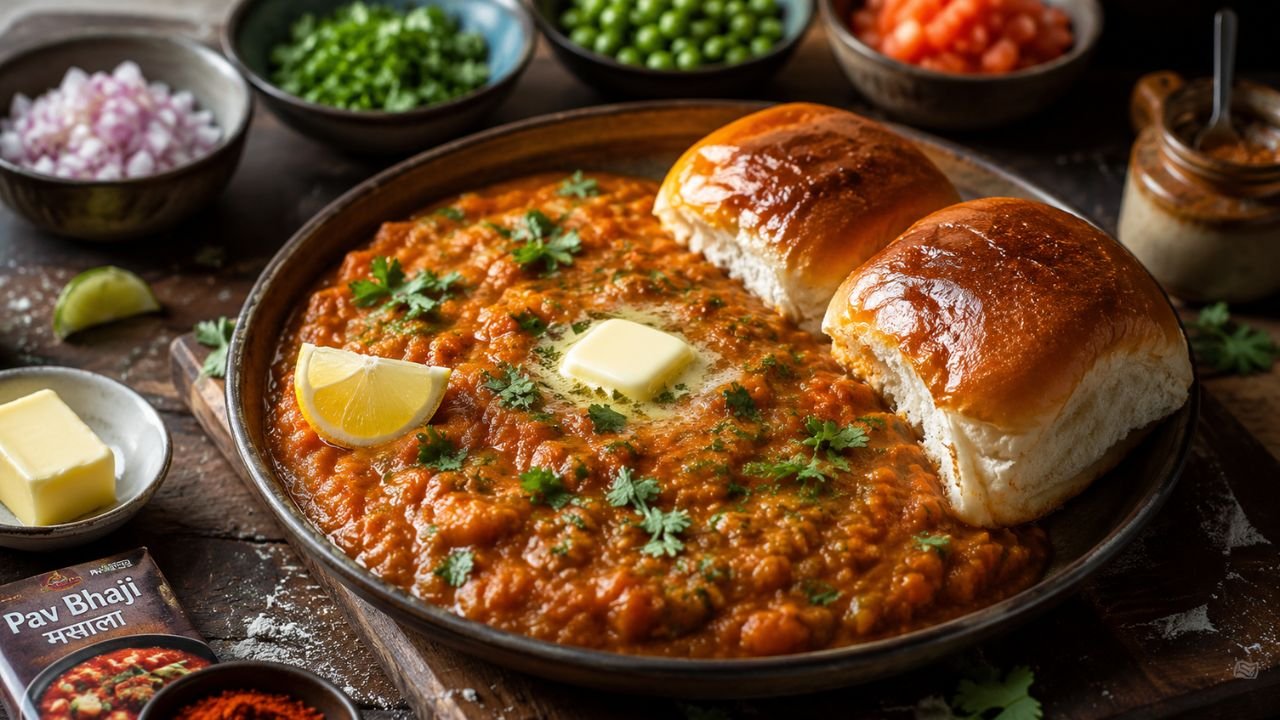
Mumbai-style pav bhaji is one of those dishes that instantly brings the energy of a busy street corner into the kitchen. It is bold, buttery, colorful, and deeply satisfying, with a vegetable mash that feels rich without being heavy and a pav that soaks up every last bit of masala. The magic of this recipe lies in balance: soft vegetables cooked until they melt together, a spice blend that tastes warm rather than aggressive, and a generous finishing touch of butter, onion, lemon, and coriander. When done well, pav bhaji is not just a snack or a dinner idea; it becomes an experience that feels festive, comforting, and unmistakably Mumbai.
This version is designed to deliver that classic street-style flavor at home. The bhaji should be thick enough to hold its shape, yet smooth enough to scoop easily with toasted pav. The masala should taste layered and buttery, with tomato sweetness, onion depth, ginger-garlic warmth, and the familiar tang that makes pav bhaji so addictive. You do not need complicated techniques to make it shine. What matters most is using enough butter, cooking the vegetables properly, mashing them to the right texture, and finishing with fresh garnishes that brighten every bite.
If you are making pav bhaji for the first time, this recipe will guide you through each stage clearly. If you already know the dish, you will appreciate the small details that help it taste more like the Mumbai original: roasting the pav on a hot pan, adjusting the consistency with a little water rather than making it thin, and letting the masala simmer long enough for the flavors to come together. The result is a plate that looks vibrant, smells irresistible, and tastes like pure comfort.
Recipe Information
Mumbai-style pav bhaji is a spiced mixed vegetable mash served with butter-toasted pav. It is known for its rich red-orange color, buttery aroma, and crowd-pleasing flavor. This recipe makes a generous family-style batch that works well for lunch, dinner, or a weekend gathering.
- Preparation time: 25 minutes
- Cooking time: 30 minutes
- Total time: 55 minutes
- Yield: 4 servings
- Category: Main course / snack
- Cuisine: Indian street food
- Skill level: Easy to moderate
The texture should be thick, smooth, and slightly rustic, not watery. The flavor should feel buttery, tangy, mildly spicy, and deeply savory. Serve it hot with lemon wedges, chopped onions, coriander, and plenty of pav toasted in butter.
Ingredients
For the bhaji, use a mix of starchy and soft vegetables so the final texture becomes creamy and cohesive. Potatoes provide body, cauliflower adds softness, peas bring sweetness, and capsicum adds the signature fresh note that gives pav bhaji its recognizable character. Fresh aromatics and a good pav bhaji masala are essential for authentic flavor.
- 3 medium potatoes, peeled and cubed
- 1 cup cauliflower florets
- 1 cup green peas, fresh or frozen
- 1 medium carrot, diced small
- 1 medium capsicum, finely chopped
- 2 large tomatoes, finely chopped or grated
- 2 medium onions, finely chopped
- 1 tablespoon ginger-garlic paste
- 2 to 3 tablespoons pav bhaji masala
- 1 teaspoon red chili powder, adjust to taste
- 1/2 teaspoon turmeric powder
- 1 teaspoon cumin seeds
- 2 to 3 tablespoons butter, plus more for serving
- 1 to 2 tablespoons oil
- Salt, to taste
- 2 to 3 cups water, as needed
- 2 tablespoons finely chopped coriander leaves
- 1 tablespoon lemon juice, plus wedges for serving
- 8 pav buns
- 1 onion, finely chopped, for garnish
- Extra butter, for toasting the pav
If you want a richer color, a small spoon of Kashmiri red chili powder can be added along with the regular chili powder. If your tomatoes are not very tangy, a little more lemon juice at the end can help lift the flavor. The recipe is flexible, but the butter and masala should never feel timid, because they are central to the finished taste.
Preparation
Start by cooking the vegetables until they are soft enough to mash easily. This step is important because pav bhaji should not taste like separate vegetables folded into sauce. It should feel unified, creamy, and well blended. You can boil or pressure cook the potatoes, cauliflower, peas, and carrots until tender. Keep the capsicum aside for sautéing later so it retains a bit of character and freshness.
Once the vegetables are ready, heat butter and oil in a wide pan or deep skillet. Add cumin seeds and let them sizzle for a few seconds until fragrant. Then add the onions and cook them slowly until they turn soft and lightly golden. This stage builds the sweet base that gives the bhaji depth. Stir in the ginger-garlic paste and cook until the raw aroma disappears. Add the chopped tomatoes, turmeric, chili powder, and pav bhaji masala. Continue cooking until the tomatoes break down and the mixture looks thick, glossy, and well seasoned.
Next, add the cooked vegetables and mash them directly in the pan with a potato masher. Do not puree them completely; a little texture makes the bhaji more satisfying. Mix in the chopped capsicum and a little water to loosen the mixture slightly. Let everything simmer together for 10 to 15 minutes, stirring often so the bhaji does not stick. Taste and adjust the salt, masala, and lemon juice. The final consistency should be thick but spoonable, with a rich sheen from the butter and spices.
While the bhaji simmers, prepare the pav. Slice the buns horizontally without cutting all the way through. Heat a pan or tawa and spread a little butter on it. Sprinkle a pinch of pav bhaji masala if you like an extra street-style touch. Toast the pav until the cut sides are golden and lightly crisp, but still soft inside. The bread should be warm, buttery, and ready to absorb the gravy.
To serve, spoon the bhaji onto a plate or into a shallow bowl, add a dollop of butter on top, and garnish with chopped onions, coriander, and a squeeze of lemon. Arrange the toasted pav alongside. For a classic Mumbai presentation, serve with a few lemon wedges, a little extra onion, and a final swipe of butter across the hot bhaji. Eat it immediately while the butter is still melting into the masala.
If you want to bring out even more flavor, let the bhaji rest for five minutes after cooking and then reheat it briefly before serving. This short pause allows the spices to settle and the texture to become even more cohesive. The dish often tastes even better after it has had a moment to mellow, especially if the pan is covered.
Tips
Good pav bhaji depends on heat control, seasoning, and texture. The vegetables should be cooked fully, but not so aggressively that they become watery. If the mixture looks thin, simmer it uncovered until the excess moisture evaporates. If it becomes too thick, add warm water in small amounts and mash again until it looks glossy and smooth.
- Use a wide pan so the bhaji reduces evenly and develops a better flavor.
- Mash the vegetables while they are hot for the smoothest texture.
- Do not skip butter at the finishing stage; it gives the dish its signature richness.
- Cook the tomato masala long enough to remove raw sharpness.
- Toast the pav in butter just before serving so it stays soft inside and crisp outside.
- Adjust the masala gradually, because different brands can vary in strength.
- Add lemon juice at the end, not too early, so the brightness stays fresh.
- For a restaurant-style finish, top the bhaji with a little extra butter right before serving.
Another useful tip is to taste the bhaji after it has simmered for several minutes. Many home cooks season it too early and forget that the vegetables absorb a lot of flavor as they cook. A final adjustment of salt, butter, and lemon often makes the whole dish come alive. Fresh coriander at the end also matters more than it seems, because it cuts through the richness beautifully.
Variations
Pav bhaji is wonderfully adaptable, which is one reason it has remained such a favorite. You can change the vegetables slightly depending on what you have, as long as you keep the base flavor profile intact. The real goal is to preserve the buttery masala character, the soft mashed texture, and the lively street-style finish.
- Cheese pav bhaji: top the hot bhaji with grated cheese for a richer, more indulgent version.
- Paneer pav bhaji: add crumbled paneer toward the end for extra body and protein.
- Jain-style pav bhaji: omit onion, garlic, and potato, and use raw banana or other suitable vegetables instead.
- Mixed vegetable pav bhaji: add beans, beetroot, or sweet corn in small amounts for a more colorful mash.
- Roasted garlic pav bhaji: stir in roasted garlic for a deeper, sweeter aroma.
- Extra spicy pav bhaji: increase the chili powder and add a bit of chopped green chili while sautéing the onions.
You can also serve pav bhaji in different ways. Some people like it as a full meal with a salad on the side, while others enjoy it as a party snack with extra butter and a larger selection of garnishes. If you are entertaining guests, keep the bhaji warm in a covered pan and toast the pav in batches so every serving tastes fresh.
Conclusion
Mumbai-style pav bhaji is proof that simple ingredients can create something extraordinary when they are cooked with care and layered with the right masala. The dish is comforting, bright, and bold at the same time. Every bite gives you soft vegetables, buttery spice, toasted bread, and the kind of flavor that feels both familiar and exciting. It is easy to understand why pav bhaji has become one of the most loved street foods in India and a favorite in home kitchens everywhere.
What makes this recipe special is its ability to deliver that signature buttery masala taste without complicated methods. Once you understand the importance of slow-cooked onions, well-cooked tomatoes, properly mashed vegetables, and generous butter, the rest becomes simple. With a few fresh garnishes and hot pav, you can turn an ordinary evening into something memorable. Serve it with confidence, eat it while it is still steaming, and enjoy the full Mumbai-style experience at home.