
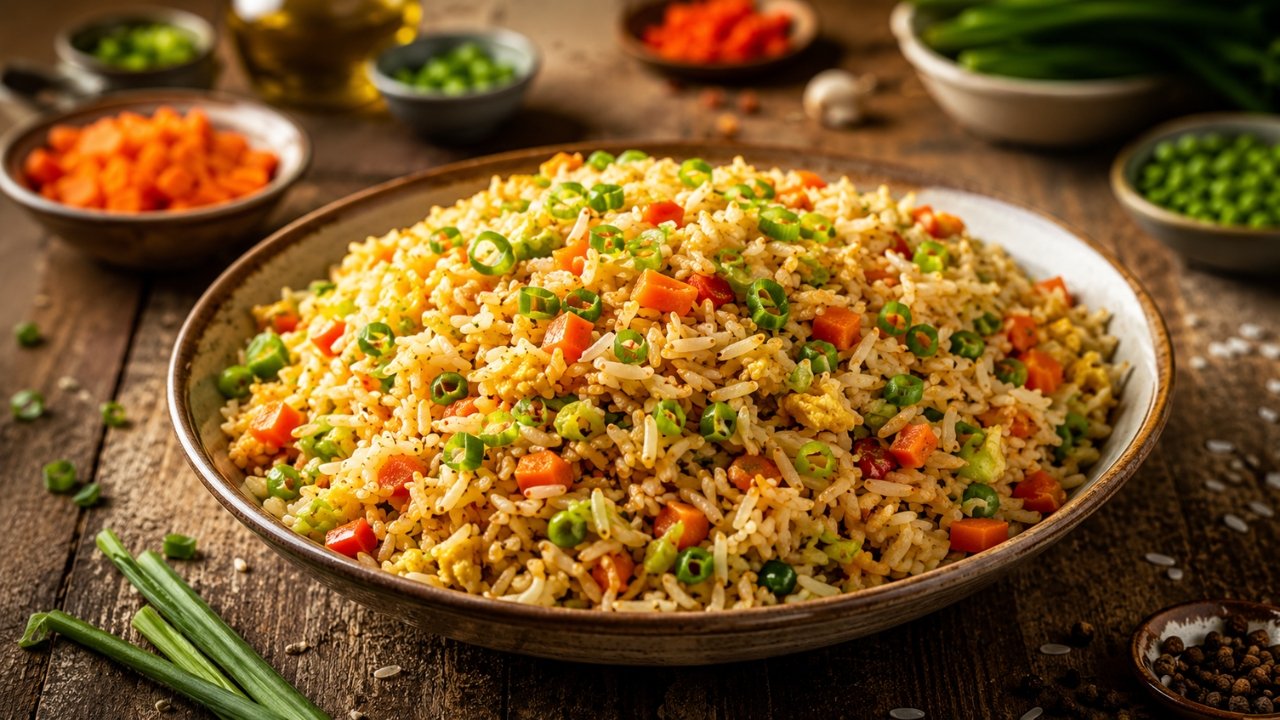
Vegetable fried rice is one of those dishes that looks simple at first glance, yet delivers the kind of flavor, aroma, and texture that makes people remember a meal. When it is made properly, every grain stays separate, the vegetables keep their color and bite, and the seasoning feels balanced rather than heavy. That restaurant-style finish is not about complicated techniques. It is about heat, timing, and a few small decisions that make a big difference.
This veg fried rice recipe is designed to give you that exact result at home in just 7 easy steps. It is ideal for a quick lunch, a weeknight dinner, or as a flavorful side dish alongside Manchurian, paneer dishes, stir-fried vegetables, or a simple soup. The ingredients are familiar, the process is straightforward, and the final dish feels polished enough for guests. The key is to use cooked rice that is cold, keep the vegetables crisp, and season the dish in layers so the flavor builds naturally instead of becoming flat.
What makes this version especially useful is that it balances convenience with quality. You do not need special equipment beyond a large pan or wok, and you do not need hard-to-find ingredients. Yet the final bowl still has that bright, savory restaurant character people love. If you have ever wanted fried rice that tastes clean, fragrant, and well-seasoned rather than oily or mushy, this recipe will give you a reliable method to follow.
Recipe Information
This veg fried rice is a quick stir-fried rice dish made with cooked rice, mixed vegetables, aromatics, soy sauce, and a light seasoning finish. It works best with rice that has been cooked ahead of time and chilled, because colder grains hold their shape better during stir-frying. The dish is naturally adaptable, so you can keep it simple or add extra vegetables depending on what you have in the kitchen.
Preparation Time: 15 minutes
Cooking Time: 15 minutes
Total Time: 30 minutes
Servings: 4
Difficulty: Easy
Best for: Lunch, dinner, side dish, meal prep
Ingredients
To make restaurant-style veg fried rice, gather ingredients that bring both texture and aroma. The rice should be cooked in advance, ideally a few hours earlier or the day before. Fresh vegetables should be cut into small, even pieces so they cook quickly without turning soft. The seasoning should stay light enough to enhance the rice rather than cover it.
- 2 cups cooked basmati rice, cooled completely
- 2 tablespoons oil, preferably a neutral oil with a high smoke point
- 1 tablespoon finely chopped garlic
- 1 teaspoon finely chopped ginger
- 1 small onion, finely chopped
- 1 small carrot, diced into tiny cubes
- 1/2 cup green peas
- 1/2 cup finely chopped cabbage
- 1/2 cup bell pepper, finely chopped
- 2 tablespoons spring onion greens, chopped
- 2 tablespoons soy sauce
- 1 teaspoon vinegar
- 1/2 teaspoon black pepper
- Salt to taste
- 1/4 teaspoon sugar, optional but helpful for balance
- 1 teaspoon toasted sesame oil, optional for aroma
- 2 to 3 tablespoons water, only if needed for steaming vegetables lightly
If you want a brighter and more colorful version, you can include sweet corn, finely chopped beans, mushrooms, or shredded carrots. If you prefer a more classic restaurant flavor, keep the vegetable selection simple and focused. The important part is to avoid overcrowding the pan, because too many vegetables at once can release moisture and soften the rice.
Preparation
The method below is intentionally simple, but the order matters. Fried rice comes alive when each ingredient gets just enough heat to do its job before the next one goes in. Using a large pan or wok helps the rice move freely, which keeps the texture light and even.
- Heat the pan properly before adding oil. A hot pan helps the aromatics cook quickly and prevents the vegetables from stewing. Restaurant-style fried rice depends on strong heat, so do not rush this first step.
- Add the oil, then the garlic and ginger. Stir them for only a few seconds until fragrant. They should smell lively and fresh, not browned, because burnt garlic can turn the whole dish bitter.
- Add the onions and cook briefly. The onions should soften slightly while still keeping some bite. This gives the rice a savory base and adds a little sweetness without making the dish heavy.
- Add the carrots, peas, cabbage, and bell pepper. Stir-fry them over medium-high heat until they are just tender. The vegetables should stay vibrant and crisp, because their texture is one of the most important parts of a good fried rice.
- Season the vegetables lightly with salt and black pepper. This early seasoning helps draw out flavor, but keep it modest because soy sauce will also contribute salt later. If the pan feels dry, add just a spoon or two of water to help the vegetables soften without losing their freshness.
- Add the cold rice and break up any clumps gently. Use a flat spatula and fold the rice rather than smashing it. The goal is to coat each grain with oil and aromatics while keeping the grains distinct and fluffy.
- Add soy sauce, vinegar, and spring onion greens, then toss everything together. Stir quickly so the seasoning spreads evenly. Finish with sesame oil if using, taste, and adjust salt or pepper only at the end. Serve immediately while the rice is hot and aromatic.
A few details can transform this from ordinary fried rice to something that tastes refined. Rice that is too fresh can become sticky, so chilled rice is always better. A pan that is too crowded will trap steam, which softens the vegetables and ruins the texture. And seasoning at the right moment matters, because adding sauces too early can make the pan wet instead of hot. Keep the process brisk and intentional, and the result will feel much closer to what you would order in a good restaurant.
If you are cooking for a larger group, it is better to make the rice in batches rather than doubling everything in one pan. That small adjustment helps preserve the signature stir-fried texture. It also gives you more control over flavor, because you can taste and refine each batch before serving.
Tips
Small habits matter a lot in fried rice. The first and most important tip is to use cooked rice that has had time to cool. Warm rice tends to clump and break apart, while cold rice stays separate and easier to toss. Long-grain rice works especially well because it stays fluffy after stir-frying.
Another useful tip is to cut the vegetables into small, even pieces. When the carrot, cabbage, and bell pepper are similar in size, they cook at a similar pace, which gives the dish a more polished finish. Uneven cuts can leave you with one vegetable that is too soft and another that is still raw.
Keep the seasoning balanced rather than aggressive. Fried rice should taste savory, bright, and lightly aromatic, not heavily sauced. Too much soy sauce can make the rice dark, salty, and dull. A small amount of vinegar helps lift the flavor, while black pepper adds a clean finish.
For better restaurant-style aroma, add spring onion greens near the end and sesame oil only after the heat is lowered. This preserves their freshness. If you add them too early, the flavor can fade during cooking.
If your pan is small, cook in two rounds. This is one of the easiest ways to improve the final texture. A crowded pan creates steam, while a roomy pan allows the rice to fry instead of boil. That difference is often what separates good fried rice from great fried rice.
Finally, always taste before serving. Rice absorbs salt differently depending on the soy sauce you use, the amount of vegetables, and even the type of rice. A final adjustment with a pinch of salt or a tiny splash of soy sauce can make the whole dish feel complete.
Variations
This recipe is flexible, which is one reason it works so well in everyday cooking. You can adjust it based on what you enjoy or what you already have at home, while still keeping the same overall structure and restaurant-style feel.
For a spicier version, add finely chopped green chilies or a little white pepper along with the garlic and ginger. This gives the rice a sharper edge without changing the basic flavor profile. It works especially well if you plan to serve the rice with a mild curry or a saucy side dish.
For a richer version, add scrambled egg separately and fold it in at the end. The egg adds softness and a little extra protein, which makes the fried rice more filling. You can also include tofu cubes for a vegetarian protein boost that still keeps the dish light.
For a more colorful vegetable mix, add sweet corn, mushrooms, finely sliced beans, or shredded cabbage in place of one of the other vegetables. The goal is not to overload the pan, but to keep the mix varied enough that every bite feels interesting. A good fried rice should offer contrast in color, aroma, and texture.
If you like a more Indo-Chinese flavor, you can add a small spoon of chili sauce or a few drops of chili oil near the end. That creates a bolder, more takeout-style profile. For a milder version, keep the sauces minimal and let the natural flavors of garlic, vegetables, and rice stay in front.
You can also turn this into a one-pan meal by adding finely chopped paneer, cooked mushrooms, or leftover stir-fried vegetables. This makes the recipe practical for busy days while still keeping the same reliable cooking method. The base stays the same, but the final bowl can shift depending on your mood and the meal you want to create.
Conclusion
Veg fried rice is proof that simple cooking can still feel exciting when it is done with care. The dish uses everyday ingredients, yet the final result can be fragrant, colorful, and deeply satisfying. When the rice is properly cooled, the pan is hot enough, and the vegetables are kept crisp, the recipe naturally develops the kind of texture and flavor people associate with restaurant cooking.
This version is especially dependable because it focuses on the essentials. It gives you a clear rhythm, from building the base with garlic and ginger to finishing with soy sauce and spring onion greens. Nothing is unnecessary, and nothing feels complicated. That is what makes the recipe practical for real life. You can prepare it quickly, serve it confidently, and adapt it easily whenever your ingredients change.
Once you make this veg fried rice a few times, you will notice how much control you have over the final result. A little more heat changes the aroma. A slightly different vegetable mix changes the character. A lighter hand with sauce keeps the rice bright and elegant. Those small choices are what give the dish its restaurant-style appeal, and they are also what make it worth returning to again and again.