
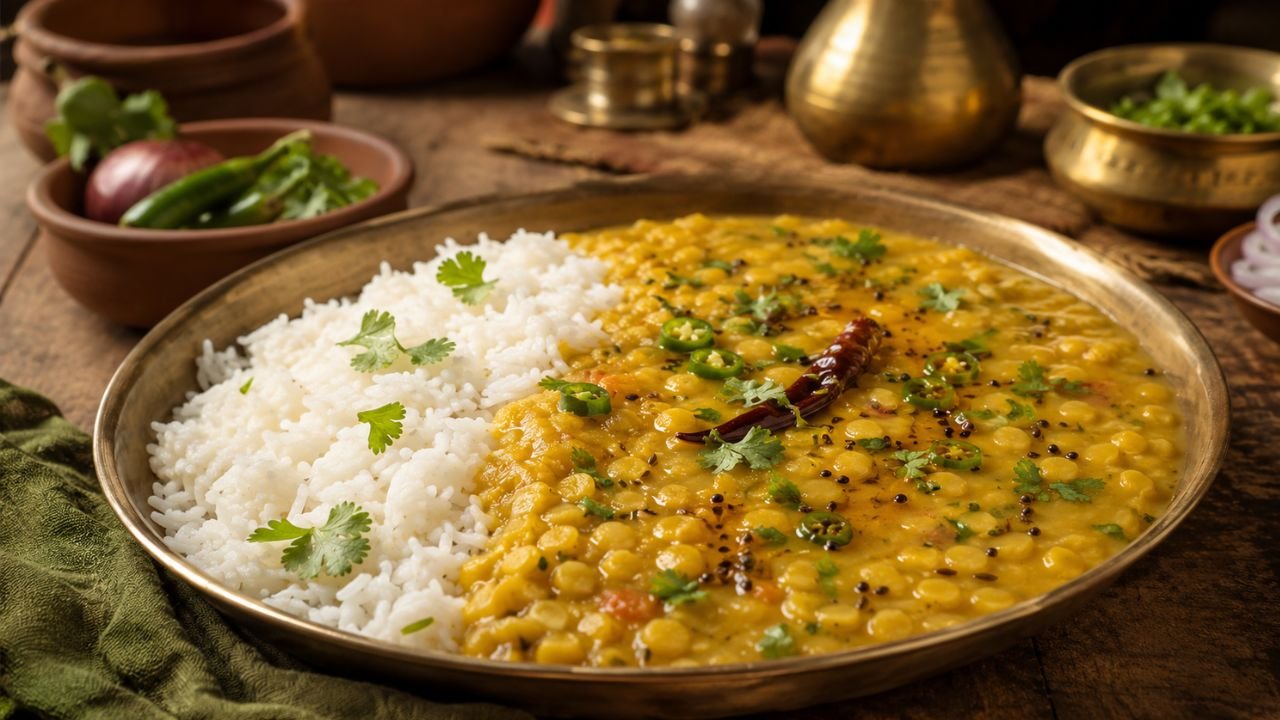
Dal chawal is the kind of meal that does not need loud presentation to feel special. It is warm, soft, comforting, and deeply familiar, yet every bowl can taste slightly different depending on the tempering, the texture of the rice, and the way the lentils are simmered. Inspired by the simple comfort associated with Mouni Roy enjoying warm dal chawal, this recipe brings together yellow moong dal, a little toor dal, fluffy steamed rice, mild spices, ghee, and a fragrant tadka that turns everyday ingredients into a satisfying homemade plate.
This warm dal chawal is perfect for days when you want food that feels soothing but still tastes complete. The dal is light enough for lunch, cozy enough for dinner, and balanced enough to serve as a wholesome meal. The rice gives softness and body, while the dal provides protein, warmth, and a gentle spice base. A spoonful of ghee, cumin, garlic, turmeric, and hing adds the classic aroma that makes dal chawal irresistible the moment it reaches the table.
The beauty of this recipe is that it does not try to complicate comfort food. It respects the familiar Indian kitchen method: wash the dal well, cook it until creamy, prepare rice separately, and finish the lentils with a sizzling tempering. Serve it hot with pickle, papad, curd, salad, or simply a squeeze of lemon. The result is a nourishing bowl that tastes homely, elegant, and deeply satisfying.
Recipe Information
- Prep Time: PT15M
- Cook Time: PT30M
- TotalTime: PT45M
- Recipe Category: Main Course
- Recipe Cuisine: Indian
The cuisine is Indian, and the recipe category is a main course. The flavor profile is mild, savory, earthy, and comforting. It is suitable for everyday meals, family lunches, light dinners, and recovery-style meals when you want something easy to digest. The consistency of the dal can be adjusted according to preference. Some people enjoy dal chawal with thin, flowing dal that soaks into the rice, while others prefer a thicker, creamier dal that sits on top like a rich sauce.
For the best result, use a combination of yellow moong dal and toor dal. Moong dal gives lightness and creaminess, while toor dal brings a deeper lentil flavor. Basmati rice or regular short-grain rice both work well. Basmati gives a fragrant and separate-grain texture, while short-grain rice creates a softer, more traditional comfort-food feel. Ghee is strongly recommended for the tempering because it adds aroma and richness, but oil may be used for a vegan version.
This recipe is also flexible. You can keep it very mild, increase the green chilli for heat, add tomatoes for tang, or include vegetables for extra nutrition. The base recipe stays close to a classic home-style dal chawal, making it reliable, simple, and full of warmth.
Ingredients
- 1 cup yellow moong dal
- 1/4 cup toor dal
- 1 cup rice
- 3 cups water for cooking dal
- 2 cups water for cooking rice
- 1 medium onion, finely chopped
- 1 medium tomato, finely chopped
- 3 garlic cloves, finely chopped
- 1 inch ginger, grated
- 1 green chilli, slit
- 1/2 teaspoon turmeric powder
- 1 teaspoon cumin seeds
- 1/4 teaspoon hing
- 1/2 teaspoon red chilli powder
- 1/2 teaspoon coriander powder
- 1 tablespoon ghee
- 1 tablespoon oil
- Salt to taste
- 1 tablespoon chopped coriander leaves
- 1 teaspoon lemon juice
- Extra hot water as needed to adjust dal consistency
- Pickle, papad, curd, or salad for serving
The ingredient list is intentionally simple because dal chawal depends more on balance than quantity. The lentils should be fresh and washed thoroughly until the water runs mostly clear. This removes excess starch and helps the dal cook into a cleaner, smoother texture. The rice should also be rinsed well to prevent gumminess. If you have time, soaking the rice for 15 minutes helps it cook more evenly, but it is not compulsory.
Turmeric gives the dal its golden color and earthy warmth. Hing is small in quantity but important because it adds a classic aroma and helps make the lentils feel lighter. Cumin seeds form the foundation of the tadka, while garlic and ginger bring depth. Tomato adds mild tang and onion gives sweetness. Lemon juice at the end brightens the entire dish without making it sour.
Use good-quality ghee for the most comforting aroma. Even a small spoonful can make the dal taste richer and more complete. If you want a lighter version, reduce the ghee slightly and increase the fresh coriander and lemon. If cooking for children or someone who prefers very mild food, skip the green chilli and reduce the red chilli powder.
Preparation
Begin by washing the yellow moong dal and toor dal together in a bowl. Rinse them three to four times, rubbing the lentils gently with your fingers, until the water looks much clearer. Drain the water and transfer the dal to a pressure cooker. Add turmeric powder, salt, and 3 cups of water. Stir once, close the lid, and cook for 3 to 4 whistles on medium heat. Let the pressure release naturally before opening the cooker.
While the dal cooks, wash the rice well under running water. Place the rice in a pot with 2 cups of water and a small pinch of salt. Bring it to a boil, then lower the heat, cover the pot, and cook until the rice is soft and the water is absorbed. Turn off the heat and let the rice rest, covered, for 5 minutes. Fluff it gently with a fork or spoon. Resting the rice helps the grains settle and prevents them from breaking too much when served.
Open the cooked dal and whisk it lightly with a spoon or ladle. The dal should look soft, creamy, and pourable. If it is too thick, add a little hot water and stir until it reaches your preferred consistency. Keep the dal warm while you prepare the tempering. This step is important because the hot dal absorbs the tadka better and develops a fuller flavor.
Heat oil and ghee together in a deep pan. Add cumin seeds and let them crackle. Add hing, chopped garlic, grated ginger, and slit green chilli. Stir for a few seconds until the garlic becomes fragrant but not burnt. Add chopped onion and cook until it turns soft and lightly golden. Add chopped tomato, red chilli powder, coriander powder, and a little salt. Cook until the tomato softens and the mixture becomes glossy.
Pour the cooked dal into the pan with the tempering. Stir well so the spices blend evenly through the lentils. Simmer the dal for 5 to 7 minutes on low heat. If it thickens too much, add hot water gradually. Taste and adjust salt. Finish with lemon juice and chopped coriander leaves. Stir gently and turn off the heat. The dal should smell warm, buttery, and lightly spiced.
To serve, place a generous portion of hot rice in a bowl or plate. Ladle the warm dal over the rice, allowing it to soak through. Add a small spoonful of ghee on top if desired. Serve immediately with pickle, roasted papad, cucumber salad, curd, or a simple onion-lemon side. Dal chawal tastes best when eaten hot, while the rice is soft and the dal is still fragrant from the tempering.
If using a regular pot instead of a pressure cooker, cook the washed dal with turmeric, salt, and water over medium heat until the lentils break down completely. This may take 35 to 45 minutes depending on the freshness of the dal. Stir occasionally and add more water if needed. Once soft, mash lightly and continue with the same tempering method.
Tips
For creamy dal, do not rush the cooking stage. Lentils should be fully soft before tempering. Half-cooked dal can taste grainy and will not blend smoothly with rice. If the dal looks separated after cooking, whisk it well and simmer it for a few minutes after adding the tadka.
Use hot water when adjusting dal consistency. Cold water can interrupt the simmering process and dull the texture. Dal chawal is usually best when the dal is slightly loose, because it should coat and soak into the rice. A very thick dal may taste good with roti, but for rice, a flowing consistency is more enjoyable.
Keep the tempering aromatic but not burnt. Garlic should turn lightly golden, not dark brown. Burnt garlic can make the dal bitter. Cumin seeds should crackle, but they should not blacken. Cooking the spices on medium to low heat gives better control and a deeper flavor.
Do not add lemon juice while the dal is boiling aggressively. Add it at the end after turning off the heat or just before serving. This keeps the flavor fresh and prevents the dal from tasting sharp. Fresh coriander should also be added near the end to preserve its color and aroma.
If you want restaurant-style richness, add an extra teaspoon of ghee in the final serving bowl. For a lighter everyday version, keep the ghee modest and serve the dal with salad or curd. A small roasted papad adds crunch and makes the meal feel more complete without much effort.
Rice texture matters. If you like soft comfort-style dal chawal, cook the rice slightly softer. If you prefer separate grains, use basmati rice and avoid over-stirring. Always rest the rice after cooking because it improves the final texture.
Dal thickens as it cools. If you are making it ahead, keep it slightly thinner than usual. Reheat it with a splash of hot water and simmer for a few minutes before serving. The flavor often deepens after resting, making leftovers especially delicious.
Variations
For a simple vegan version, replace ghee with oil. Mustard oil, groundnut oil, or neutral cooking oil can be used. The dal will still taste delicious, though ghee gives the most classic aroma. Add extra cumin, coriander, and fresh herbs to build flavor without dairy.
For a tomato-rich dal chawal, use two tomatoes instead of one and cook them until they become soft and jammy. This gives the dal a brighter, tangier taste. You can also add a small pinch of sugar if the tomatoes are too sharp. This variation pairs well with plain basmati rice and cucumber salad.
For a spicier version, add one more green chilli and increase the red chilli powder slightly. You can also finish the dal with a second tadka made from ghee, cumin, dried red chilli, and chilli powder. Pour it over the dal just before serving for a stronger aroma and a beautiful color.
For a vegetable dal chawal, add chopped carrots, bottle gourd, spinach, or peas while cooking the dal. Bottle gourd makes the dal softer and lighter, while spinach adds color and nutrition. If using spinach, add it after the dal is cooked and simmer only for a few minutes so it stays fresh.
For a more festive version, serve the dal with jeera rice instead of plain rice. To make jeera rice, temper cumin seeds in ghee, add washed rice, water, and salt, then cook until fluffy. The extra cumin flavor makes the plate more aromatic while still keeping the comfort of dal chawal intact.
For a khichdi-style bowl, mix cooked rice directly into the dal and simmer with extra water until soft and porridge-like. This version is especially soothing and easy to digest. Finish it with ghee, coriander, and lemon. It is ideal for rainy days, tired evenings, or simple one-pot comfort meals.
Conclusion
Mouni Roy enjoying warm dal chawal reminds us why this dish remains one of India’s most loved comfort meals. It is not complicated, expensive, or heavy. It is a meal built on softness, warmth, balance, and memory. With creamy lentils, fluffy rice, gentle spices, and a fragrant ghee tadka, dal chawal can turn an ordinary day into something calmer and more comforting.
This recipe keeps the essence of home-style cooking while giving enough detail to help you make it perfectly. The dal is mild but flavorful, the rice is soft and satisfying, and the final serving feels complete with just a few simple sides. Whether you eat it for lunch, dinner, or as a cozy weekend meal, warm dal chawal always delivers the same promise: nourishment, comfort, and taste in every spoonful.
Serve it fresh, keep the dal warm, add a final touch of ghee if you love richness, and enjoy it slowly. Sometimes the most memorable meals are the simplest ones, and this warm dal chawal is proof that everyday food can be deeply special when cooked with care.