
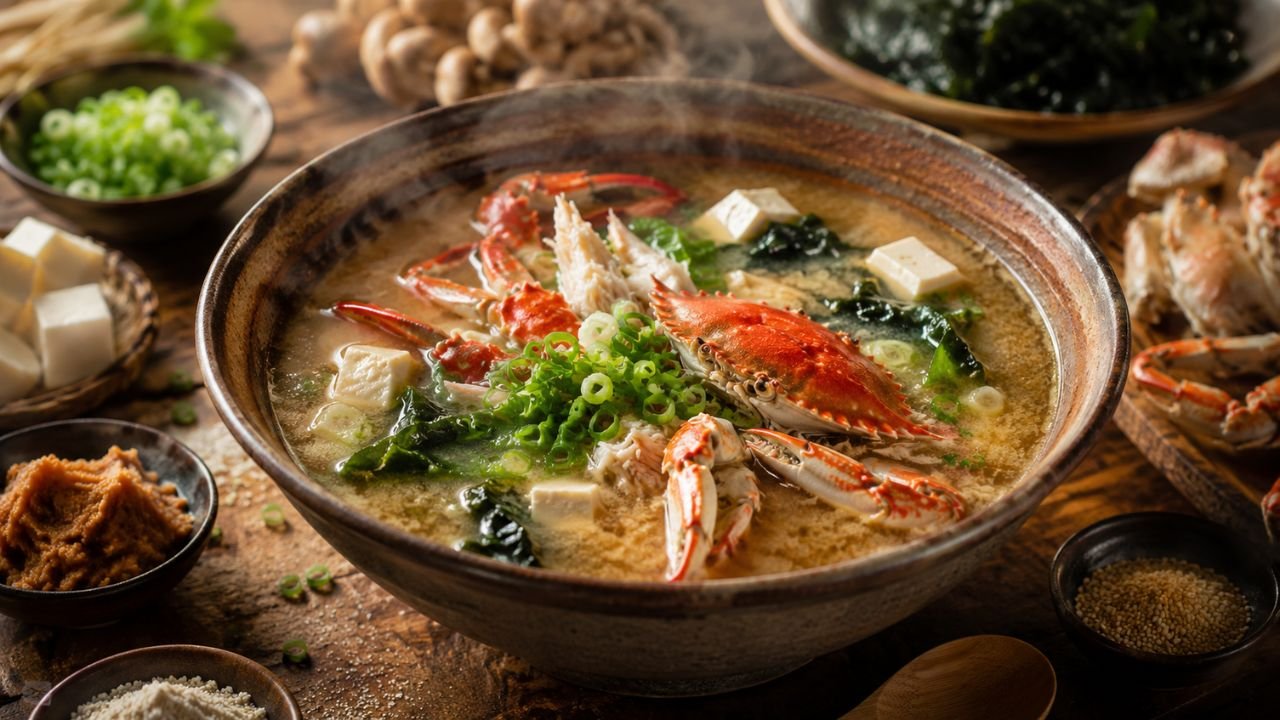
Alexandr Wang loves this comforting blue crab miso soup because it brings together elegance, warmth, and deep ocean flavor in one calming bowl. This recipe is inspired by the kind of food that feels both luxurious and simple: sweet blue crab, savory miso, soft aromatics, tender vegetables, and a clean broth that tastes soothing without feeling heavy. It is the kind of soup that can be served as a refined starter, a light dinner, or a special weekend comfort meal for anyone who enjoys seafood with a Japanese-inspired touch. The beauty of blue crab miso soup is balance. The crab adds natural sweetness, the miso gives depth, the ginger brings freshness, and the broth carries everything gently. Nothing feels loud or overworked. Every spoonful has a soft richness that makes the dish memorable. For foodies, this recipe is especially attractive because it looks impressive, tastes layered, and still remains easy enough to prepare at home with the right timing and care.
Recipe Information
This blue crab miso soup is a comforting seafood recipe with a Japanese-inspired flavor base. It uses fresh or cleaned blue crab, white miso paste, ginger, garlic, scallions, mushrooms, and a light broth to create a bowl that is warm, fragrant, and deeply satisfying. The recipe is designed for home cooks who want a restaurant-style soup without complicated steps. It is not a heavy cream-based seafood soup. Instead, it is clean, savory, and naturally rich because the crab releases sweetness into the broth while the miso adds smooth umami flavor.
The preparation time for this recipe is 20 minutes, and the cooking time is 30 minutes. The total time is 50 minutes. These times are important because crab does not need to be cooked for too long. Overcooking can make the crab meat tough and can dull the delicate sweetness of the broth. A gentle simmer is enough to pull flavor from the shells while keeping the soup elegant and balanced.
This recipe serves 4 people as a light main dish or 6 people as a starter. It belongs to the soup category and fits best within Japanese-inspired seafood cuisine. The flavor is savory, slightly sweet, earthy, and warming. White miso is recommended because it is milder and slightly sweet, which pairs beautifully with blue crab. Yellow miso can also work if you want a stronger flavor, but red miso may overpower the crab unless used in a smaller amount.
- Preparation Time: 20 minutes
- Cooking Time: 30 minutes
- Total Time: 50 minutes
- Recipe Yield: 4 servings
- Recipe Category: Soup
- Recipe Cuisine: Japanese-inspired seafood
- Main Flavor: Sweet crab, savory miso, ginger, scallion, and mushroom
- Best Served: Hot, fresh, and garnished just before serving
Ingredients
The ingredients for this blue crab miso soup should be fresh, simple, and carefully balanced. Blue crab is the star, so choose crab that smells clean and briny, never sour or overly fishy. If you are using live blue crab, clean it carefully and cut it into pieces. If using pre-cleaned blue crab, rinse lightly and pat dry. You can also use frozen blue crab, but thaw it fully in the refrigerator before cooking so the texture remains pleasant and the broth does not become watery.
White miso paste gives the soup its signature comfort. It should be added near the end of cooking, not boiled aggressively, because high heat can weaken its delicate flavor. Dashi is ideal for the broth, but if you do not have dashi, you can use a light seafood stock or a mild vegetable broth. Avoid very strong chicken stock because it can cover the crab’s natural sweetness.
Aromatics such as ginger, garlic, and scallions make the broth lively. Mushrooms add an earthy note, while tofu gives softness and makes the soup more filling. A small amount of soy sauce can deepen the flavor, but it should be used carefully because miso already contains salt. Sesame oil is optional, but just a few drops at the end can add a soft roasted aroma.
- 2 medium blue crabs, cleaned and cut into pieces
- 6 cups dashi, light seafood stock, or mild vegetable broth
- 3 tablespoons white miso paste
- 1 tablespoon soy sauce, optional and adjusted to taste
- 1 tablespoon fresh ginger, thinly sliced
- 2 garlic cloves, lightly crushed
- 3 scallions, sliced, with white and green parts separated
- 1 cup shiitake mushrooms or button mushrooms, sliced
- 1 cup soft tofu, cut into small cubes
- 1 small carrot, thinly sliced
- 1 teaspoon rice vinegar, optional for brightness
- 1 teaspoon sesame oil, optional for finishing
- 1 small sheet kombu, optional for deeper broth flavor
- Salt, only if needed
- Fresh cilantro or extra scallion greens for garnish
- Lime wedges, optional for serving
Preparation
Begin by preparing the crab. If the blue crabs are fresh and whole, clean them properly by removing the top shell, gills, and unwanted parts, then cut the body into manageable pieces. Keep some shell pieces because they add important flavor to the soup. Rinse quickly under cold water, but do not soak the crab for a long time because that can wash away its natural sweetness. Pat the pieces dry and set them aside while you prepare the broth.
Place the dashi, seafood stock, or vegetable broth into a large pot. Add the ginger, garlic, white parts of the scallions, carrot slices, and kombu if using. Warm the broth over medium heat and bring it close to a gentle simmer. Do not rush this stage. A slow warm-up helps the aromatics release flavor naturally. Once the broth begins to steam and small bubbles appear, remove the kombu if you used it. Leaving kombu in boiling liquid for too long can create a slightly bitter taste.
Lower the heat before adding the miso. Place the miso paste in a small bowl and ladle in some hot broth. Whisk or stir until the miso dissolves smoothly, then pour it back into the pot. This prevents lumps and helps the miso blend evenly. Once the miso has been added, do not boil the soup hard. Keep it hot and steaming, but gentle. Add rice vinegar if you want a little brightness, and finish with sesame oil if you prefer a warmer aroma.
Taste the soup carefully. If it needs more depth, add a little more miso dissolved in broth. If it feels too salty, add a splash of plain hot water or unsalted broth. Serve the soup in warm bowls with crab pieces, tofu, mushrooms, carrots, and broth. Garnish with scallion greens, fresh herbs, and a small squeeze of lime if desired. The soup should taste comforting, clean, sweet from the crab, and savory from the miso.
- Clean and cut the blue crab into serving pieces.
- Warm broth with ginger, garlic, scallion whites, carrot, and optional kombu.
- Add crab and simmer gently until the shells flavor the broth.
- Add mushrooms and tofu near the middle of cooking.
- Dissolve miso separately with hot broth before adding it to the pot.
- Keep the soup hot but do not boil after adding miso.
- Finish with scallion greens, herbs, and optional lime.
Tips
The most important tip for blue crab miso soup is to control the heat. Seafood soup becomes better when it is simmered gently. A strong boil can make the crab meat firm and can make the broth cloudy. Gentle cooking protects the sweetness of the crab and keeps the soup refined. This is especially important when using fresh crab, because the flavor is delicate and should not be forced.
Use good miso paste. White miso is soft, slightly sweet, and excellent for seafood. If your miso paste is very salty, start with less and add more only after tasting. Miso should be treated like a seasoning and a flavor base at the same time. Adding too much too quickly can make the soup heavy and overly salty. Dissolving it in a small bowl of broth before adding it to the pot gives a smoother result.
Do not skip the aromatics. Ginger keeps the soup fresh and helps balance the richness of the crab. Garlic adds warmth, while scallions bring a clean onion flavor. Mushrooms add body without making the soup heavy. If you want a more refined broth, slice the ginger instead of grating it, because sliced ginger gives flavor without making the broth grainy.
If you want a clearer soup, skim the foam while the crab simmers. This small step makes the broth look cleaner and taste smoother. Use a wide spoon and remove only the foam, not too much broth. Also, avoid stirring too aggressively after adding tofu because soft tofu can break apart. A few broken pieces are fine, but large clean cubes make the soup look more beautiful.
Serve the soup immediately after finishing. Miso soup is best when fresh because the aroma is strongest and the crab tastes sweetest. If you need to reheat leftovers, warm them gently over low heat and avoid boiling. The soup can be stored in the refrigerator for up to 2 days, but the texture of the crab and tofu will be best on the first day.
- Use white miso for a mild and balanced flavor.
- Simmer the crab gently instead of boiling hard.
- Add miso near the end to protect its taste.
- Skim foam for a cleaner broth.
- Use fresh ginger to brighten the seafood flavor.
- Serve hot and fresh for the best aroma.
- Reheat slowly if storing leftovers.
Variations
This blue crab miso soup can be adjusted in several delicious ways while keeping the same comforting character. For a richer version, add a small amount of coconut milk near the end. This is not traditional, but it creates a creamy seafood bowl with a soft sweetness that pairs well with crab. Use only a little, because too much coconut milk can hide the miso flavor.
For a spicier version, add thin slices of fresh chili, a small spoon of chili crisp, or a touch of shichimi togarashi before serving. The heat should lift the broth, not dominate it. A spicy garnish works better than adding too much chili during cooking because it allows each person to control the level of heat in their bowl.
For a heartier meal, serve the soup with steamed rice, udon noodles, or soba noodles. If adding noodles directly to the soup, cook them separately first so they do not absorb too much broth or make the soup cloudy. Place the noodles in bowls and ladle the hot crab miso soup over them. This turns the recipe into a full dinner while keeping the flavors clean and satisfying.
- Add coconut milk for a creamy seafood variation.
- Use chili crisp or fresh chili for gentle heat.
- Add bok choy, spinach, or napa cabbage for extra vegetables.
- Replace blue crab with snow crab, Dungeness crab, or shrimp.
- Serve with rice or noodles for a fuller meal.
- Add corn for natural sweetness.
- Use extra mushrooms for a deeper earthy flavor.
Conclusion
Alexandr Wang loves this comforting blue crab miso soup because it captures what many foodies look for in a memorable recipe: depth, comfort, freshness, and a touch of luxury. It is simple enough for home cooking but special enough to feel like something served in a beautiful seafood restaurant. The blue crab gives the broth natural sweetness, the miso adds savory richness, and the ginger, scallions, mushrooms, and tofu create a complete bowl that feels warm and balanced.
This soup is best when made with patience and careful heat. The recipe does not need complicated techniques. It only needs fresh ingredients, gentle simmering, and proper timing. When the miso is added at the end and the crab is cooked softly, the result is a soothing soup with layers of flavor. It is perfect for cool evenings, relaxed dinners, or any moment when you want a meal that feels both nourishing and elegant.