
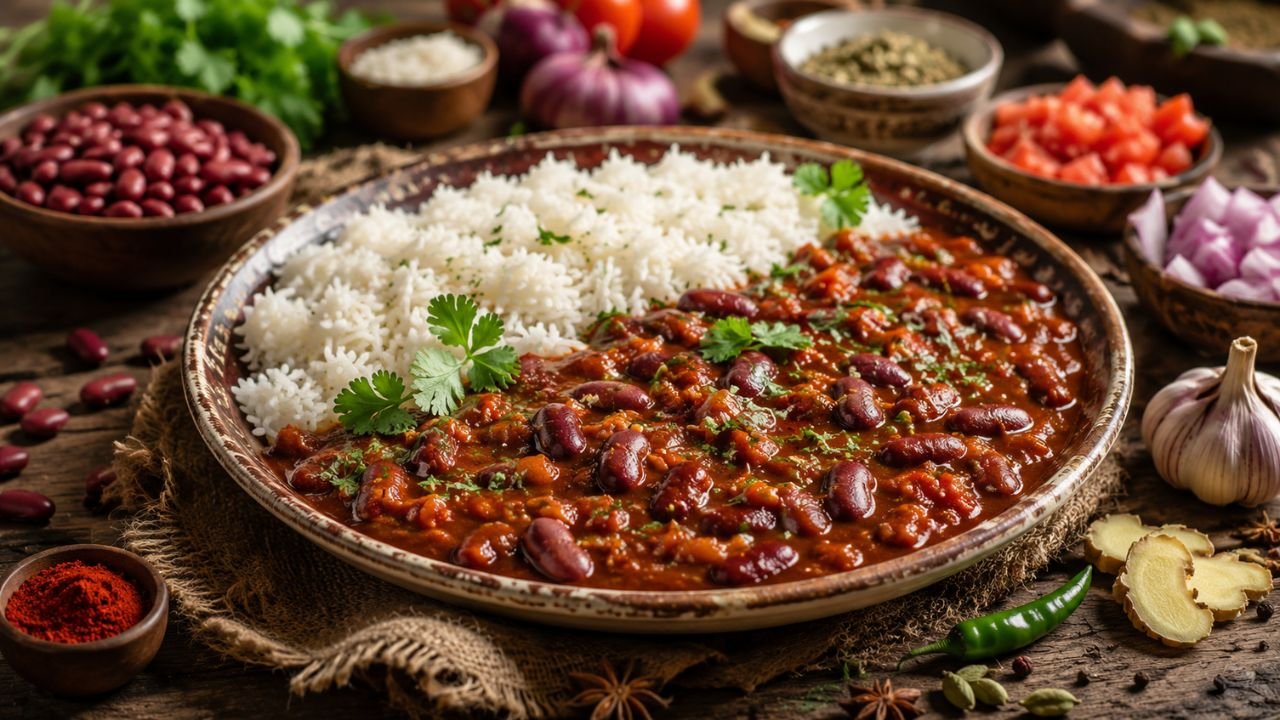
Robin Singh’s love for a truly comforting plate of Rajma Chawal makes perfect sense. This is the kind of meal that feels generous from the first spoonful, familiar in the best possible way, and deeply satisfying without trying too hard. A well-made Rajma Chawal is never just “beans and rice.” It is slow-simmered kidney beans folded into a fragrant, tomato-rich gravy, served over fluffy rice that catches every drop of the sauce. It is home food with a serious soul.
What makes this classic so irresistible is balance. The rajma should be tender but not mushy, the masala should taste rounded and warm rather than harsh, and the rice should be light enough to lift the curry without weighing it down. When all three parts work together, the dish becomes much more than the sum of its ingredients. It is rustic, elegant in its own humble way, and memorable enough to make any foodie pause after the first bite.
This recipe is written to deliver that exact feeling: deep flavor, a glossy gravy, a silky texture, and rice that stays separate yet soft. It keeps the classic North Indian spirit intact while offering enough detail to help you cook confidently at home. Whether you are preparing a comforting family lunch, a weekend meal, or a dish to impress someone who appreciates honest cooking, this Rajma Chawal will not disappoint.
Recipe Information
Rajma Chawal is a traditional North Indian comfort dish made with red kidney beans simmered in an aromatic onion-tomato masala and served with steamed rice. It is hearty, protein-rich, deeply flavorful, and ideal for a satisfying lunch or dinner. This version leans into a classic домашний style, with enough layering in the masala to taste rich and polished while still feeling familiar and comforting.
- Preparation Time: 20 minutes
- Cooking Time: 1 hour 10 minutes
- Total Time: 1 hour 30 minutes
- Type: Main Course
- Cuisine: North Indian
- Recipe Yield: 4 servings
- Calories: Approximately 430 kcal per serving
Ingredients
For the rajma, choose good-quality dried kidney beans if possible. They give the best flavor and a naturally creamy texture when cooked properly. Canned beans can work in a hurry, but the result is usually less layered. For the rice, use long-grain basmati so the dish feels airy, fragrant, and balanced.
For the rajma masala:
- 1 cup dried rajma (kidney beans), soaked overnight
- 4 cups water for pressure cooking, plus more as needed
- 2 tablespoons oil or ghee
- 1 bay leaf
- 1 inch cinnamon stick
- 2 green cardamom pods
- 4 cloves
- 1 teaspoon cumin seeds
- 2 medium onions, finely chopped
- 1 tablespoon ginger-garlic paste
- 2 medium tomatoes, finely chopped or pureed
- 1 green chili, slit
- 1 teaspoon turmeric powder
- 1 teaspoon coriander powder
- 1 teaspoon red chili powder
- 1 teaspoon Kashmiri red chili powder, optional for color
- 1 teaspoon garam masala
- 1 teaspoon dried fenugreek leaves, crushed, optional
- Salt to taste
- 2 to 3 cups water, as needed for gravy
- 2 tablespoons chopped fresh coriander leaves
- 1 tablespoon lemon juice, optional
For the rice:
- 1 cup basmati rice
- 2 cups water
- 1/2 teaspoon salt
- 1 teaspoon ghee or oil, optional
Preparation
Start with the beans. Soaking the rajma overnight is not just a technical step; it is what helps the beans cook evenly and become tender enough to absorb the masala properly. After soaking, drain and rinse them well. Pressure cook the beans with fresh water until they are soft and creamy inside. They should hold their shape but yield easily when pressed between your fingers. If they are even slightly undercooked, the final curry will feel flat and grainy instead of rich and comforting.
While the beans cook, prepare the rice. Rinse the basmati rice several times until the water runs mostly clear. This removes excess starch and helps the grains stay separate. Soak it for 15 to 20 minutes if time allows, then cook it with measured water and salt until fluffy. A tiny touch of ghee adds fragrance, but it is optional. The goal is clean, delicate rice that supports the rajma rather than competing with it.
Now build the masala. Heat oil or ghee in a heavy pan and add the whole spices: bay leaf, cinnamon, cardamom, cloves, and cumin seeds. Let them sizzle gently for a few seconds until fragrant. This brief blooming step adds warmth and depth to the dish. Add the chopped onions and cook them patiently until golden brown. This part matters. Properly browned onions create the sweetness and body that make rajma taste complete. If the onions remain pale, the gravy can taste thin and unfinished.
Once the onions are well cooked, stir in the ginger-garlic paste and green chili. Cook for a minute until the raw smell disappears. Add the tomatoes, turmeric, coriander powder, red chili powder, and Kashmiri chili powder if using. Cook the masala slowly until the tomatoes soften, the oil begins to separate at the edges, and the mixture turns thick and cohesive. This is the stage where the curry gains its personality. The masala should look glossy and feel concentrated, not watery.
Add the cooked rajma to the pan along with some of its cooking liquid. Mash a small portion of the beans lightly with the back of a spoon. This gives the gravy a naturally creamy texture without needing any cream. Stir well and simmer for at least 20 to 25 minutes so the beans can absorb the masala. Add water little by little until the curry reaches your preferred consistency. Rajma Chawal is best when the gravy is thick enough to coat the beans but loose enough to seep beautifully into the rice.
Taste and adjust the salt. Add garam masala near the end so its aroma stays lively. If you like, crush a little dried fenugreek between your palms and stir it in for a subtle restaurant-style edge. Finish with fresh coriander and a small squeeze of lemon juice for brightness. The lemon is optional, but it can sharpen the final flavor and prevent the curry from feeling too heavy. Serve the rajma hot over warm basmati rice, and let the sauce settle naturally into the grains.
The final plate should feel inviting and generous. Spoon the rajma over the rice rather than next to it so the curry can begin doing what it was born to do: seep, soften, and bring the whole meal together. A little extra coriander on top is enough for freshness. If you enjoy a fuller meal, serve it with sliced onions, a wedge of lemon, and a simple salad on the side. The beauty of Rajma Chawal is that it does not need adornment to feel complete.
Tips
Use dried rajma rather than relying on random short-cuts. Soaked and freshly cooked beans produce a much better texture and deeper flavor. If you have the time, let the cooked rajma rest in the gravy for a while after simmering. Like many bean-based dishes, it often tastes even better after a short rest, once the flavors settle into each other.
- Soak the beans overnight for even cooking and a creamier finish.
- Do not rush the onion stage; browned onions build the backbone of the curry.
- Cook the tomato masala until the oil separates, or the gravy may taste raw.
- Lightly mash a few beans to naturally thicken the sauce.
- Add garam masala near the end to preserve its aroma.
- Adjust the water carefully so the gravy stays rich, not soupy.
- Rest the curry for 10 to 15 minutes before serving for fuller flavor.
Variations
If you want a slightly richer version, finish the curry with a small spoonful of butter at the end. It gives the gravy a glossy, round finish without changing the soul of the dish. For a lighter version, use less oil and keep the masala simple, allowing the natural flavor of the rajma to stand forward. Both versions can be excellent, depending on the mood of the meal.
You can also change the spice profile without losing the classic character of the dish. For a bolder gravy, add a little extra red chili or a pinch of black pepper. For a softer, more aromatic style, lean more heavily on cinnamon, cardamom, and cloves. A few kitchens like to add a spoon of cream, but that is not essential. Traditional rajma gets most of its comfort from the beans, the slow-cooked onions, and the tomato base.
Another elegant variation is to use a mix of rajma beans if available, such as red kidney beans and smaller dark beans, for a more complex texture. Some cooks also like to add a bit of cooked potato for extra body, though purists may prefer the cleaner, bean-forward profile. For a healthier plate, pair the curry with brown rice or a small portion of jeera rice. The flavor remains deeply satisfying either way.
If you are serving guests, consider a simple garnish of ginger juliennes fried lightly in ghee. It adds a fragrant lift and makes the dish feel more polished without overwhelming it. Another nice touch is a spoon of fresh coriander chutney on the side, which brings brightness against the rich curry. The charm of Rajma Chawal is that it welcomes these variations while remaining unmistakably itself.
Conclusion
Robin Singh’s favorite-style Rajma Chawal is the kind of dish that wins people over slowly and then completely. It has the comfort of a home-cooked meal, the depth of a carefully built masala, and the kind of texture that makes every bite feel generous. When the rajma is tender, the gravy is balanced, and the rice is fluffy, the result is quietly luxurious in its own way.
This recipe honors the classic spirit of the dish while giving you the structure to make it well at home. There is no unnecessary complication here, only the right sequence of patient cooking, smart seasoning, and thoughtful finishing. That is often what the best comfort food needs: restraint, attention, and respect for the ingredients.
Serve it hot, serve it simply, and let the aroma do the rest. A bowl of Rajma Chawal like this is satisfying enough for an ordinary day and special enough for the moments when you want something familiar but deeply rewarding. It is the kind of meal that lingers in memory because it tastes honest, warm, and complete.