
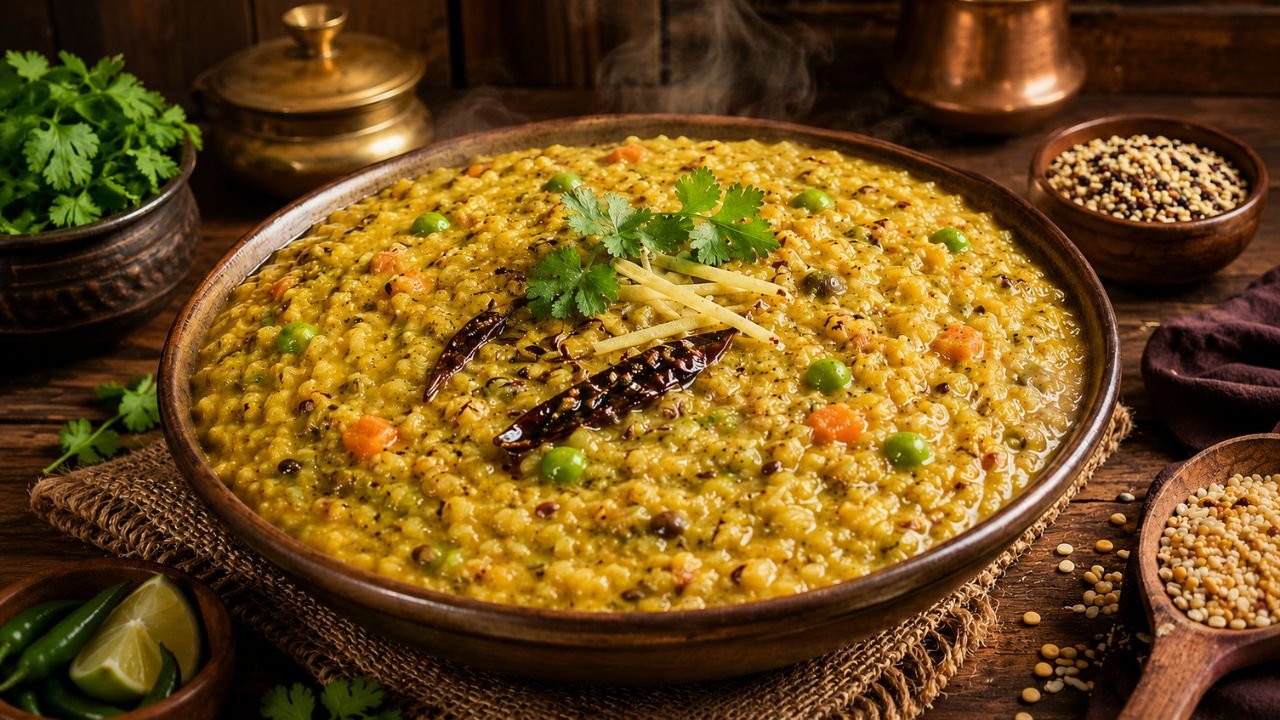
Vikas Khanna Loves This Simple Multigrain Khichdi Every Foodie Wants is the kind of comforting, nourishing recipe that proves everyday Indian food can be both humble and deeply satisfying. Khichdi has always held a special place in Indian kitchens because it is warm, gentle, wholesome, and endlessly adaptable. This multigrain version takes the familiar rice-and-dal comfort bowl and gives it more texture, more nutrition, and a fuller, earthier flavor. It is simple enough for a weekday meal, yet special enough for anyone who enjoys thoughtful home cooking.
The beauty of this multigrain khichdi is that it does not try to be complicated. It brings together rice, lentils, millets, broken wheat, and vegetables in one pot, then seasons them with a classic tempering of ghee, cumin, ginger, turmeric, and mild spices. The result is soft, creamy, aromatic, and satisfying without being heavy. It is the kind of recipe that feels restorative after a long day, works well for lunch or dinner, and can be served with yogurt, pickle, papad, or a spoonful of extra ghee.
For food lovers, this dish offers more than comfort. It gives layers of taste: the nuttiness of grains, the creaminess of moong dal, the sweetness of vegetables, and the warm fragrance of Indian spices. It also shows how traditional recipes can be made richer without losing their soul. A good khichdi should feel balanced, not bland. It should be soft but not watery, nourishing but not dull, and simple but memorable. This recipe follows that idea closely.
Recipe Information
- Preparation Time: 15 minutes
- Cooking Time: 35 minutes
- Total Time: 50 minutes
- Recipe Yield: 4 servings
- Recipe Category: Main Course
- Recipe Cuisine: Indian
- Cooking Method: Pressure cooking or one-pot stovetop cooking
- Texture: Soft, creamy, and porridge-like
- Best Served With: Curd, pickle, roasted papad, chutney, or a drizzle of ghee
This multigrain khichdi is designed for everyday cooking, so it uses ingredients that are easy to find in most Indian kitchens. The grains can be adjusted depending on what you have, but the balance matters. Rice gives softness, dal gives creaminess, millet gives nuttiness, and broken wheat adds body. When cooked together with enough water, the mixture turns into a smooth, hearty khichdi that feels complete on its own.
The recipe is also naturally flexible. You can keep it mild for a soothing meal, make it spicier with green chillies, add more vegetables for extra nutrition, or finish it with a second tempering for a richer flavor. For a lighter version, reduce the ghee slightly. For a more indulgent version, serve it hot with a spoonful of melted ghee on top. The aim is to create a bowl that feels warm, balanced, and deeply comforting.
Ingredients
- 1/2 cup short-grain rice, washed
- 1/4 cup yellow moong dal, washed
- 2 tablespoons masoor dal or split red lentils, washed
- 2 tablespoons broken wheat or dalia
- 2 tablespoons foxtail millet or little millet
- 1 tablespoon quinoa or barnyard millet, optional
- 1 small carrot, finely chopped
- 1/4 cup green peas
- 1/4 cup chopped beans
- 1 small tomato, finely chopped
- 1 small onion, finely chopped, optional
- 1 teaspoon grated ginger
- 1 green chilli, slit, optional
- 1 tablespoon ghee
- 1 teaspoon cumin seeds
- 1/4 teaspoon asafoetida
- 1/2 teaspoon turmeric powder
- 1/2 teaspoon coriander powder
- 1/4 teaspoon black pepper powder
- Salt to taste
- 5 cups water, plus more if needed
- 1 tablespoon chopped coriander leaves
- 1 teaspoon lemon juice, optional
- Extra ghee for serving, optional
The combination of grains and lentils is what gives this khichdi its character. Rice and moong dal form the soft base, while broken wheat and millet add a mild chewiness and nutty depth. Masoor dal cooks quickly and blends beautifully into the mixture, helping the khichdi become creamy without needing cream or butter. Vegetables bring color, freshness, and gentle sweetness, making the dish more complete and enjoyable.
Ghee is highly recommended because it gives the khichdi a traditional aroma and richness. However, the quantity is moderate, so the dish remains light. Cumin, ginger, turmeric, and asafoetida are classic ingredients in khichdi because they make the dish fragrant and easier to digest. The spices should support the grains, not overpower them. This is why the seasoning is warm and mild rather than intense.
Preparation
- Wash the rice, moong dal, masoor dal, broken wheat, millet, and quinoa or barnyard millet together in a large bowl. Rinse two to three times until the water runs mostly clear.
- Soak the washed grains and lentils for 15 minutes. This helps them cook evenly and gives the khichdi a softer texture.
- Heat ghee in a pressure cooker or heavy-bottomed pot over medium heat.
- Add cumin seeds and let them crackle gently. Add asafoetida and stir for a few seconds.
- Add grated ginger and green chilli. Cook briefly until aromatic, without browning the ginger.
- Add chopped onion if using, and sauté until it turns soft and lightly translucent.
- Add tomato, carrot, peas, and beans. Stir for 2 to 3 minutes so the vegetables absorb the tempering.
- Add turmeric powder, coriander powder, black pepper powder, and salt. Mix well.
- Drain the soaked grains and lentils, then add them to the cooker or pot. Stir for 1 minute to coat them with the spices and ghee.
- Add 5 cups water and mix everything well. Check the salt and adjust if needed.
- If using a pressure cooker, close the lid and cook for 4 to 5 whistles on medium heat. Let the pressure release naturally.
- If using a pot, cover and cook on low to medium heat for 30 to 35 minutes, stirring occasionally and adding more hot water if the mixture becomes too thick before the grains soften.
- Open the cooker or pot and stir the khichdi well. Mash lightly with the back of a ladle for a creamy consistency.
- Add more hot water if you prefer a looser texture. Simmer for 2 to 3 minutes after adjusting the consistency.
- Finish with chopped coriander leaves and lemon juice if desired.
- Serve hot with curd, pickle, papad, chutney, or a small spoonful of ghee.
The most important part of making excellent khichdi is getting the texture right. Multigrain khichdi should be soft and spoonable, not dry like pulao. Different grains absorb water differently, so do not hesitate to add more hot water after cooking if needed. A good khichdi thickens as it rests, which means it may look slightly loose when hot but become thicker within a few minutes.
Soaking the grains is a small step that makes a noticeable difference. It shortens the cooking time and helps the dal, rice, and millets soften together. If you skip soaking, the khichdi will still cook, but it may need more time and water. Pressure cooking is the easiest method because it breaks down the grains evenly and creates the classic creamy consistency. Stovetop cooking works too, especially if you enjoy watching the dish slowly come together.
Once cooked, stir the khichdi vigorously for a few seconds. This simple action helps combine the lentils and grains into one smooth, comforting mixture. If you like a very rustic texture, stir less. If you like a creamy bowl, mash it lightly. The final texture should suit your taste, but it should never feel undercooked or grainy.
Tips
- Use short-grain rice for a softer and more traditional khichdi texture.
- Do not add too many strong spices, because khichdi tastes best when the grain flavor remains clear.
- For a lighter meal, use less ghee and add more vegetables.
- For a richer taste, add a small second tempering of ghee, cumin, garlic, and dried red chilli before serving.
- Always adjust the consistency with hot water, not cold water, so the khichdi remains smooth.
- If serving children or elders, skip the green chilli and keep the spices mild.
- Add salt carefully because the flavor becomes more concentrated as the khichdi thickens.
- Let the pressure release naturally for the best soft texture.
- Serve immediately for the freshest flavor, but add hot water while reheating leftovers.
- Use seasonal vegetables to keep the recipe interesting throughout the year.
A common mistake is making multigrain khichdi too dense. Because millets and broken wheat absorb a lot of water, the dish needs more liquid than plain rice khichdi. If the khichdi looks thick after pressure cooking, do not worry. Add hot water, stir well, and simmer for a few minutes. This brings back the creamy texture and prevents the dish from feeling heavy.
Another helpful tip is to toast the drained grains briefly in the tempering before adding water. This adds a mild roasted note and helps the spices cling to the grains. The step takes only a minute, but it deepens the flavor. However, avoid roasting too long, because khichdi should remain soft and gentle rather than dry or sharply toasted.
Fresh coriander and lemon juice at the end brighten the dish. They are optional, but they bring freshness to the warm, earthy flavors. If you are serving the khichdi with curd, you may skip lemon juice. If you are serving it plain, lemon can make the bowl taste livelier. A tiny drizzle of ghee just before serving also lifts the aroma and gives the dish a satisfying finish.
Variations
Vegetable multigrain khichdi is the easiest variation. Add bottle gourd, spinach, pumpkin, cauliflower, zucchini, or sweet potato along with the basic vegetables. Soft vegetables such as spinach and zucchini cook quickly, while root vegetables should be chopped small so they soften at the same time as the grains. This version is colorful, filling, and ideal when you want a complete one-pot meal.
For a high-protein version, increase the quantity of dal slightly and add sprouted moong. You can also include a few cubes of paneer after the khichdi is cooked. Stir them in gently and let them warm through for a few minutes. This keeps the paneer soft and adds richness without changing the basic character of the dish.
For a South Indian-inspired version, add curry leaves, mustard seeds, and a few crushed black peppercorns to the tempering. You can also finish with a little grated coconut. This variation tastes especially good with coconut chutney or plain yogurt. It has a fragrant, peppery warmth while still remaining gentle and nourishing.
For a spicier foodie-style version, add garlic, extra ginger, chopped green chillies, and a pinch of garam masala. Finish with a ghee tempering of cumin, dried red chilli, and garlic. This turns the khichdi into a bolder dinner dish while keeping it rooted in comfort. Serve it with pickle and roasted papad for a more dramatic flavor contrast.
For a sattvic version, skip onion, garlic, and green chilli. Use only ghee, cumin, ginger, turmeric, asafoetida, vegetables, grains, and dal. This version is simple, clean, and soothing. It is ideal for days when you want something calm, light, and easy to digest.
For a millet-forward version, reduce the rice and increase the millets. Foxtail millet, little millet, barnyard millet, or kodo millet all work well. Since millets absorb water differently, monitor the texture after cooking and add hot water as needed. This version has a nuttier flavor and a more rustic feel.
Conclusion
Vikas Khanna Loves This Simple Multigrain Khichdi Every Foodie Wants is a reminder that comfort food does not need to be plain or ordinary. With the right mix of grains, lentils, vegetables, and gentle spices, khichdi becomes a deeply flavorful meal that is nourishing, balanced, and satisfying. It respects tradition while giving the classic dish a modern, wholesome twist.
This recipe works because every ingredient has a purpose. The dal creates creaminess, the rice brings softness, the millets and broken wheat add texture, the vegetables bring freshness, and the ghee-spice tempering ties everything together. Nothing feels excessive, yet the final bowl tastes complete. It is food that comforts the body and pleases the palate at the same time.
Whether you are cooking for family, preparing a simple dinner, recovering from a tiring day, or looking for a wholesome Indian recipe with depth, this multigrain khichdi is a dependable choice. Serve it hot, keep the texture soft, and finish it with fresh coriander or a spoonful of ghee. One bowl is enough to show why a simple khichdi can win the heart of every foodie.