
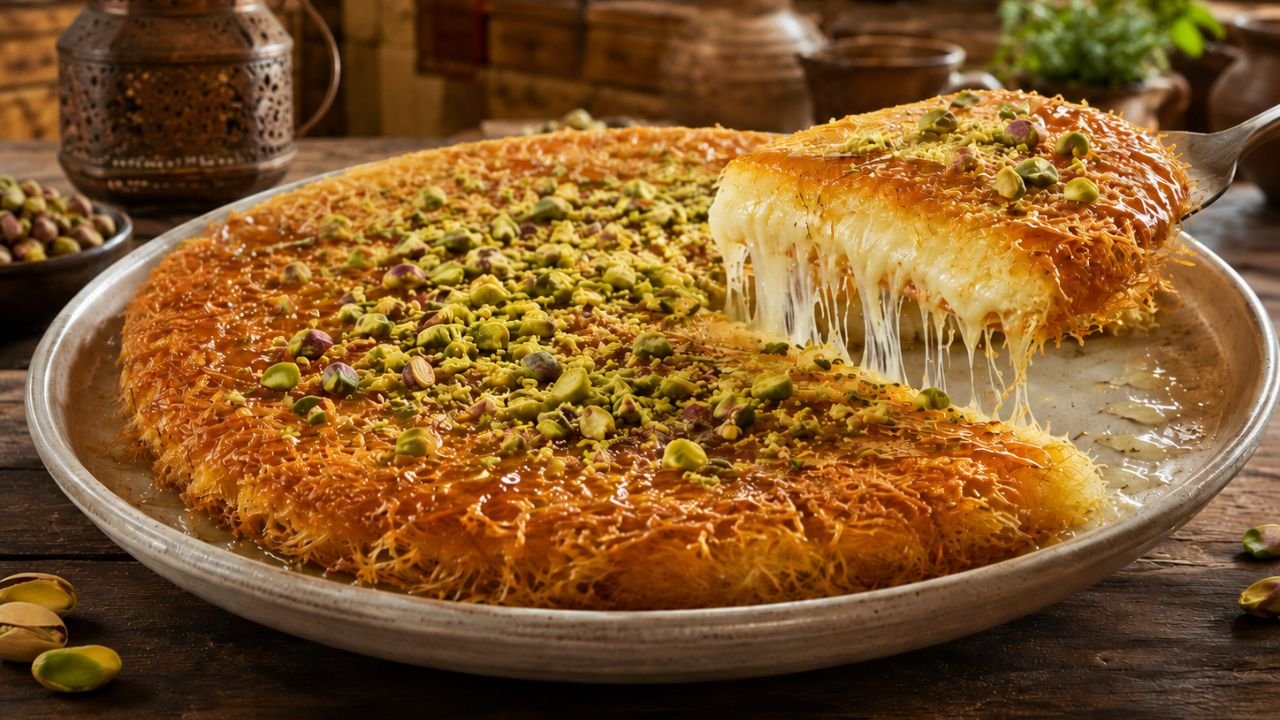
Mohammad Abbas Favorite Kunafa Dessert You Must Try is the kind of dessert that feels celebratory the moment it reaches the table. With its golden, crisp top, tender layers beneath, and a syrup finish that glistens just enough to make every slice irresistible, kunafa has earned its place among the most beloved sweets in Middle Eastern cuisine. This version is designed to be rich, fragrant, and satisfying without becoming heavy or overly complicated, so you can recreate that special-occasion feeling at home with confidence.
What makes kunafa so memorable is the contrast. The outer layer bakes into a delicate, buttery crunch, while the center stays soft and creamy. As the warm syrup soaks in, the dessert becomes beautifully balanced: crisp at the edges, luscious in the middle, and sweet without losing structure. Whether you serve it for a family gathering, a holiday table, or simply as a show-stopping dessert after dinner, this recipe delivers a polished result that looks impressive and tastes even better.
In this article, you will find a complete guide to preparing a kunafa dessert with a smooth cheese filling and a golden, bakery-style finish. The method is approachable, the ingredients are easy to source, and the final result has that elegant, luxurious quality people expect from a dessert worth remembering. The secret is in the layering, the butter, the syrup timing, and the patience to let every element settle properly before serving.
Recipe Information
This kunafa recipe is a classic-style dessert made with shredded pastry, melted butter, a creamy cheese filling, and fragrant sugar syrup. It is best served warm so the cheese stays soft and the pastry keeps its crisp appeal. The recipe yields about 8 servings, making it ideal for sharing.
- Recipe Name: Mohammad Abbas Favorite Kunafa Dessert You Must Try
- Recipe Category: Dessert
- Cuisine: Middle Eastern
- Yield: 8 servings
- Preparation Time: 25 minutes
- Cooking Time: 30 minutes
- Total Time: 55 minutes
- Difficulty: Moderate
- Best Served: Warm or slightly warm
- Flavor Profile: Sweet, buttery, creamy, and aromatic
Ingredients
For the best texture, use fresh ingredients and measure everything before you begin. Kunafa is not complicated, but it does reward careful preparation, especially when it comes to buttering the pastry evenly and preparing a syrup that is sweet but not cloying.
- 500 g kunafa dough or shredded kataifi pastry, thawed if frozen
- 200 g unsalted butter, melted
- 2 tablespoons neutral oil
- 300 g mozzarella cheese, shredded or torn into small pieces
- 200 g ricotta cheese or unsalted cream cheese
- 2 tablespoons fine semolina or cornstarch, optional for a firmer filling
- 1 teaspoon rose water, optional
- 1 teaspoon orange blossom water, optional
- 1 tablespoon sugar, for the cheese mixture if needed
- 1 tablespoon finely ground pistachios, for garnish
- 2 tablespoons chopped pistachios, for garnish
For the syrup:
- 200 g sugar
- 120 ml water
- 1 tablespoon lemon juice
- 1 teaspoon rose water, optional
- 1 teaspoon orange blossom water, optional
Preparation
Start by preparing the syrup first, because it needs time to cool completely before it is poured over the hot kunafa. That temperature contrast is essential. A warm dessert and cool syrup give you the best texture and help the pastry stay crisp rather than soggy.
- In a small saucepan, combine the sugar, water, and lemon juice.
- Bring the mixture to a gentle boil over medium heat, stirring only until the sugar dissolves.
- Once it boils, reduce the heat and simmer for about 7 to 8 minutes until slightly thickened.
- Remove from the heat and stir in rose water or orange blossom water, if using.
- Set the syrup aside to cool completely.
Next, prepare the kunafa dough. If the pastry comes in long strands, separate them gently with your fingers so there are no hard clumps. This step matters because evenly loosened strands absorb the butter more uniformly and bake into a more delicate, golden crust.
- Place the kunafa pastry in a large bowl.
- Pour the melted butter and neutral oil over the pastry.
- Use your hands to rub the butter through the strands until every piece looks lightly coated.
- Keep separating the strands as you mix so the texture stays airy rather than compressed.
Prepare the filling in a separate bowl. The combination of mozzarella and ricotta creates a creamy center that melts beautifully without becoming runny. If you want a slightly firmer interior, a small amount of semolina or cornstarch can help the filling hold its shape.
- Mix the mozzarella and ricotta together in a bowl.
- Add sugar if the cheese mixture tastes too neutral.
- Stir in semolina or cornstarch if you want a more stable filling.
- Add rose water or orange blossom water very lightly, only if you enjoy a floral note.
Now assemble the dessert. Choose a round baking pan or a shallow oven-safe tray. A metal pan usually gives a better crisp finish because it conducts heat evenly and helps the bottom develop a deeper golden color.
- Preheat the oven to 180°C.
- Brush the pan generously with melted butter or lightly grease it with oil and butter together.
- Spread about half of the kunafa pastry into the bottom of the pan.
- Press it down gently and evenly with your hands or the back of a spoon.
- Add the cheese filling over the pastry in an even layer, leaving a small border around the edges.
- Cover the filling with the remaining kunafa pastry.
- Press gently again so the top layer adheres without becoming dense.
At this stage, it is important not to compress the pastry too much. Kunafa should be lightly packed, not crushed. The pastry needs room to brown and crisp. A tender hand during assembly will reward you later with a more delicate texture.
Before baking, add a little extra melted butter on top if the surface looks dry. This gives the dessert a more luxurious finish and helps it turn the deep, inviting golden color that makes kunafa so appealing.
- Bake for about 25 to 30 minutes, or until the top becomes golden and the edges look crisp.
- If your oven browns unevenly, rotate the pan once during baking.
- For a stronger top color, finish under the broiler for a short moment, watching carefully so it does not burn.
Once the kunafa is out of the oven, let it rest for 3 to 5 minutes. Then pour the cooled syrup evenly over the hot dessert. The sound and aroma at this moment are part of the experience: the pastry softens slightly as the syrup is absorbed, while the top keeps enough crunch to remain satisfying.
- Pour the syrup slowly and evenly over the baked kunafa.
- Allow it to sit for 5 to 10 minutes so the syrup settles into the layers.
- Sprinkle chopped pistachios over the top.
- Slice and serve warm.
For the cleanest slices, use a sharp knife and wipe it between cuts. Kunafa is at its best when it is warm enough for the cheese to stay soft, but not so hot that the filling spills out immediately. If you are serving guests, let the dessert rest briefly before cutting so the layers hold together beautifully.
Tips
A truly excellent kunafa comes down to a few small habits that make a big difference. These tips help you keep the pastry crisp, the filling creamy, and the final flavor balanced.
- Use cooled syrup on hot kunafa. This is one of the most important texture rules.
- Do not over-saturate the pastry with butter. It should be evenly coated, not dripping.
- Separate the kunafa strands well before assembling so the crust bakes evenly.
- Choose a cheese filling that melts smoothly and is not overly salty.
- If your cheese is very salty, soak or rinse it lightly and pat it dry before mixing.
- Press the layers gently. Too much pressure can make the dessert heavy.
- Serve soon after baking for the best contrast between crisp pastry and soft filling.
- Use pistachios sparingly for elegance rather than overwhelm; they should decorate, not dominate.
Another useful tip is to think about sweetness in layers. The syrup should be sweet enough to perfume the dessert, but not so intense that it hides the buttery pastry or the creaminess of the filling. If you prefer a lighter finish, you can start by adding less syrup and serving a little extra on the side.
Variations
Kunafa is wonderfully adaptable, and once you master the basic method, you can tailor it to different tastes and occasions. Some versions lean richer, some lean more floral, and others offer a cleaner, simpler profile. Each one can feel special when prepared with care.
- Nutty version: Replace part of the cheese filling with finely chopped pistachios or almonds for added texture.
- Cream-filled version: Use ashta or thick clotted cream in place of some of the cheese for a softer, more indulgent center.
- Orange blossom version: Increase the orange blossom water slightly for a more perfumed dessert, but use a light hand.
- Rose-scented version: Add a touch more rose water to the syrup for a delicate floral finish.
- Chocolate twist: Drizzle a small amount of melted dark chocolate over the top after baking for a modern presentation.
- Mini kunafa portions: Bake the dessert in smaller ramekins or individual molds for elegant single servings.
You can also adjust the texture based on your preference. If you enjoy a firmer bite, use a little more semolina in the filling. If you want a softer, creamier center, keep the cheese mixture lighter and avoid overbaking. The beauty of kunafa is that it can be dressed up or simplified without losing its charm.
For a more festive appearance, garnish with a wider scatter of pistachios and serve with extra syrup in a small pitcher. For a more refined presentation, keep the topping minimal and let the golden surface do most of the visual work. Either approach can be elegant when the dessert is baked properly.
Conclusion
Mohammad Abbas Favorite Kunafa Dessert You Must Try is more than just a sweet recipe; it is an experience built around texture, aroma, and the pleasure of sharing something beautiful. Every bite offers contrast: crisp pastry, creamy filling, warm syrup, and the subtle perfume of pistachio and blossom water. That balance is what makes kunafa unforgettable and why it continues to be treasured across tables and celebrations.
What makes this recipe especially rewarding is its ability to feel impressive without being inaccessible. With a few straightforward steps and a little attention to detail, you can create a dessert that looks polished, tastes luxurious, and brings a genuine sense of occasion to the table. The key is to respect each stage: cool the syrup, butter the pastry evenly, layer gently, and bake until the top turns deeply golden.
When served warm, kunafa has a kind of effortless glamour. It slices beautifully, stretches slightly when the cheese is still soft, and carries a sweetness that feels both familiar and special. Whether you are making it for guests, family, or your own quiet indulgence, this dessert delivers a memorable finish. Once you try it, it is easy to understand why kunafa remains a favorite worth returning to again and again.