
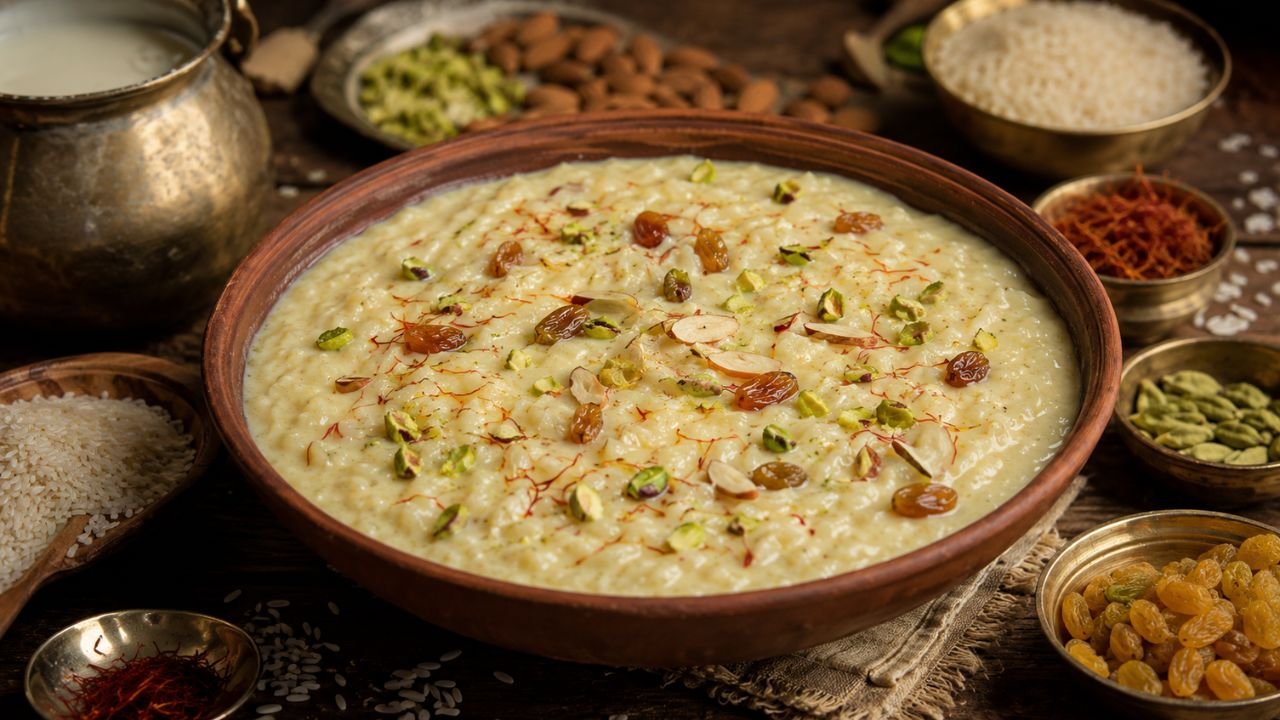
There are desserts that feel festive, and then there are desserts that feel like home. This homemade rice kheer payasam belongs to the second kind. It is creamy, fragrant, gently sweet, and deeply comforting, the sort of dessert that turns an ordinary meal into something memorable. Inspired by the classic Indian tradition of slow-cooked milk puddings, this version brings together rice, milk, sugar, cardamom, and a touch of ghee into one silky bowl of warmth. It is the kind of sweet dish that feels equally welcome at a family celebration, a temple-style offering, a holiday dinner, or a quiet evening when only something soothing will do.
The charm of rice kheer payasam lies in its simplicity. It does not depend on complicated techniques or rare ingredients. Instead, it rewards patience, gentle heat, and a little attention while the milk slowly thickens and the rice turns tender. As the mixture simmers, the aroma of cardamom fills the kitchen, the milk takes on a richer body, and the rice softens into a soft, luxurious texture. A handful of nuts adds crunch, raisins bring bursts of sweetness, and saffron or jaggery can be added depending on the mood and regional style you prefer.
This recipe is designed for sweet lovers who enjoy a dessert that is balanced rather than overly heavy. It is rich enough to feel indulgent but still delicate enough to let the flavor of milk and rice shine. Whether you call it rice kheer or payasam, the result is the same: a beautiful bowl of tradition, comfort, and celebration.
Recipe Information
Recipe Name: Homemade Rice Kheer Payasam
Preparation Time: 15 minutes
Cooking Time: 35 minutes
Total Time: 50 minutes
Recipe Category: Dessert
Recipe Cuisine: Indian
Recipe Yield: 6 servings
Keywords: rice kheer, payasam, Indian dessert, milk pudding, festive sweet, homemade kheer, traditional dessert
Ingredients
For the best result, use fresh milk, good-quality rice, and a gentle hand with the sweetness. The ingredients are simple, but the final texture depends on care and timing.
- 1/2 cup short-grain rice or basmati rice
- 1 tablespoon ghee
- 1 liter full-fat milk
- 1/2 cup sugar, adjusted to taste
- 1/4 teaspoon saffron strands, optional
- 1/2 teaspoon cardamom powder
- 2 tablespoons chopped almonds
- 2 tablespoons chopped cashews
- 1 tablespoon raisins
- 1 tablespoon pistachios, chopped, optional
- 2 tablespoons water, for soaking saffron if using
If you prefer a more traditional southern-style payasam, you can replace part of the sugar with jaggery after the milk has thickened. If you want a brighter aroma, a few strands of saffron will add both color and elegance. The nuts are flexible as well; almonds and cashews are classic, but pistachios and even a few melon seeds can be used for extra texture.
Preparation
Start by rinsing the rice thoroughly in water until the water runs mostly clear. This step removes excess starch from the surface and helps prevent the kheer from becoming gluey too early. After rinsing, soak the rice in enough water for about 15 to 20 minutes. Soaking softens the grains slightly, which helps them cook evenly and blend into the milk more smoothly.
Meanwhile, heat the ghee in a heavy-bottomed pan or pot. Add the chopped cashews and almonds, and sauté them on low heat until they turn lightly golden. Add the raisins last, because they puff up quickly and can burn if left too long. Remove the toasted nuts and raisins from the pan and keep them aside. This step is small, but it adds a deep, nutty aroma to the finished dessert and makes every spoonful more interesting.
In the same pan, pour in the milk and bring it to a gentle boil. Stir occasionally so the milk does not stick to the bottom. Once the milk begins to boil, lower the heat and let it simmer. Add the soaked rice after draining it well. Stir well, then continue cooking on a low flame. The rice should slowly soften while the milk reduces. This is the heart of the recipe, and it is where patience matters most. Stir every few minutes, especially along the bottom and corners of the pan, to prevent scorching.
As the rice cooks, the milk will begin to thicken. The grains will swell and become tender, and the mixture will grow creamier with time. Depending on the rice type, this may take around 20 to 25 minutes. If the mixture becomes too thick before the rice is fully cooked, add a splash of hot milk or hot water. Use only a little at a time so the kheer remains rich and not thin.
When the rice is fully cooked and the milk has taken on a luscious, slightly creamy consistency, add the sugar. Stir until it dissolves completely. Add cardamom powder and saffron at this stage. If using saffron, soak it in a tablespoon or two of warm water or warm milk for a few minutes before adding it to the pot. This helps release its color and fragrance more evenly. At this point, the kheer should smell warm, floral, and inviting.
Allow the payasam to simmer for another 5 to 7 minutes after adding sugar. This short final simmer brings all the flavors together. Add the toasted nuts and raisins, reserving a few for garnish if you like a more polished presentation. Stir gently and taste for sweetness. If the kheer feels too thick, you can loosen it slightly with a little warm milk. If you want a more dessert-like spoonable texture, continue cooking for a few extra minutes until it reaches the consistency you love.
Once done, turn off the heat and let the rice kheer payasam rest for a few minutes. It will continue to thicken slightly as it cools. You can serve it warm for a comforting finish to a meal, or chilled for a smoother, more pudding-like experience. Either way, the dessert stays elegant, satisfying, and deeply nostalgic.
Tips
Use a heavy-bottomed pan. This helps distribute heat evenly and reduces the chance of milk sticking or burning at the bottom. Milk-based desserts need gentle heat, and a sturdy pot makes the process much easier.
Stir regularly, but not aggressively. A soft, steady stir is enough to keep the rice moving and the milk from catching. Overstirring can break the rice too much and make the texture less refined.
Choose the right rice. Short-grain rice often gives a creamier texture, while basmati gives a lighter, more fragrant finish. Both work well, so choose based on the style you want. Short-grain rice is usually preferred when you want the kheer to feel richer and silkier.
Do not rush the milk reduction. The depth of flavor comes from slowly concentrating the milk. High heat may seem faster, but it can lead to sticking, uneven cooking, and a flat taste.
Add sugar near the end. If sugar is added too early, it can slow the rice from softening. Waiting until the rice is nearly cooked gives better texture and better control over sweetness.
Taste before serving. Some people like kheer lightly sweet, while others want a richer dessert. Adjusting sweetness at the end keeps the flavor balanced and prevents overdoing it.
Resting improves the texture. Like many milk desserts, payasam thickens as it cools. This means the texture you see in the pan may not be the final one in the bowl. Let it rest for a few minutes before deciding whether to add a little more milk.
Variations
If you want a more traditional South Indian-style payasam, replace the sugar with jaggery. To do this safely, cook the rice in milk first until tender, then add melted jaggery syrup after the mixture has cooled slightly. This helps prevent curdling and keeps the flavor deep and earthy. Jaggery gives the dessert a rustic sweetness that feels especially comforting during festivals.
For a richer festive version, add a few strands of saffron and a spoonful of finely grated khoya or evaporated milk toward the end. This creates a more luxurious finish and makes the dessert even more indulgent. It is especially nice for special dinners or celebrations when you want a fuller, creamier bowl of kheer.
You can also create a coconut-based variation by replacing part of the milk with thick coconut milk. This gives the payasam a more coastal flavor profile and a softer, tropical sweetness. Coconut milk should be added carefully and ideally toward the end to preserve its aroma and keep the texture smooth.
For a lighter everyday version, reduce the sugar slightly and increase the milk a little. This keeps the dessert balanced and less dense. A lighter version works well after a heavy meal or as a simple family sweet dish during the week.
Some cooks like adding a pinch of nutmeg along with cardamom for a deeper aroma. Others enjoy a few strands of saffron for color and elegance. You can even add thinly sliced banana or chopped dates in small quantities for a more wholesome variation, though the classic version remains the most timeless.
If you prefer a completely vegetarian festive offering with a slightly different texture, replace some of the rice with broken wheat or semolina, though that shifts the dessert away from classic rice kheer. The principle stays the same: slow cooking, gentle sweetness, and a silky finish.
Conclusion
Homemade rice kheer payasam is more than a dessert. It is a memory in a bowl, a recipe that carries tradition, family warmth, and the quiet pleasure of making something beautiful from basic ingredients. Its appeal lies in the way it transforms simple milk and rice into something rich, aromatic, and satisfying. Every spoonful offers softness from the rice, creaminess from the milk, sweetness from the sugar, and a delicate lift from cardamom and saffron. The toasted nuts and raisins add texture, making the dessert feel complete and thoughtfully layered.
What makes this recipe especially lovable is how adaptable it is. It can be plain and comforting, or dressed up for celebrations. It can be served warm on a cool evening or chilled for a more refreshing finish. It can be made with sugar or jaggery, with saffron or without, with short-grain rice or basmati. No matter how you customize it, the spirit stays the same: slow, tender, satisfying sweetness.
For anyone who loves Indian desserts, this rice kheer payasam is a recipe worth keeping close. It is elegant without being complicated, classic without being boring, and rich without becoming overwhelming. Serve it after a festive meal, make it for a loved one, or prepare it simply because a sweet craving calls for something deeply comforting. Once you taste it, you will understand why this homemade version remains a favorite for so many sweet lovers.