
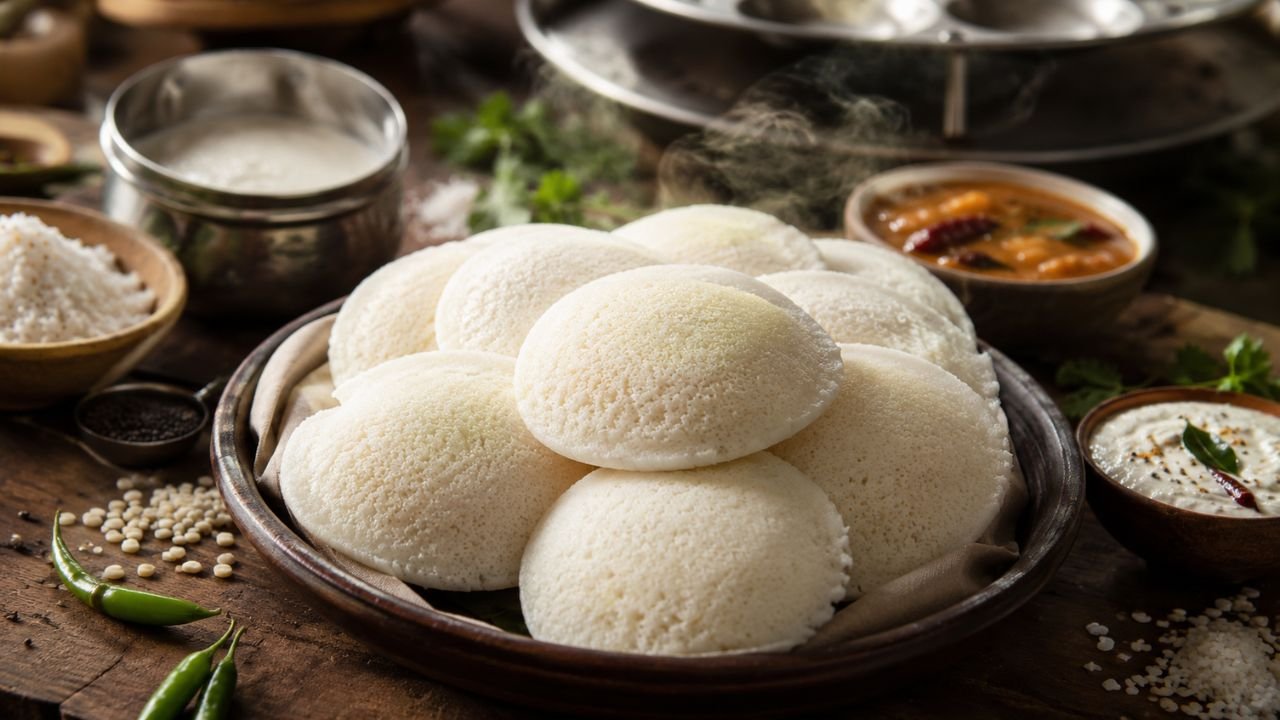
Anshul Kamboj loves this delicious steamed idlis recipe because it brings together comfort, lightness, and clean homemade flavor in one simple plate. Steamed idlis are soft, fluffy, and gentle on the stomach, making them a perfect breakfast, lunch box option, or evening snack. This recipe uses the classic South Indian method of soaking rice and urad dal, grinding them into a smooth batter, fermenting it naturally, and steaming it until the idlis turn airy and tender. The beauty of idlis is that they are made with very basic ingredients, yet the result feels fresh, wholesome, and satisfying. When served with coconut chutney, sambar, tomato chutney, or even a simple podi powder, idlis become a complete meal full of taste and comfort. This article explains the full method in a clear, practical way so you can make soft steamed idlis at home without confusion.
Recipe Information
This steamed idlis recipe is based on a traditional South Indian cooking style where fermentation plays the most important role. The batter is made with idli rice, urad dal, and a small amount of fenugreek seeds. After soaking and grinding, the batter is kept in a warm place until it rises and becomes light. Once fermented, it is poured into greased idli moulds and steamed. The result is a batch of soft, white, fluffy idlis that taste fresh and mild. This recipe is ideal for people who want a healthy homemade dish without deep frying or heavy spices.
- Preparation time is 20 minutes, excluding soaking and fermentation time.
- Cooking time is 15 minutes for one batch of steamed idlis.
- Total active time is 35 minutes when the batter is already fermented.
- This recipe makes about 16 medium idlis, enough for 4 servings.
- The dish belongs to South Indian cuisine and works well for breakfast or light dinner.
Idlis are often loved by fitness-focused people because they are steamed instead of fried. They feel light, yet they can keep you full when eaten with protein-rich sambar. The natural fermentation also gives the batter a soft texture and a gentle tangy taste. A good idli should not feel dense, rubbery, or dry. It should break easily with a spoon, soak chutney nicely, and remain soft even after cooling for some time. To get this result, the right soaking, grinding, batter thickness, fermentation, and steaming time all matter.
Ingredients
The ingredients for steamed idlis are simple, but each one has a clear purpose. Idli rice gives body and structure. Urad dal adds softness and airiness. Fenugreek seeds help fermentation and improve the texture. Salt balances the flavor. Water brings the batter to the right consistency. For the best result, use good-quality idli rice or parboiled rice. Regular raw rice can also be used, but idli rice gives a softer result. Fresh urad dal is equally important because old dal may not grind well and may not make the batter fluffy.
- 2 cups idli rice or parboiled rice
- 1 cup whole or split urad dal without skin
- 1 teaspoon fenugreek seeds
- 1 teaspoon salt, or as needed
- Water as required for soaking and grinding
- Oil or ghee for greasing the idli moulds
- Coconut chutney, sambar, or tomato chutney for serving
For a balanced texture, keep the rice and dal ratio close to 2:1. This ratio helps the idlis become soft but not too sticky. Fenugreek seeds should not be skipped because they support better fermentation, especially in cooler weather. While grinding, add water slowly instead of pouring too much at once. A thick, smooth, and pourable batter is better than a watery batter. If the batter becomes too thin, the idlis may turn flat and may not rise properly during steaming.
Salt can be added before or after fermentation depending on the weather. In warm weather, adding salt before fermentation is fine. In cold weather, it is better to add salt after fermentation because salt may slow down the rising process. For serving, classic coconut chutney and hot sambar are the best choices. However, idlis also taste good with peanut chutney, coriander chutney, curry leaf podi, or even a light vegetable stew.
Preparation
Start by washing the idli rice two to three times until the water looks clearer. Place the rice in a large bowl and cover it with enough water. In another bowl, wash the urad dal and fenugreek seeds together. Soak both bowls for about 5 to 6 hours. Soaking helps the rice and dal soften, making them easier to grind. It also supports better fermentation later. Do not rush this step because poorly soaked grains can make the batter rough and heavy.
- Wash 2 cups idli rice and soak it in enough water for 5 to 6 hours.
- Wash 1 cup urad dal with fenugreek seeds and soak separately for 5 to 6 hours.
- Drain the soaked dal and grind it first with a little water until smooth and fluffy.
- Drain the soaked rice and grind it into a slightly coarse but smooth batter.
- Mix both batters together in a deep bowl using clean hands or a spoon.
Grinding the urad dal properly is the key to soft idlis. The dal batter should look light, smooth, and airy. If using a wet grinder, the texture usually becomes better because the grinding is slow and even. If using a mixer grinder, grind in short breaks so the batter does not become hot. Heat can affect fermentation and reduce softness. Add chilled water little by little if needed. The rice batter should not be completely watery. A slight grainy feel is fine because it gives structure to the idlis.
After grinding, mix the rice batter and dal batter well. The bowl should be large enough because the batter will rise during fermentation. Cover the bowl loosely and keep it in a warm place for 8 to 12 hours. In summer, fermentation may happen faster. In winter, it may take longer. The batter is ready when it rises, becomes light, and shows tiny air bubbles. It should have a mild fermented smell, not a sour or unpleasant smell. Once fermented, add salt if you have not added it earlier. Mix gently without overbeating the batter.
- Grease the idli moulds lightly with oil or ghee.
- Pour the fermented batter into each mould, filling about three-fourths full.
- Heat water in an idli steamer or deep pot until it starts steaming.
- Place the filled idli stand inside and cover the steamer tightly.
- Steam on medium heat for 12 to 15 minutes until the idlis are cooked.
Do not steam idlis on very high heat because they may become hard outside and uneven inside. Medium heat gives soft and even cooking. After 12 minutes, insert a toothpick or knife into one idli. If it comes out clean, the idlis are ready. Turn off the heat and let them rest for 2 to 3 minutes before removing. This short rest makes it easier to take them out without breaking. Use a wet spoon to gently lift each idli from the mould.
Tips
Soft idlis depend on small details. The first important tip is to use fresh urad dal. If the dal is too old, the batter may not become fluffy. The second tip is to avoid adding too much water while grinding. A thick batter rises better than a thin batter. The third tip is to ferment the batter in a warm place. Fermentation is not just about time; it is also about temperature. If your kitchen is cold, keep the batter inside an oven with the light on or near a warm corner.
- Use fresh urad dal for better volume and softness.
- Add water slowly while grinding to control batter thickness.
- Keep the batter warm during fermentation for better rise.
- Do not overmix the fermented batter because it can lose air.
- Steam idlis on medium heat and avoid opening the lid too early.
If the batter does not rise after 12 hours, do not panic. Place it in a warmer spot and wait a little longer. You can also place the bowl inside a slightly warm oven that has been turned off. Never place the batter on direct heat. If the batter smells too sour, it may have fermented too much. In that case, use it quickly and avoid keeping it outside longer. A perfectly fermented batter has a mild tang and a light texture.
Another useful tip is to check the batter consistency before steaming. It should be thick but pourable, like a smooth pancake batter. If it is too thick, add one or two tablespoons of water and mix gently. If it is too thin, you cannot fully fix it, but you can add a little idli rava or rice flour and rest it for a short time. Also, always make sure there is enough water in the steamer before placing the idli stand inside. If the water dries out, the idlis may burn at the bottom or turn dry.
Variations
Classic steamed idlis are simple and mild, but you can make many tasty variations using the same basic batter. For vegetable idlis, add finely chopped carrots, beans, coriander leaves, and a little grated ginger to the batter before steaming. This makes the idlis colorful and more filling. For podi idlis, sprinkle a little idli podi inside the mould before pouring the batter, or toss cooked mini idlis with podi and ghee. For kids, mini idlis are a fun option because they are easy to eat and look attractive.
- Vegetable idlis can be made with carrots, beans, peas, and coriander.
- Mini idlis are perfect for lunch boxes and quick snacks.
- Podi idlis taste rich when tossed with ghee and spice powder.
- Rava idlis can be made quickly without long fermentation.
- Oats idlis can be made for a lighter, fiber-rich version.
You can also make stuffed idlis by adding a small spoon of spiced potato filling between two layers of batter. Pour a little batter into the mould, add filling, and cover with more batter before steaming. This creates a soft idli with a flavorful center. Another simple variation is curry leaf idli, where finely chopped curry leaves, green chili, and ginger are mixed into the batter. This gives a fresh aroma and a gentle spicy taste.
For a healthier twist, you can replace part of the rice with millets such as barnyard millet, foxtail millet, or little millet. Millet idlis have a slightly earthy flavor and work well with spicy chutney. However, millet batter may need careful fermentation because different grains absorb water differently. Start by replacing only half the rice with millet until you understand the texture. You can also make brown rice idlis, but they may be slightly denser than regular idlis.
Leftover idlis can also be turned into new dishes. Cut them into pieces and toss with mustard seeds, curry leaves, onion, and light spices to make idli upma. You can also make fried idli bites, masala idli, or sambar idli. These variations are useful when you have extra idlis from breakfast and want to serve them differently later in the day.
Conclusion
Anshul Kamboj loves this delicious steamed idlis recipe because it is simple, soft, and satisfying without feeling heavy. It uses basic ingredients, but the right method turns them into a comforting homemade meal. The most important parts are proper soaking, careful grinding, warm fermentation, and gentle steaming. Once you understand these steps, making idlis at home becomes easy and reliable. Serve them fresh with coconut chutney and sambar for the best taste. You can also try vegetable idlis, mini idlis, podi idlis, or millet idlis for variety. This recipe is perfect for anyone who wants a healthy, clean, and flavorful dish that works for breakfast, dinner, or a light snack.