
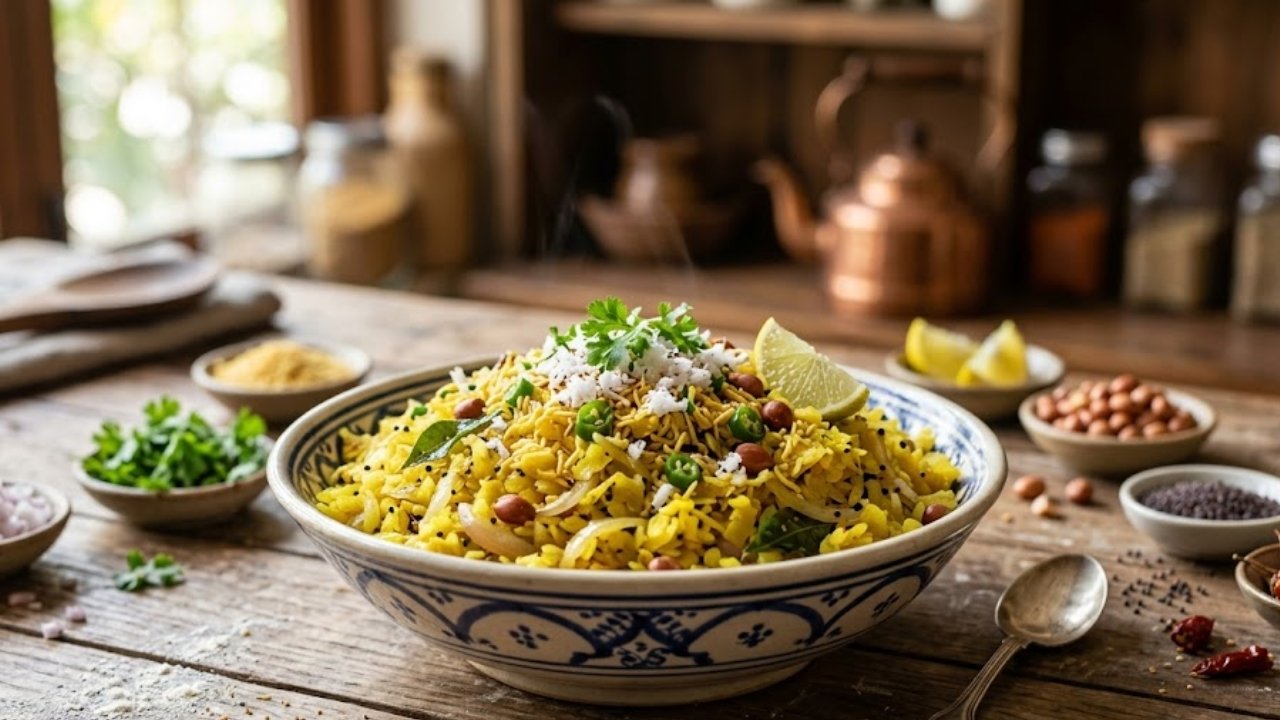
Sharad Pawar’s Favorite Diet Breakfast Poha Looks Fresh And Tasty is a wholesome Indian breakfast recipe that beautifully combines nutrition, simplicity, and flavor in every bite. This light yet satisfying poha recipe is inspired by the traditional Maharashtrian style of cooking where flattened rice is transformed into a vibrant morning dish with onions, green chilies, peanuts, turmeric, curry leaves, and fresh coriander. Known for being easy on the stomach while still keeping you energized for hours, poha has remained a timeless breakfast favorite across Indian households.
This version focuses on freshness and balance, making it ideal for anyone looking for a healthy breakfast option without compromising on taste. The soft texture of soaked poha pairs perfectly with crunchy peanuts and aromatic spices, while a touch of lemon juice enhances the overall flavor with refreshing brightness. It is quick to prepare, low in calories, rich in carbohydrates, and packed with fiber and protein from nuts and vegetables.
The recipe is especially suitable for busy mornings because it comes together in under half an hour and requires minimal preparation. Whether served with hot tea, yogurt, or fresh fruit, this poha recipe delivers comfort and nourishment together. The colorful presentation also makes it visually appealing and appetizing.
Unlike oily breakfast dishes, this poha remains light and naturally flavorful. The use of curry leaves and mustard seeds creates a fragrant base that gives the recipe its authentic Indian touch. Fresh coriander and grated coconut can also be added for an elevated taste and texture. Every spoonful offers softness, crunch, spice, and freshness in perfect harmony.
Poha is also highly versatile and can be adapted to different dietary preferences. Additional vegetables like peas, carrots, and capsicum can increase its nutritional value while preserving its delicious simplicity. Because flattened rice absorbs flavors quickly, the recipe becomes deeply aromatic with minimal spices.
This breakfast recipe has gained popularity not only because of its traditional roots but also due to its healthy profile. It is naturally gluten-free when prepared carefully and can easily become vegan. The light seasoning allows the natural flavors of ingredients to shine, making it a comforting and refreshing meal at any time of day.
Recipe Information
This healthy poha recipe is inspired by classic Maharashtrian breakfast traditions and focuses on freshness, light seasoning, and balanced nutrition. The recipe is suitable for beginners because it requires simple ingredients and uncomplicated cooking techniques.
- Preparation Time: 15 minutes
- Cooking Time: 15 minutes
- Total Time: 30 minutes
- Recipe Category: Breakfast
- Recipe Cuisine: Indian
- Recipe Yield: 4 servings
- Calories: Approximately 260 kcal per serving
The preparation process mainly involves rinsing and softening the poha correctly. Over-soaking can make it mushy, while under-soaking may leave it dry. The ideal texture should be soft yet separate. Cooking is done quickly over medium heat, ensuring that all ingredients remain fresh and vibrant.
This recipe works wonderfully as a morning breakfast, evening snack, or even a light lunch. It is filling without feeling heavy and pairs beautifully with masala chai, buttermilk, or fresh fruit juice.
Ingredients
The ingredients used in this recipe are simple, affordable, and commonly available in Indian kitchens. Each ingredient contributes either flavor, texture, aroma, or nutritional value to the dish.
- 2 cups thick poha (flattened rice)
- 2 tablespoons oil
- 1 teaspoon mustard seeds
- 8 to 10 curry leaves
- 2 green chilies finely chopped
- 1 medium onion finely chopped
- 1 medium potato finely diced
- 1/3 cup peanuts
- 1/2 teaspoon turmeric powder
- Salt to taste
- 1 teaspoon sugar
- 1/3 cup green peas
- 2 tablespoons fresh coriander chopped
- 1 tablespoon lemon juice
- 2 tablespoons grated fresh coconut optional
- 2 tablespoons pomegranate seeds optional
Thick poha is preferred because it absorbs moisture gradually and maintains a fluffy texture after cooking. Thin poha may become soggy quickly and is therefore not ideal for this preparation.
Peanuts provide a satisfying crunch and also increase the protein content of the dish. Potatoes make the recipe heartier, while peas add sweetness and nutritional balance. The curry leaves and mustard seeds release a warm and earthy aroma that defines authentic poha.
Lemon juice should always be added at the end to preserve its fresh flavor and natural brightness. Fresh coriander gives the final dish a vibrant appearance and refreshing taste.
Preparation
Start by placing the poha in a large sieve or colander. Rinse it gently under running water for a few seconds until the flakes soften slightly. Avoid soaking the poha for too long because excess moisture can ruin the texture. Let the rinsed poha rest for about 10 minutes so it absorbs the remaining water naturally.
While the poha is resting, prepare all the vegetables and spices. Chop the onions finely, dice the potatoes into small cubes, slit the green chilies, and keep the curry leaves ready. Having all ingredients prepared beforehand helps maintain smooth cooking.
Heat oil in a large pan over medium heat. Add mustard seeds and allow them to crackle completely. Once they begin popping, add curry leaves and green chilies. Stir carefully because the curry leaves may splutter slightly.
Add peanuts to the pan and roast them for two to three minutes until they become golden and crunchy. This step enhances their flavor and creates a satisfying texture contrast in the final dish.
Next, add chopped onions and sauté until they become translucent and lightly golden. Do not overcook the onions because poha tastes best when the flavors remain light and fresh.
Add diced potatoes and cook for several minutes until they become tender. Stir occasionally to prevent sticking. If required, sprinkle a little water and cover the pan briefly to speed up cooking.
Once the potatoes soften, add green peas along with turmeric powder, salt, and sugar. Mix everything thoroughly so the spices coat the vegetables evenly. The turmeric instantly gives the mixture its signature bright yellow color.
Fluff the softened poha gently using your fingers before adding it to the pan. This helps separate the flakes and prevents clumping. Add the poha gradually and mix carefully using a light hand so the flakes do not break.
Cook the poha mixture for about three to four minutes on low heat. Stir occasionally to ensure even seasoning. Avoid overcooking because poha can become dry if heated for too long.
Turn off the heat and immediately add lemon juice and chopped coriander. Mix gently to distribute the freshness evenly throughout the dish. Garnish with grated coconut and pomegranate seeds if desired.
Serve the poha hot while it remains soft and aromatic. It tastes best immediately after preparation when the peanuts are crunchy and the herbs remain fresh.
This recipe creates a comforting breakfast that feels both nourishing and satisfying. The combination of spices, vegetables, and herbs creates layers of flavor without making the dish overly heavy.
Tips
Choosing the correct variety of poha is one of the most important aspects of the recipe. Thick poha produces the best texture because it remains fluffy after rinsing. Thin poha often becomes sticky and soft very quickly.
Always rinse poha gently instead of soaking it in water. Excess moisture can turn the dish mushy and dense. If the poha feels too dry after resting, sprinkle a few drops of water before cooking.
Roasting peanuts separately for a few extra minutes improves their crunch and flavor significantly. Crunchy peanuts create an enjoyable contrast against the soft poha flakes.
Use fresh curry leaves whenever possible because they provide a distinct aroma that dried leaves cannot replicate. Fresh lemon juice should also be added only at the end to maintain brightness.
If preparing poha for guests, keep all ingredients chopped and ready beforehand. Since the actual cooking process is quick, advance preparation helps achieve the best texture and flavor.
A small amount of sugar balances the spices beautifully and enhances the overall taste without making the dish sweet. This is a common traditional technique used in Maharashtrian poha recipes.
Cooking on low heat after adding poha is essential. High heat may dry out the flakes and reduce their softness. Gentle cooking preserves the light texture and freshness.
For additional nutrition, finely chopped carrots, beans, or capsicum can be included. However, avoid adding too many vegetables because the simplicity of poha is part of its appeal.
If you enjoy extra spice, garnish the dish with finely chopped green chilies or serve it alongside spicy chutney. Yogurt also pairs very well with poha and adds cooling richness.
Variations
One of the greatest strengths of poha is its versatility. Different regions of India prepare poha using unique ingredients and techniques while preserving its comforting essence.
Kanda Poha is one of the most traditional versions and focuses mainly on onions, peanuts, turmeric, and lemon juice. It is simple, flavorful, and extremely popular in Maharashtra.
Batata Poha includes extra potatoes for a heartier and more filling breakfast. The soft potatoes blend beautifully with the fluffy poha and crunchy peanuts.
Vegetable Poha is ideal for those seeking additional nutrition. Carrots, capsicum, beans, sweet corn, and peas can create a colorful and nutrient-rich version of the recipe.
Indori Poha is another famous variation known for its sweet and savory balance. It is often topped with sev, fennel seeds, coriander, pomegranate seeds, and sometimes even crispy namkeen.
For a protein-rich version, roasted chickpeas, paneer cubes, tofu, or sprouts can be added. These ingredients make the recipe more substantial while preserving its healthy qualities.
A coconut poha variation uses fresh grated coconut generously, giving the dish a softer and mildly sweet flavor profile. This style is especially popular in certain coastal regions.
You can also prepare a vegan version easily because the traditional recipe already relies on plant-based ingredients. Simply avoid yogurt-based side dishes if serving completely vegan meals.
Some people enjoy adding raisins for subtle sweetness, while others prefer extra green chilies for stronger heat. The recipe adapts beautifully to personal taste preferences.
For festive presentations, garnish with nylon sev, fresh coriander, coconut, and pomegranate seeds. This creates a visually attractive breakfast suitable for gatherings and celebrations.
Conclusion
Sharad Pawar’s Favorite Diet Breakfast Poha Looks Fresh And Tasty perfectly represents how simple ingredients can create a deeply satisfying and nourishing meal. The combination of soft flattened rice, crunchy peanuts, aromatic spices, and fresh herbs makes this breakfast comforting yet refreshing.
The recipe is quick enough for busy mornings while still offering balanced nutrition and authentic Indian flavor. Its light texture makes it suitable for people seeking healthier breakfast choices without sacrificing taste or satisfaction.
Poha continues to remain one of India’s most beloved breakfast dishes because it is adaptable, affordable, and naturally delicious. Whether prepared traditionally or customized with vegetables and toppings, it always delivers warmth and comfort.
This recipe highlights freshness in every element, from bright turmeric and lemon juice to fragrant coriander and curry leaves. Each spoonful feels wholesome, flavorful, and energizing.
Serve it hot with tea or yogurt and enjoy a breakfast that is both timeless and nourishing. Its simplicity, aroma, and vibrant appearance make it a recipe worth preparing again and again for family breakfasts, relaxed weekends, or healthy everyday meals.