
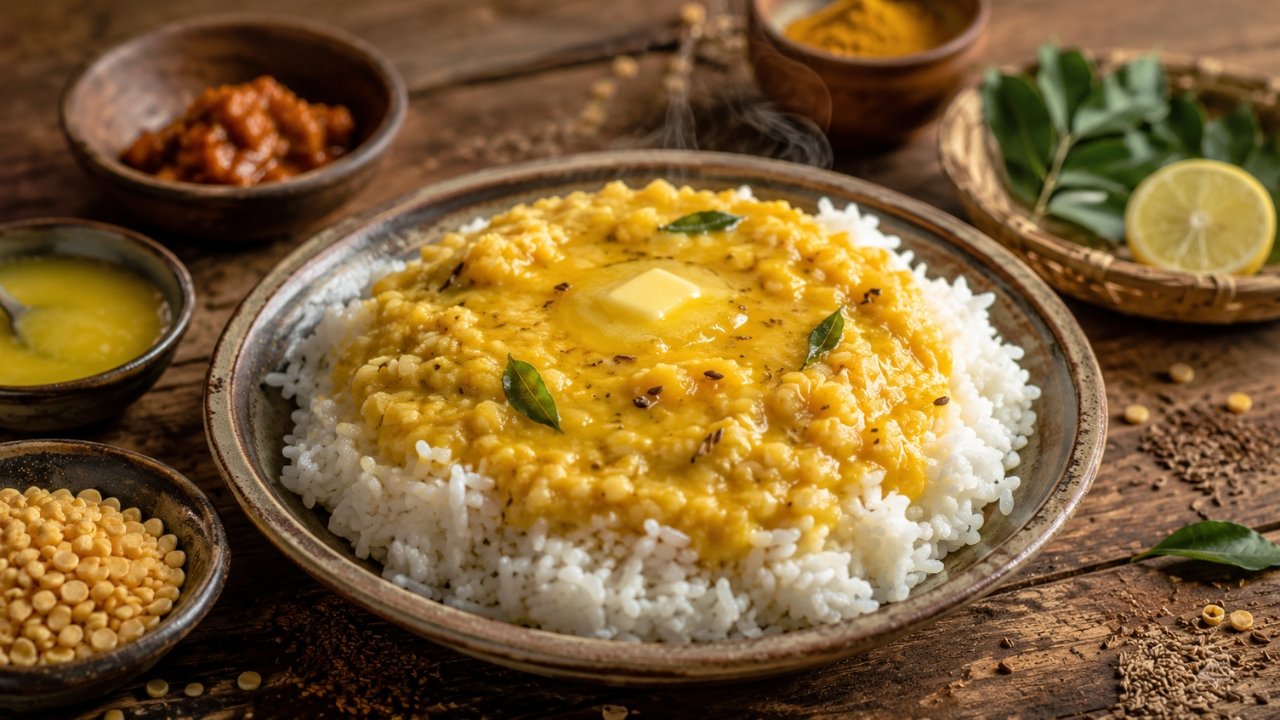
Prajakta Mali Enjoys This Comforting Varan Bhat Tup For Perfect Meal, and it is easy to understand why this dish remains such a beloved comfort food in many Maharashtrian homes. Varan bhat tup is simple, nourishing, and deeply satisfying. It brings together soft steamed rice, silky toor dal tempered with mild spices, and a generous spoonful of ghee that melts into everything and ties the meal together. It is the kind of food that feels humble at first glance but delivers a warm, memorable experience with every bite.
This recipe celebrates the balance that makes varan bhat tup so special. The dal is gently cooked until smooth, the rice is light and fluffy, and the ghee adds richness without making the dish heavy. A little jaggery can soften the edges of the dal, while turmeric and cumin keep the flavor clean and traditional. The result is a meal that is comforting enough for a quiet weekday lunch, restorative enough for a tired evening, and classic enough to serve when you want something honest and wholesome.
For many people, varan bhat tup is more than a recipe. It is a memory of home, a plate served after a long day, or a meal that feels complete without needing many extras. It is also one of the easiest traditional meals to prepare well because the ingredients are modest and the technique is simple. The key is attention: rinsing the dal properly, cooking the rice with the right amount of water, and tempering the dal just enough to lift the flavor without overpowering it.
In this version, the recipe stays true to the classic spirit of the dish while giving enough detail to help you make it confidently in any kitchen. Whether you are familiar with Maharashtrian cooking or trying it for the first time, this guide will show you how to create a bowl that is soothing, balanced, and full of everyday charm.
Recipe Information
Recipe Name: Varan Bhat Tup
Preparation Time: 15 minutes
Cooking Time: 30 minutes
Total Time: 45 minutes
Recipe Category: Main Course
Recipe Cuisine: Maharashtrian
Recipe Yield: 4 servings
Calories: 360 kcal per serving
Best For: Lunch, dinner, comfort meal, traditional vegetarian meal
Ingredients
For the rice and dal, keep the ingredients simple and fresh. The beauty of this dish comes from clean flavors and proper cooking, not from a long ingredient list.
- 1 cup toor dal (split pigeon peas)
- 1 cup rice
- 4 cups water for cooking dal, plus extra as needed
- 2 1/2 cups water for cooking rice, or as needed depending on rice type
- 1/2 teaspoon turmeric powder
- 1 to 1 1/2 teaspoons salt, or to taste
- 1 to 2 teaspoons jaggery, optional but recommended for balance
- 2 tablespoons ghee, plus more for serving
- 1 teaspoon cumin seeds
- 1 to 2 green chilies, slit
- 1 pinch asafoetida (hing)
- 1 tablespoon chopped coriander leaves for garnish
- Optional: 1 teaspoon lemon juice for a slightly brighter finish
If you want to build a fuller plate, you can also serve the meal with a simple pickle, papad, or a light vegetable side. Still, the classic combination of rice, dal, and ghee is enough to stand on its own.
Preparation
Start by rinsing the rice well under running water until the water looks clearer. This helps remove excess starch and keeps the grains separate and soft once cooked. Soak the rice for 10 to 15 minutes if you have extra time. While the rice rests, rinse the toor dal in a few changes of water. The dal does not need a long soak for this recipe, but a brief soak can help it cook a little faster and more evenly.
Next, cook the rice. Add the rinsed rice to a pot with the measured water and a small pinch of salt. Cover and cook on medium heat until the grains are tender and fluffy. If you are using a pressure cooker or rice cooker, follow the usual method for your rice variety. The goal is soft, separate rice that can absorb the dal and ghee beautifully when served. Avoid overcooking the rice, because the final dish should feel gentle and light rather than sticky.
Now move to the dal. In a pressure cooker or heavy pot, add the toor dal, water, turmeric, and a little salt. If you like your varan with a very smooth texture, you can add slightly more water at this stage because the dal will be lightly mashed later. Cook until the dal turns soft and breaks down easily. In a pressure cooker, this usually takes a few whistles depending on the cooker and the quality of the dal. In a pot, it may take longer, but the method is equally good if you keep the heat moderate and stir occasionally.
Once the dal is cooked, mash it gently with a spoon or ladle. The texture should be smooth but not watery. If the dal looks too thick, add a little warm water and stir until it reaches a silky consistency. If it looks too thin, let it simmer uncovered for a few minutes. This part matters because varan is meant to be comforting and spoonable, not dense or heavy. Taste and adjust salt at this stage. Add jaggery if you want the traditional mild sweetness that gives the dal a softer, rounder flavor.
Prepare the tempering in a small pan. Heat the ghee, then add cumin seeds and let them sizzle briefly. Add the slit green chilies and a pinch of asafoetida. The aroma should be warm and inviting, but the spices should not darken too much. Immediately pour this tempering over the cooked dal. Stir gently so that the ghee and spices spread through the entire pot. The tempering gives the dal its signature fragrance and makes the dish feel complete.
If you want a brighter edge, add a tiny splash of lemon juice after switching off the heat. This is optional and should be used carefully, because the classic flavor of varan is subtle and balanced. Finally, sprinkle chopped coriander leaves on top. Keep the dal warm while you finish the rice, because the best way to eat this dish is fresh and hot.
To serve, place a portion of hot rice in a bowl or plate, ladle the varan over or beside it, and add a spoonful of ghee on top. Let the ghee melt into the rice and dal before mixing. This is where the magic happens. The rice becomes glossy, the dal becomes richer, and every bite carries both comfort and simplicity. Eat it slowly and enjoy how the flavors unfold with almost no effort at all.
If you are preparing the meal for guests or family, you can serve it in a traditional thali style with a small bowl of pickle, a crisp papad, and a plain salad or koshimbir. But even without side dishes, this combination feels complete. It is the kind of meal that does not need decoration to be satisfying.
Tips
Use fresh toor dal for the best taste and smooth texture. Old dal may take longer to cook and can remain slightly grainy, so cook until it turns soft and creamy. If needed, add a little warm water while simmering to improve consistency.
Ghee is essential for authentic flavor. It adds richness and aroma, so avoid skipping it. Even a small amount makes a big difference in the final taste.
Keep the seasoning simple. The dish works best with minimal spices like cumin, turmeric, hing, green chili, salt, and ghee, which allow the natural flavor of dal and rice to shine.
Always adjust the dal with warm water instead of cold water to maintain a smooth texture and steady temperature, especially when reheating or serving later.
Serve immediately after cooking for the best experience. If storing, keep rice and dal separate and reheat gently with a splash of water before serving.
For extra aroma, lightly roast cumin seeds before tempering, but avoid over-roasting to keep the dish soft and comforting.
For mild preferences, reduce or skip green chilies while still keeping the dish flavorful and soothing.
Variations
The classic version of varan bhat tup is simple, but you can adjust it based on taste and occasion.
For a richer flavor, add a small amount of mashed garlic in the tempering. It gives depth without overpowering the dish.
If you prefer a slightly sweet note, add a little extra jaggery to balance the earthy taste of toor dal.
You can also include lightly sautéed vegetables like potato, pumpkin, or spinach on the side for a more filling meal.
For texture variation, keep the dal slightly coarse for a rustic feel or blend it smooth for a more traditional soft consistency.
Brown rice or millets can be used instead of white rice for a healthier twist, though the taste becomes nuttier and more modern.
For a festive touch, finish with extra ghee on top and serve with pickle or thecha for added contrast and flavor.
Conclusion
Prajakta Mali Enjoys This Comforting Varan Bhat Tup For Perfect Meal because it represents everything a great comfort dish should be: simple, soothing, flavorful, and satisfying without unnecessary effort. It is the kind of meal that tastes like care. The rice is soft, the dal is smooth, and the ghee brings everything together in a way that feels both traditional and timeless.
What makes this recipe so lasting is its honesty. There is no need for elaborate ingredients or complicated steps. A handful of staples, cooked with attention and served warm, can create a meal that feels complete and memorable. Varan bhat tup is proof that comfort food does not have to be heavy or complex to be deeply rewarding.
Once you make it a few times, you will begin to notice how easy it is to adjust the texture and balance to suit your taste. Some days you may prefer a thinner, more brothy dal. On other days you may want it richer, thicker, and finished with an extra spoon of ghee. That flexibility is part of the dish’s charm, and it is one reason it remains a favorite in so many homes.
Serve it fresh, eat it warmly, and let each spoonful remind you that the best meals are often the simplest ones. Varan bhat tup is not just food for the body. It is comfort, tradition, and quiet satisfaction served in one bowl.