
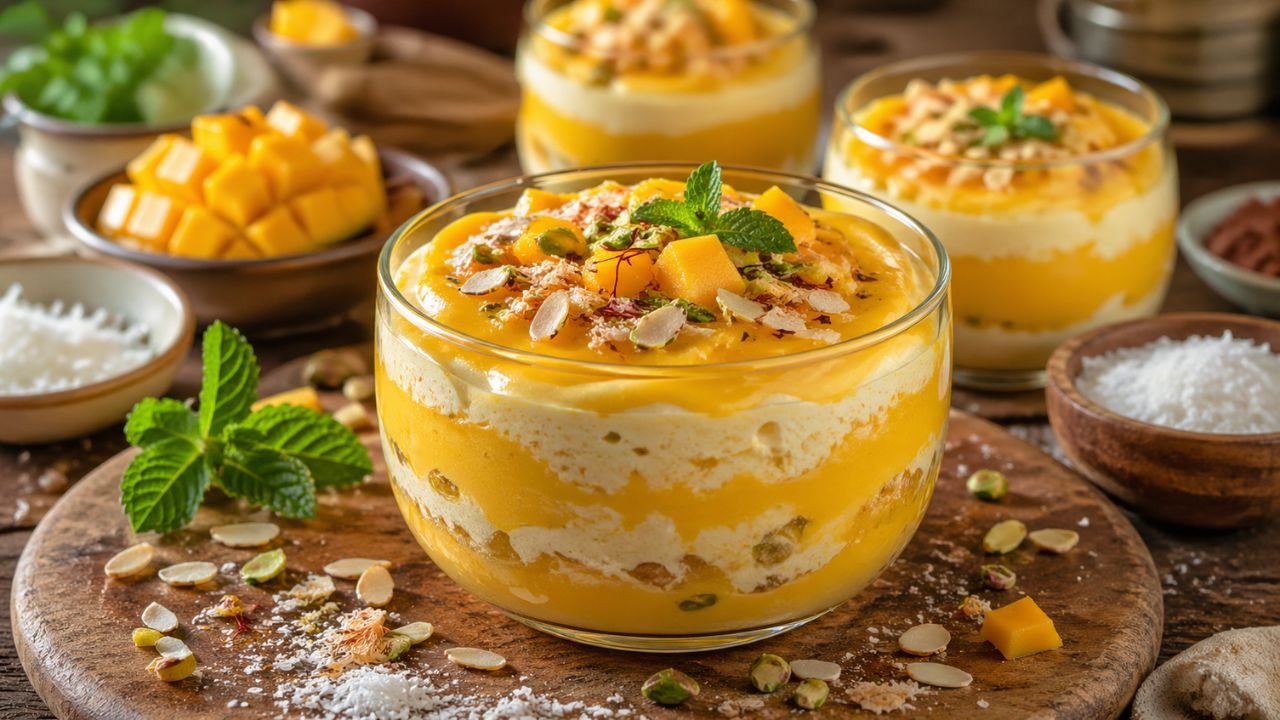
When the heat rises across Indian afternoons, the appetite often disappears for anything heavy, fried, or oven-baked. Yet that same sticky weather creates a craving for something cool, lightly sweet, and instantly refreshing. This is exactly where this 10-minute mango coconut dessert earns its place in the kitchen. It is the kind of no-bake treat that feels luxurious without asking for effort, and it uses ingredients that naturally belong to tropical summer cooking: ripe mangoes, creamy coconut, a little sweetness, and a chilled finish.
Unlike complicated puddings or desserts that need setting time on the stove, this one comes together with almost no cooking skill. There is no baking, no custard thickening, no gelatin balancing, and no waiting around in front of a hot gas flame. You simply blend, fold, layer, and chill. The result is a spoonable dessert that tastes like a cross between mango mousse, coconut cream, and chilled fruit shrikhand, but with a lighter and fresher texture.
The beauty of this recipe is its adaptability. It works as a quick family dessert, a festive afternoon sweet, a small party cup dessert, or even a satisfying post-lunch cooler. Since mango and coconut are deeply familiar flavors in Indian homes, the taste feels comforting, while the creamy presentation makes it look far more elaborate than the effort involved. In homes where summer mangoes arrive by the basket, this recipe often becomes one of the fastest ways to turn overripe fruit into something memorable.
Best of all, it takes just ten minutes of active preparation. The refrigerator does the rest. If you have chilled mangoes and coconut cream ready, the dessert can be assembled before tea is even poured. That speed is why this no-bake mango coconut bowl is the treat many people return to on hot afternoons when turning on the oven feels impossible.
Recipe Information
- Preparation Time: 10 minutes
- Cooking Time: 0 minutes
- Total Time: 10 minutes
- Recipe Yield: 4 dessert servings
- Recipe Category: No-bake Dessert
- Recipe Cuisine: Indian Summer Fusion
This dessert relies entirely on naturally cool ingredients and chilled assembly. Since there is no cooking involved, the freshness of the fruit matters greatly. Alphonso, Kesar, Banganapalli, or any sweet non-fibrous mango variety works beautifully. Coconut cream adds body and a rich tropical finish that balances the bright sweetness of mango pulp.
Ingredients
- 2 large ripe sweet mangoes, peeled and cubed
- 1 cup thick coconut cream, chilled
- 1/2 cup fresh grated coconut or desiccated coconut
- 3 to 4 tablespoons condensed milk
- 2 tablespoons powdered sugar or honey
- 1/4 teaspoon green cardamom powder
- 1 teaspoon lemon juice
- 8 to 10 soaked saffron strands (optional)
- 2 tablespoons chopped pistachios
- 2 tablespoons chopped almonds
- 1 tablespoon chia seeds or sabja seeds soaked in water (optional)
- Few mint leaves for garnish
- 2 tablespoons toasted coconut flakes for topping
These ingredients are intentionally simple, but each contributes to the final cooling sensation. Mango provides the fruity sweetness and thick natural body. Coconut cream creates a lush spoon-coating texture without needing whipped cream or eggs. Condensed milk rounds out tart notes and helps bind the fruit and cream together into a dessert-like consistency.
Cardamom and saffron are optional, but they make the flavor feel more rooted in Indian dessert tradition rather than tasting like a generic fruit cup. Lemon juice is a small but important addition because it sharpens mango flavor and prevents the dessert from becoming flatly sweet.
Preparation
Begin by selecting ripe mangoes that feel fragrant and soft when pressed. Avoid fibrous mangoes because they can make the dessert stringy. Peel them and cut the flesh into cubes. Reserve a handful of neat cubes for layering and garnish later.
Add the remaining mango cubes to a blender jar. Pour in the condensed milk, powdered sugar or honey, lemon juice, and cardamom powder. Blend until the mixture becomes a smooth thick puree. If using saffron, add the soaked strands now and pulse once more. The puree should be velvety and naturally glossy.
Take the chilled coconut cream in a cold mixing bowl. Whisk it gently for one to two minutes using a spoon or hand whisk. It does not need to form stiff peaks, but it should loosen slightly and become silky. Fold in the grated coconut. This gives the cream a pleasant body and a gentle bite.
Now pour about three-fourths of the mango puree into the coconut cream. Fold carefully using broad circular motions. Do not whisk aggressively; the goal is to create a marbled, airy mango coconut cream rather than a completely flat liquid blend. Keep the remaining mango puree aside for layering.
If you are using soaked chia seeds or sabja seeds, fold them into the cream at this stage. They add cooling texture and make the dessert even more suitable for hot afternoons.
Take four small dessert glasses, kulhads, or bowls. Spoon one layer of plain mango puree at the bottom. Add a thick layer of the mango coconut cream mixture. Scatter a few reserved mango cubes. Repeat once more until the glasses are filled.
Top each serving with toasted coconut flakes, chopped pistachios, chopped almonds, and mint leaves. For a richer presentation, drizzle a few drops of condensed milk over the top or add one small saffron strand.
Although the dessert can be eaten immediately, it tastes significantly better after chilling for 15 to 20 minutes because the coconut cream firms up slightly and the mango flavor settles into every layer. Serve cold with a long spoon.
The finished texture should be soft, creamy, fruity, and slightly chewy from coconut. It is not a jelly, not a pudding, and not a mousse in the strict French sense, but it borrows pleasant qualities from all three. The spoon glides through cool mango silk while bits of coconut and nuts create contrast.
Tips
- Always chill the coconut cream before using; warm cream turns runny.
- Use sweet ripe mangoes so you do not need too much added sugar.
- Blend mangoes until perfectly smooth for a premium dessert texture.
- Add lemon juice in small quantity only; too much can dominate the tropical flavor.
- Fold rather than whisk after combining cream and puree to maintain lightness.
- Serve in glass bowls for attractive visible layers.
- Chill serving bowls beforehand for an extra cooling experience.
One very practical trick is to refrigerate the mangoes themselves before blending. Cold fruit instantly improves the final serving temperature and reduces the need for long chilling. Another useful tip is to avoid watery canned coconut milk. Thick coconut cream from the top layer gives much better consistency.
If serving to guests, prepare all components separately and assemble just before serving. This keeps the layers distinct and fresh-looking. You can also sprinkle roasted makhana crumbs on top for a more Indian-style garnish.
Variations
This basic dessert formula can be adjusted in many ways depending on what is available in the kitchen.
- Add hung curd to create a mango coconut shrikhand style bowl.
- Mix in crushed digestive biscuits for a quick no-bake trifle texture.
- Use jaggery syrup instead of sugar for a deeper caramel sweetness.
- Add basil seeds and rose water for a falooda-inspired chilled dessert.
- Layer with banana slices for a more filling tropical pudding.
- Freeze partially and serve as a semi-frozen mango coconut parfait.
Some households also add a spoon of soaked poha blended into the mango puree for additional thickness, though that creates a denser spoon dessert. If you want a more elegant party version, pipe the cream into shot glasses and garnish with very fine nut slivers.
Children often enjoy this dessert with tiny chocolate chips on top, while adults usually prefer the saffron-cardamom version because it feels more fragrant and refined. You can even convert the same recipe into popsicle molds and freeze it for a naturally creamy mango coconut ice treat.
Conclusion
There are desserts that impress because they are complicated, and then there are desserts that become household favorites because they are effortless, repeatable, and deeply suited to the season. This 10-minute mango coconut dessert belongs firmly in the second category. It asks for no baking, no advanced technique, and almost no cleanup, yet it delivers a rich chilled spoonful that tastes tailor-made for Indian summer afternoons.
The mango gives brightness, the coconut gives soothing creaminess, and the optional cardamom-saffron notes quietly connect the dessert to familiar Indian sweet flavors. In ten minutes, ordinary fruit and pantry ingredients become something that feels festive enough for guests and comforting enough for daily family use.
That is why this no-bake treat returns again and again whenever the day turns hot, the kitchen feels unbearable, and a cold sweet bowl is all anyone wants. One blender, one bowl, a few layers, and summer suddenly tastes softer.