
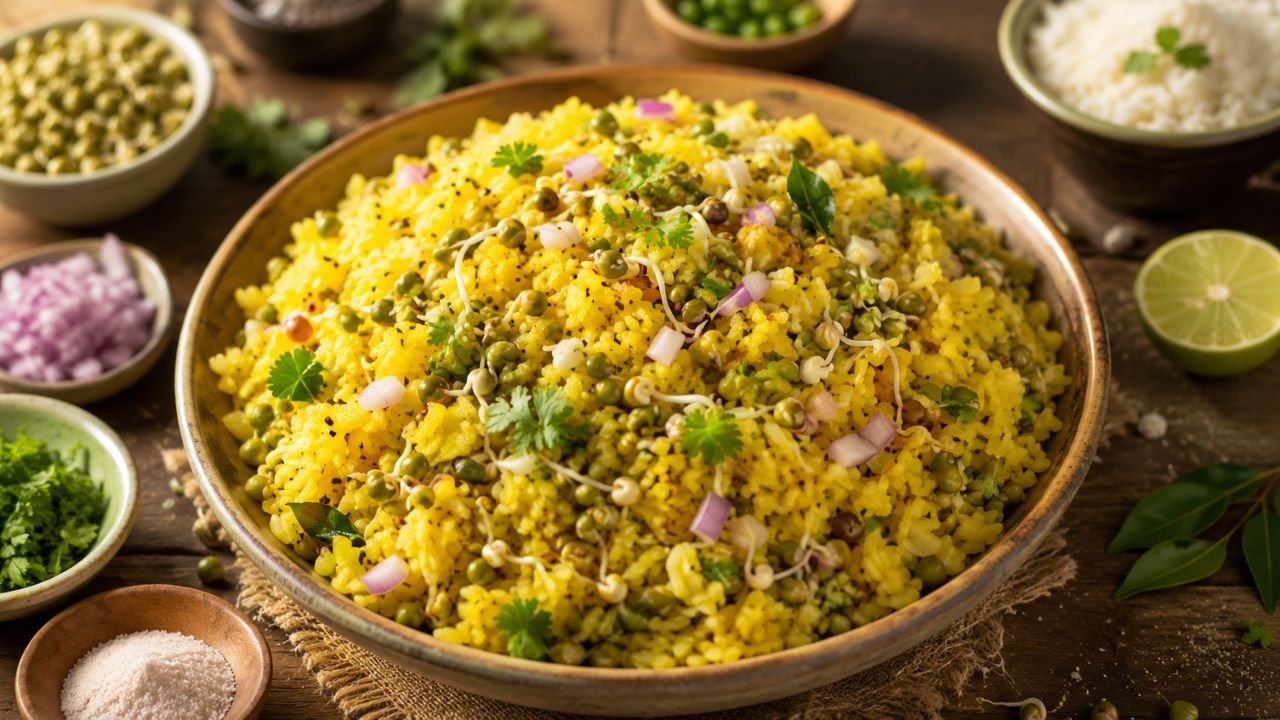
Mouni Roy’s must-try poha and sprouts recipe brings together comfort, freshness, and everyday nutrition in one simple bowl. This dish is inspired by the kind of light, wholesome Indian breakfast that feels satisfying without being heavy. Poha is soft, quick to prepare, and easy to season, while sprouts add crunch, plant-based protein, fiber, and a fresh bite. Together, they create a balanced meal that works beautifully for breakfast, brunch, or a light evening snack.
The best part about this poha and sprouts recipe is that it does not need complicated ingredients or long cooking time. It uses flattened rice, mixed sprouts, mild spices, vegetables, lemon juice, and herbs to create a colorful, healthy, and delicious dish. If you enjoy traditional poha but want to make it more nourishing, this version is an excellent choice. It keeps the familiar flavors of Indian poha while adding extra texture and nutrition from sprouts.
This recipe is especially useful for busy mornings because most of the work is simple washing, chopping, and quick tempering. The poha softens within minutes, the sprouts can be used raw or lightly steamed, and the final dish comes together fast. It is also flexible, so you can adjust the spice level, vegetables, and garnish according to your taste. The result is a bright, filling, and feel-good recipe that proves healthy food can be comforting and flavorful at the same time.
Recipe Information
- Recipe name: Poha and Sprouts
- Preparation time: 15 minutes
- Cooking time: 10 minutes
- Total time: 25 minutes
- Servings: 2 servings
- Recipe category: Breakfast
- Recipe cuisine: Indian
- Difficulty level: Easy
- Best served: Warm or at room temperature
This poha and sprouts recipe is designed as a balanced everyday meal. The flattened rice provides quick energy, while sprouts bring protein, fiber, and freshness. Peanuts add healthy fats and crunch, vegetables add color and micronutrients, and lemon juice gives the dish a lively finish. Because the cooking time is short, the ingredients retain their natural texture and flavor.
For the best result, use medium-thick poha. Thin poha can become mushy quickly, while very thick poha may need extra soaking and can stay firm if not softened properly. Rinse the poha gently and let it rest until soft but not wet. This small step makes a big difference in the final texture. The grains should remain separate, tender, and lightly fluffy.
Ingredients
- 1 cup medium-thick poha, rinsed and softened
- 1 cup mixed sprouts, such as moong, matki, or chana sprouts
- 1 small onion, finely chopped
- 1 small tomato, finely chopped
- 1 small carrot, grated or finely chopped
- 2 tablespoons roasted peanuts
- 1 green chili, finely chopped
- 8 to 10 curry leaves
- 1 teaspoon mustard seeds
- 1 teaspoon cumin seeds
- 1/4 teaspoon turmeric powder
- 1 tablespoon oil
- 1 tablespoon fresh lemon juice
- 2 tablespoons fresh coriander leaves, chopped
- Salt to taste
- 1/2 teaspoon sugar, optional
- 2 tablespoons fresh grated coconut, optional
The ingredient list is simple, but each item has a role. Mustard seeds, cumin seeds, curry leaves, green chili, and turmeric create the classic poha base. Onion gives sweetness, tomato adds juiciness, carrot adds natural crunch, and sprouts make the dish more filling. Roasted peanuts give a nutty bite that contrasts nicely with the soft poha. Lemon juice and coriander should be added at the end because they brighten the finished dish.
Mixed sprouts work well here because they give variety in texture and nutrition. Moong sprouts are mild and tender, matki sprouts have a stronger earthy flavor, and chana sprouts are heartier. If your sprouts are very firm, steam them for a few minutes before using. If they are tender and fresh, you can add them directly after the tempering and cook briefly so they stay crisp.
Preparation
Begin by placing the poha in a sieve and rinsing it gently under running water. Do not soak it for too long. Once rinsed, set it aside for 5 to 7 minutes so it can soften. After resting, press a grain between your fingers. It should be soft but not sticky. Sprinkle a little salt, turmeric, and optional sugar over the poha and gently fluff it with a fork.
Next, prepare the sprouts. Rinse them well and drain completely. If you prefer a softer texture, steam the sprouts for 3 to 4 minutes. If you like a fresh crunch, keep them raw and add them later in the cooking process. Chop the onion, tomato, green chili, carrot, and coriander before you start cooking. Since poha cooks quickly, having everything ready helps prevent overcooking.
Heat oil in a pan over medium heat. Add mustard seeds and let them splutter. Add cumin seeds, curry leaves, and chopped green chili. Stir for a few seconds until aromatic. Add the chopped onion and cook until it turns soft and lightly translucent. Do not brown the onion too much, as this recipe tastes best when the flavors remain light and fresh.
Add the grated carrot and mixed sprouts to the pan. Stir well and cook for 2 to 3 minutes. The sprouts should remain slightly crisp but should not taste raw. Add the chopped tomato and cook for another minute. Keep the heat moderate so the vegetables soften gently without releasing too much moisture. If the mixture looks dry, sprinkle one or two tablespoons of water.
Add the softened poha to the pan and mix gently. Use a light hand so the poha does not break. Cover the pan and cook for 2 minutes on low heat. This allows the spices, vegetables, and poha to blend together. Turn off the heat, add lemon juice, chopped coriander, and roasted peanuts. Toss gently and taste for salt. Add more lemon juice if you prefer a brighter flavor.
Serve the poha and sprouts warm, topped with extra coriander, grated coconut, or more peanuts if desired. It can also be served with plain curd, green chutney, or a cup of masala chai. The dish is light enough for breakfast but filling enough to keep you satisfied for several hours.
Tips
- Use medium-thick poha for the best texture.
- Do not soak poha in a bowl of water, as it can become mushy.
- Drain sprouts well before adding them to the pan.
- Add lemon juice only after turning off the heat.
- Use roasted peanuts for better crunch and flavor.
- Steam firm sprouts briefly if you prefer a softer bite.
- Keep the vegetables finely chopped so they cook quickly.
- Do not overcook the poha after adding it to the pan.
A good poha recipe depends on balance. The poha should be soft, the sprouts should be fresh, and the seasoning should be gentle but flavorful. Too much water can make the dish heavy, while too much heat can dry it out. Cooking on medium to low heat helps the ingredients stay moist and separate.
If you are making this recipe for meal prep, keep the lemon juice, coriander, and peanuts separate until serving. This keeps the flavor fresh and the peanuts crunchy. You can prepare the sprouts and vegetables in advance, but the poha tastes best when cooked close to serving time. If reheating, sprinkle a little water over the poha and warm it gently in a covered pan.
Variations
You can make this recipe more protein-rich by adding boiled chickpeas, paneer cubes, tofu, or extra moong sprouts. For a lighter version, reduce the peanuts and add more vegetables such as cucumber, capsicum, peas, or beans. If you enjoy spice, add crushed black pepper, red chili powder, or a spoon of green chutney while mixing.
For a street-style flavor, garnish the poha with sev, pomegranate seeds, and extra lemon juice. For a cleaner breakfast version, skip sev and use more sprouts, herbs, and vegetables. You can also add grated beetroot for color or finely chopped spinach for extra greens. The recipe adapts well to seasonal produce, so use what is fresh and available.
If you want a no-onion version, skip the onion and add more curry leaves, cumin, and grated carrot. For a Jain-style version, avoid onion and root vegetables, and use tomato, capsicum, sprouts, coriander, and coconut instead. For a slightly sweet Maharashtrian-style touch, add a small pinch of sugar to balance the lemon and spices.
This poha and sprouts recipe can also be turned into a salad-style dish. Cook the tempered poha lightly, let it cool, and then mix in raw sprouts, cucumber, tomato, lemon juice, coriander, and peanuts. This version is refreshing and works well for summer mornings or as a healthy lunchbox option.
Conclusion
Mouni Roy’s must-try poha and sprouts recipe is simple, healthy, and delicious because it combines familiar Indian flavors with smart nutrition. It is quick enough for a weekday breakfast, colorful enough for brunch, and wholesome enough to become part of a regular meal routine. The soft poha, crunchy sprouts, roasted peanuts, fresh vegetables, and lemony finish make every bite light yet satisfying.
This recipe proves that healthy eating does not need to be bland or complicated. With just a few pantry ingredients and fresh produce, you can prepare a nourishing dish that tastes comforting and vibrant. Whether you are looking for a high-fiber breakfast, a light snack, or a simple Indian recipe with a nutritious twist, poha and sprouts is a wonderful choice.
Serve it warm, customize it with your favorite vegetables, and enjoy it fresh. Once you try this version, classic poha may become even more exciting with the added crunch and goodness of sprouts.