
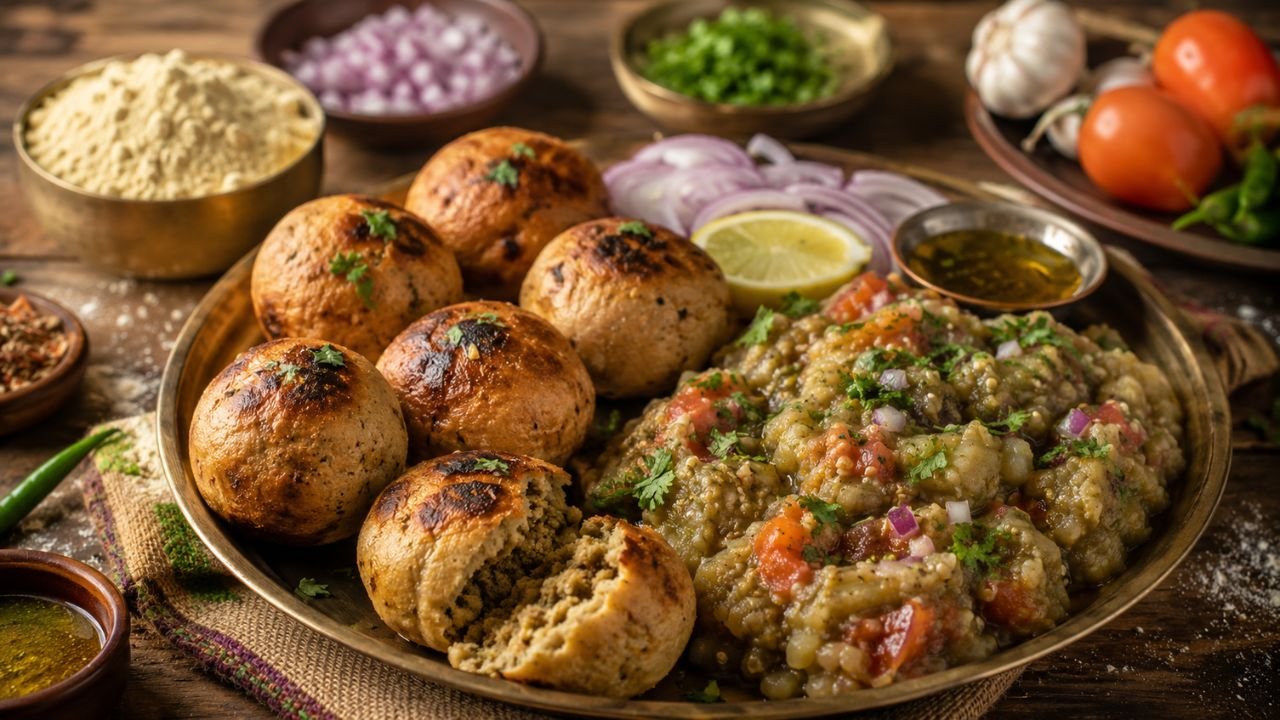
Khesari Lal Yadav Enjoys This Famous Litti Chokha With Bihar Taste is the kind of title that immediately brings the aroma of roasted sattu, smoky brinjal, tangy tomato, mustard oil, green chilli, and fresh coriander to mind. Litti chokha is one of Bihar’s most loved traditional meals, and its charm lies in the balance between rustic preparation and bold flavor. It is not a fancy restaurant-style dish that depends on heavy cream, complicated sauces, or expensive ingredients. Instead, it celebrates simple pantry staples and turns them into a hearty, earthy, and deeply satisfying plate.
This recipe brings together crisp roasted litti stuffed with spiced sattu and a classic chokha made with roasted brinjal, boiled potato, tomato, garlic, onion, green chilli, coriander, lemon juice, and mustard oil. The famous Bihar taste comes from the smoky roasting method and the unmistakable pungency of raw mustard oil. Traditionally, litti is cooked over cow-dung cakes, charcoal, or a clay oven, but this home-friendly version explains how to make it in an oven, tandoor, air fryer, or even on a gas flame with careful handling. The goal is to keep the taste authentic while making the process practical for modern kitchens.
If you enjoy regional Indian food, this recipe is a beautiful example of how a meal can be filling, nutritious, and full of character without being complicated. The litti has a crisp outer layer and a savory, nutty filling. The chokha is soft, smoky, spicy, and fresh. When served with melted ghee, sliced onion, lemon wedges, and green chutney, the combination feels complete. This article gives you all the details you need to prepare a proper Bihar-style litti chokha at home.
Recipe Information
- Recipe name: Khesari Lal Yadav Enjoys This Famous Litti Chokha With Bihar Taste
- Recipe type: Traditional main course
- Cuisine: Bihari, Indian
- Preparation time: 35 minutes
- Cooking time: 45 minutes
- Total time: 1 hour 20 minutes
- Servings: 4 servings
- Yield: 12 medium littis with chokha
- Cooking method: Roasting, baking, mashing
- Best served with: Ghee, onion slices, lemon wedges, green chutney, pickle, or curd
- Taste profile: Smoky, spicy, tangy, earthy, and savory
- Difficulty level: Moderate
Litti chokha is often described as a complete meal because it combines wheat flour, roasted gram flour, vegetables, herbs, and fat in a balanced way. The sattu filling gives protein and fiber, while the chokha adds moisture, vegetables, and bright flavor. The addition of ghee makes the meal richer and more satisfying, but the recipe can also be adjusted for lighter eating by reducing the amount of ghee used at the end.
The key to a successful litti chokha recipe is not just the ingredient list. The texture of the dough, the moisture in the sattu filling, the roasting of the vegetables, and the final finishing with mustard oil all matter. The dough should be firm enough to hold the filling but soft enough to bite into. The sattu mixture should be moist and crumbly, not dry and powdery. The chokha should be mashed by hand or with a fork so it stays rustic rather than becoming a smooth puree.
Ingredients
- 2 cups whole wheat flour
- 2 tablespoons ghee or oil for the dough
- 1/2 teaspoon salt for the dough
- Water as needed to knead the dough
- 1 cup roasted gram flour or sattu
- 1 medium onion, finely chopped
- 2 green chillies, finely chopped
- 1 tablespoon grated ginger
- 4 garlic cloves, finely chopped or crushed
- 2 tablespoons fresh coriander, chopped
- 1 teaspoon ajwain
- 1 teaspoon kalonji
- 1 tablespoon lemon juice
- 2 tablespoons mustard oil for the filling
- 1 tablespoon pickle masala or mango pickle oil
- 1/2 teaspoon roasted cumin powder
- Salt to taste for the filling
- 2 to 4 tablespoons water for moistening the filling
- 1 large brinjal
- 3 medium potatoes, boiled and peeled
- 2 medium tomatoes
- 6 garlic cloves for roasting
- 1 medium onion, finely chopped for chokha
- 2 green chillies, chopped for chokha
- 2 tablespoons fresh coriander, chopped for chokha
- 2 tablespoons mustard oil for chokha
- 1 tablespoon lemon juice or to taste
- Salt to taste for chokha
- 4 tablespoons melted ghee for serving
- Lemon wedges, onion slices, pickle, or green chutney for serving
Use good-quality sattu because it is the heart of the filling. Sattu should smell roasted and nutty, not stale. Mustard oil should be fresh and strong, as it gives the signature Bihar-style flavor. If you are new to mustard oil, begin with the amount mentioned and adjust gradually. It has a sharp aroma that becomes addictive once balanced with lemon, chilli, and roasted vegetables.
Whole wheat flour works best for the outer layer because it gives litti a wholesome flavor and sturdy structure. Some people add a little refined flour for softness, but traditional home-style litti is generally made with atta. Ghee in the dough improves texture and makes the litti more flavorful. Do not add too much water at once while kneading, because the dough should remain medium firm.
Preparation
Begin by preparing the dough. Add whole wheat flour, salt, and ghee or oil to a large mixing bowl. Rub the fat into the flour using your fingertips until the mixture looks slightly crumbly. Add water gradually and knead into a smooth, medium-firm dough. The dough should not be sticky. Cover it with a damp cloth and let it rest for 20 minutes while you prepare the filling and chokha ingredients.
For the sattu filling, place roasted gram flour in a bowl. Add finely chopped onion, green chilli, grated ginger, chopped garlic, coriander, ajwain, kalonji, roasted cumin powder, salt, lemon juice, mustard oil, and pickle masala. Mix everything thoroughly with your fingers so the oil and spices coat the sattu evenly. Add water one tablespoon at a time and mix until the filling becomes moist and crumbly. It should hold together when pressed in your palm but should not become wet or pasty.
Now prepare the vegetables for chokha. Roast the brinjal directly over a flame, on a grill, or in an oven until the skin is charred and the inside becomes soft. Turn it frequently so it cooks evenly. Roast the tomatoes until the skin blisters and the flesh softens. Roast the garlic cloves along with the brinjal or separately until fragrant. If using an oven, place the brinjal, tomatoes, and garlic on a tray and roast at high heat until the skins blacken slightly and the vegetables become tender.
Once the roasted vegetables cool slightly, peel the brinjal and tomatoes. Discard the burnt skin, but keep the smoky flesh. Mash the roasted brinjal, tomatoes, roasted garlic, and boiled potatoes together in a bowl. Add chopped onion, green chilli, coriander, mustard oil, lemon juice, and salt. Mix well. The chokha should remain slightly coarse. Taste and adjust salt, lemon juice, and chilli according to your preference. A good chokha should taste smoky, tangy, spicy, and fresh.
After the dough has rested, knead it again for a minute. Divide it into 12 equal portions. Take one portion and roll it between your palms to make a smooth ball. Flatten it with your fingers and shape it into a small cup. Place one to two tablespoons of sattu filling in the center. Bring the edges together carefully and seal the ball completely. Roll it gently so there are no cracks. Repeat with the remaining dough and filling.
To cook the litti in an oven, preheat the oven to 200 degrees Celsius. Place the stuffed littis on a baking tray. Bake for about 25 to 30 minutes, turning them once or twice, until they become firm, lightly browned, and crisp on the outside. For a more roasted flavor, finish them over direct flame for a few seconds using tongs, turning constantly. This optional step gives a traditional smoky touch.
To cook litti on a gas stove, use a wire roaster or grill rack. Place the littis on the rack over low to medium flame and keep turning them regularly. Cook until the outer surface is evenly roasted and brown patches appear. This method requires patience because high heat can burn the outside while leaving the inside undercooked. Slow roasting gives the best texture.
To cook litti in an air fryer, preheat it to 190 degrees Celsius. Arrange the littis in a single layer and air fry for 18 to 22 minutes, turning halfway. Brush lightly with ghee near the end if you want a richer crust. Air fryer litti becomes crisp and convenient, though the smoky flavor may be milder than flame-roasted litti.
Once the littis are cooked, gently press or crack each one slightly and dip or drizzle with melted ghee. This step is important because the ghee seeps into the outer shell and filling, making the litti softer, richer, and more aromatic. Serve hot with generous portions of chokha, onion slices, lemon wedges, pickle, and green chutney.
Tips
- Do not make the sattu filling too dry. A dry filling can make litti difficult to eat and may cause the inner texture to feel powdery.
- Do not make the filling too wet either. Excess water can break the dough while shaping and may make the litti heavy.
- Resting the dough is important because it improves elasticity and makes shaping easier.
- Seal the litti properly. If there are cracks, the filling may come out during roasting.
- Roast on moderate heat. Slow cooking helps the litti cook from inside while developing a crisp outer layer.
- Use mustard oil without skipping it if you want authentic flavor. It gives chokha and filling their traditional sharpness.
- Roast brinjal and tomato until the skin chars. The smoky flavor is essential for a proper chokha.
- Mash chokha by hand or with a fork. Avoid blending it, because a smooth paste does not give the traditional rustic texture.
- Add ghee only after the litti is fully cooked. This keeps the shell crisp while still making the final bite rich.
- Serve immediately. Litti tastes best hot, especially when combined with warm ghee and fresh chokha.
If you are preparing litti chokha for guests, you can make the dough, filling, and chokha in advance. Shape the littis shortly before cooking so the filling does not release too much moisture into the dough. Chokha can be kept ready for a few hours, but add fresh coriander and lemon juice closer to serving for the brightest taste.
Variations
The classic litti chokha recipe is already rich in flavor, but there are several useful variations depending on taste, equipment, and dietary preference. For a spicier version, increase green chillies in both the filling and chokha. You can also add a pinch of red chilli powder to the sattu mixture. For a tangier version, increase lemon juice or add a little amchur powder to the filling.
For a garlic-forward version, roast extra garlic and mix it into the chokha. Garlic pairs beautifully with brinjal, tomato, mustard oil, and potato. If you prefer a milder flavor, reduce raw onion in the filling and use more coriander instead. Some households also add finely chopped spring onion or crushed roasted cumin seeds for extra aroma.
For a healthier version, reduce the ghee used for serving and bake or air fry the litti instead of roasting with extra fat. The dish will still be satisfying because sattu and wheat flour are naturally filling. You can also add grated carrot or finely chopped spinach to the dough, though this moves away from the most traditional version.
Conclusion
Khesari Lal Yadav Enjoys This Famous Litti Chokha With Bihar Taste is more than a recipe title. It reflects the love people have for a dish that represents comfort, culture, and strong regional identity. Litti chokha is humble, but it has a memorable personality. The roasted wheat balls filled with spicy sattu and the smoky mashed chokha create a meal that is both rustic and deeply flavorful.
The most important elements are patience and balance. Knead the dough properly, season the sattu filling generously, roast the vegetables until smoky, and finish the dish with mustard oil and ghee. These simple steps create the authentic taste associated with Bihar-style litti chokha. Whether you make it for lunch, dinner, a weekend family meal, or a regional food celebration, this recipe gives you a satisfying plate with traditional flavor.