
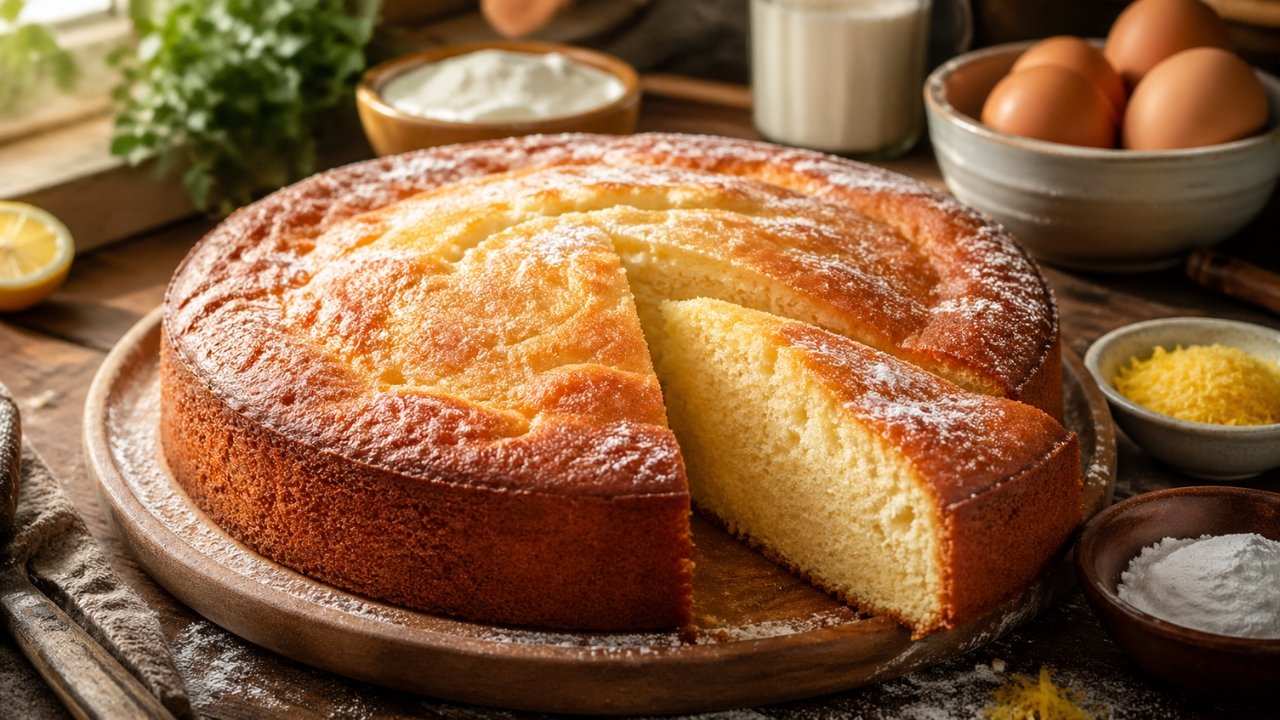
There is a quiet elegance to a yogurt cake: pale, tender, modestly fragrant, and the sort of cake that belongs as much beside a morning coffee as it does at the end of a long dinner. It is not a showpiece in the dramatic sense, yet when made well, it has the kind of softness that makes people pause after the first forkful. The crumb should be fine and plush, never dry, with a gentle tang from the yogurt and a delicate sweetness that feels clean rather than heavy.
The simple ingredient I add is a spoonful of cornstarch. It may not sound romantic, but in pastry, small technical choices often create the most graceful results. Cornstarch softens the structure of the flour, giving the cake a lighter, silkier crumb while preserving the comforting richness that makes yogurt cake so beloved. It is the difference between a pleasant everyday cake and one that tastes carefully composed.
This recipe is designed for ease, but it is not casual in its details. The batter comes together quickly, the aroma is warm and buttery with a whisper of vanilla and citrus, and the finished cake slices beautifully once cooled. It is a cake for afternoon guests, weekend breakfasts, lunchbox treats, or any moment when a soft, understated bake feels exactly right.
Recipe Information
- Recipe Name: Soft Yogurt Cake with Cornstarch
- Description: A tender, lightly tangy yogurt cake made softer with one simple ingredient: cornstarch. The result is a moist, delicate crumb with a refined bakery-style texture.
- Servings: 8 slices
- Preparation Time: 15 minutes
- Cooking Time: 40 minutes
- Cooling Time: 45 minutes
- Total Time: 55 minutes
- Difficulty: Easy
- Recipe Category: Cake, Dessert, Tea Cake
- Cuisine: European-inspired home baking
Ingredients
For the yogurt cake batter
- 1 cup plain whole-milk yogurt, at room temperature
- 1 1/2 cups all-purpose flour
- 2 tablespoons cornstarch
- 2 teaspoons baking powder
- 1/4 teaspoon fine sea salt
- 3 large eggs, at room temperature
- 3/4 cup granulated sugar
- 1/2 cup neutral oil, such as sunflower or light olive oil
- 1 teaspoon pure vanilla extract
- 1 teaspoon finely grated lemon zest
- 1 tablespoon fresh lemon juice
For finishing
- 1 to 2 tablespoons powdered sugar, for dusting
- Fresh berries or lightly whipped cream, optional for serving
Kitchen Tools
- 8-inch round cake pan or standard loaf pan
- Parchment paper
- Mixing bowls
- Whisk
- Fine sieve
- Rubber spatula
- Measuring cups and spoons
- Cooling rack
Preparation
Preparing the pan and dry ingredients
- Prepare the pan: Heat the oven to 350°F. Lightly grease an 8-inch round cake pan and line the base with parchment paper. This small step gives the cake a clean release and protects its delicate crumb from tearing.
- Sift for softness: In a bowl, sift together the flour, cornstarch, baking powder, and salt. The cornstarch is the quiet hero here; it softens the flour and helps create the fine, tender texture that makes this soft yogurt cake feel especially refined.
Mixing the batter
- Whisk the eggs and sugar: In a large bowl, whisk the eggs and sugar for about 1 minute, until the mixture looks slightly lighter and smoother. You do not need to whip it dramatically, but a little aeration gives the cake a more graceful lift.
- Add the yogurt, oil, vanilla, lemon zest, and lemon juice. Whisk until the mixture is glossy and evenly combined. The yogurt brings moisture and gentle acidity, while the lemon lifts the flavor without turning the cake into a citrus dessert.
- Tip: Add the dry ingredients in two additions, folding gently with a spatula after each one. Stop as soon as the flour disappears. Overmixing is the quickest way to toughen a yogurt cake, especially one designed to be soft and delicate.
Baking the cake
- Pour the batter into the prepared pan and smooth the surface. Tap the pan once or twice on the counter to release any large air pockets, but do not overdo it; a little air in the batter helps the crumb remain light.
- Bake for 38 to 42 minutes, or until the top is softly golden and a skewer inserted into the center comes out clean or with a few moist crumbs. The cake should spring back gently when touched in the center.
- Texture check: Avoid baking until the skewer is completely dry. A perfectly baked yogurt cake carries a little moisture in the crumb, which settles beautifully as it cools.
Cooling and finishing
- Let the cake cool in the pan for 10 minutes, then turn it out onto a cooling rack. Remove the parchment and allow it to cool for about 45 minutes before slicing. This cooling time is separate from the total time because it is inactive.
- Dust lightly with powdered sugar just before serving. For a more polished presentation, add fresh berries beside each slice or serve with a spoonful of lightly whipped cream.
Serving Suggestions
This cake is at its best when served slightly warm or fully cooled, when the crumb has settled into its soft, velvety texture. I like to slice it with a serrated knife and place each piece on a simple plate with a small scattering of berries. Strawberries, raspberries, or blueberries all work beautifully because their acidity echoes the yogurt without overpowering the cake.
For breakfast or brunch, serve the cake plain with coffee or black tea. For dessert, dress it with a spoonful of crème fraîche, whipped cream, or a thin ribbon of honey. The flavor is gentle enough to welcome seasonal fruit, yet complete enough to stand alone. That is the charm of a well-made yogurt cake: it never feels like it is trying too hard.
Chef Tips
Why cornstarch makes the cake softer
Cornstarch contains no gluten, so replacing a small portion of flour with it makes the structure more tender. In this recipe, two tablespoons are enough to soften the crumb without making the cake fragile or powdery. It is a classic pastry-minded adjustment, especially useful in simple cakes where texture is everything.
Use room-temperature ingredients
Cold yogurt or eggs can cause the batter to look slightly split, especially once the oil is added. Room-temperature ingredients blend more smoothly and create a more even crumb. This is a small discipline, but it makes the finished cake noticeably more polished.
Choose the right yogurt
Whole-milk plain yogurt gives the richest result. Greek yogurt can be used, but it should be loosened with one or two tablespoons of milk because it is thicker and can make the batter too dense. Avoid sweetened or flavored yogurts, which can disturb both the sugar balance and the clean flavor of the cake.
Do not rush the cooling
A yogurt cake continues to set after it leaves the oven. Slicing too early can make the crumb seem damp or compressed. Give it the cooling time it deserves, and the texture will become tender, even, and beautifully sliceable.
Storage and Make-Ahead Tips
Store the cake tightly covered at room temperature for up to 2 days. Because yogurt helps retain moisture, the cake remains soft and pleasing even the next morning. For longer storage, keep it in the refrigerator for up to 5 days, wrapped well to prevent it from absorbing other aromas.
To make it ahead, bake the cake the day before serving and leave it undecorated. Dust with powdered sugar only at the last moment, as it will dissolve into the surface over time. Individual slices may also be frozen for up to 2 months. Wrap them tightly, thaw at room temperature, and warm briefly if desired.
Additional Information
Yogurt cakes have long been treasured in European home kitchens because they rely on pantry ingredients and simple technique. In France, a version known as gâteau au yaourt is often one of the first cakes children learn to bake, traditionally measured with the yogurt pot itself. Its beauty lies in proportion: dairy for tenderness, eggs for structure, oil for moisture, and just enough leavening to lift the crumb.
This version keeps that spirit but refines the texture with a pastry cook’s adjustment. The added cornstarch does not change the soul of the cake; it simply makes it softer, smoother, and more consistent. It is still humble, still easy, still the kind of cake you can make without ceremony. Yet each slice carries a quiet sophistication, the kind that comes from understanding how one small ingredient can transform an entire bake.