
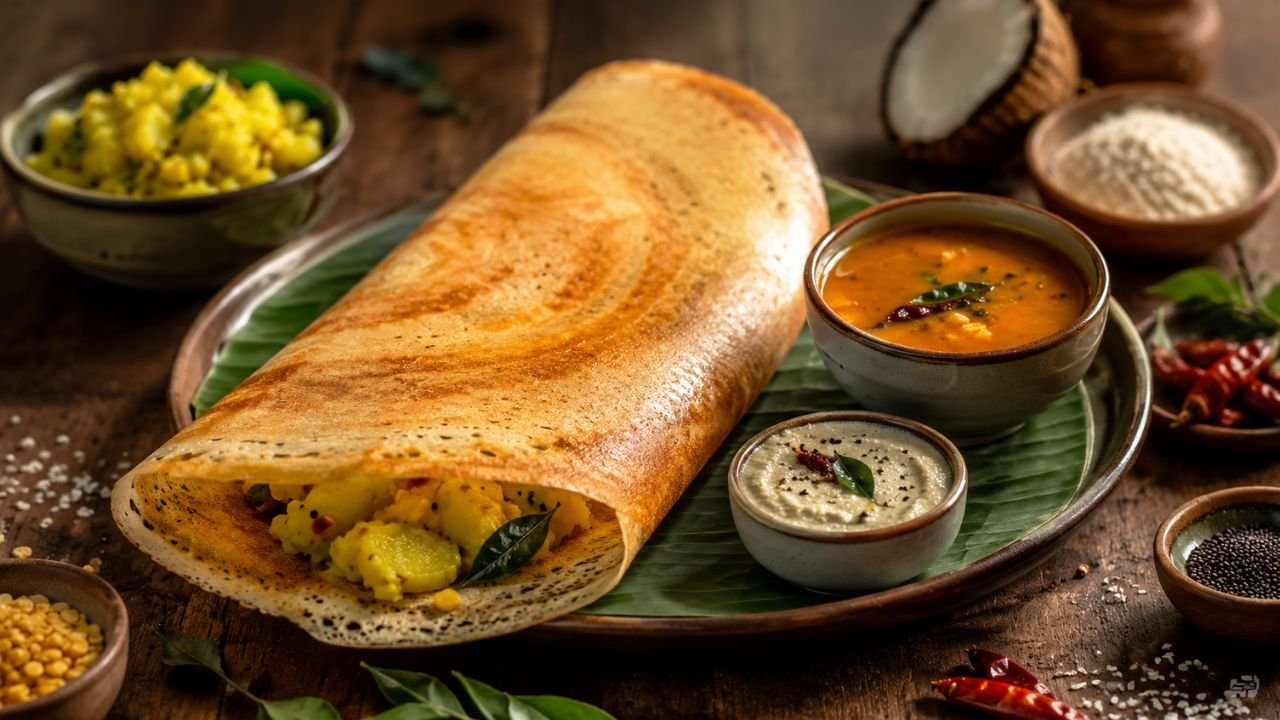
Dileep Raj’s Favourite Breakfast Revealed: The Kannada Star Loved Eating This Every Morning is the kind of title that instantly makes readers curious about a simple, comforting, and homely morning meal. For a Kannada star, a breakfast rooted in Karnataka flavours feels especially fitting, and one dish that beautifully represents everyday South Indian comfort is ragi dosa served with fresh coconut chutney. This recipe is light, earthy, nourishing, and full of familiar flavours that many households enjoy before beginning a busy day.
Ragi, also known as finger millet, has long been valued in Karnataka kitchens for its wholesome character and naturally nutty taste. When turned into dosa batter, it becomes a soft, slightly crisp, and satisfying breakfast that pairs wonderfully with chutney, sambar, or even a simple spoon of ghee. Unlike heavier breakfasts, ragi dosa feels filling without being overly rich, which makes it suitable for mornings when you want energy, balance, and taste on the same plate.
This recipe keeps the process practical for home cooks. It uses ragi flour, rice flour, curd, spices, onion, curry leaves, and a few pantry staples to create a quick batter that does not require overnight fermentation. The result is a rustic Karnataka-style breakfast that can be made on a regular weekday yet still feels special enough for a weekend family meal. The coconut chutney adds freshness, mild sweetness, and a cooling contrast to the earthy dosa.
If you enjoy celebrity-inspired food stories, this breakfast article gives you a recipe that feels authentic, approachable, and easy to recreate. It is not complicated restaurant food. It is the kind of dish that speaks of comfort, routine, and a love for traditional flavours. Whether you are a fan of Kannada cinema, South Indian breakfasts, or millet-based recipes, this ragi dosa with coconut chutney is a delicious way to start the morning.
Recipe Information
This ragi dosa recipe is designed as a complete breakfast for four servings. The preparation time is 15 minutes, the cooking time is 20 minutes, and the total time is 35 minutes. The recipe belongs to the breakfast category and is inspired by Karnataka cuisine, with a focus on simple ingredients, everyday technique, and balanced nutrition.
The dosa batter is made with ragi flour as the main ingredient. Rice flour is added to improve texture and help the dosa cook with light crispness around the edges. A little semolina gives body, while curd adds mild tang and softness. Onion, green chilli, ginger, curry leaves, cumin, and coriander bring aroma and flavour, making the dosa enjoyable even without an elaborate side dish.
The coconut chutney is kept classic and fresh. Grated coconut, roasted gram, green chilli, ginger, salt, and a small amount of water are blended into a smooth chutney. A simple tempering of mustard seeds, curry leaves, and dried red chilli can be added for extra aroma. The chutney balances the ragi dosa by adding creaminess and brightness to every bite.
- Recipe name: Karnataka-style ragi dosa with coconut chutney
- Preparation time: 15 minutes
- Cooking time: 20 minutes
- Total time: 35 minutes
- Servings: 4
- Category: Breakfast
- Cuisine: Karnataka, South Indian
- Texture: Soft in the centre with lightly crisp edges
- Best served with: Coconut chutney, sambar, or a small spoon of ghee
This recipe works best when the batter is rested briefly before cooking. Resting helps the flours absorb moisture, which improves the texture of the dosa. Since this is an instant-style recipe, it does not require soaking lentils or fermenting batter overnight. That makes it useful for mornings when you want a traditional breakfast without planning a day ahead.
Ingredients
The ingredients for this breakfast are simple, affordable, and easy to find in most Indian kitchens. Ragi flour gives the dish its signature earthy flavour and dark colour. Rice flour helps the dosa spread smoothly and crisp lightly. Semolina adds structure, while curd helps soften the batter and gives a gentle tang. The spices and fresh herbs make the dosa aromatic and lively.
- 1 cup ragi flour
- 1/4 cup rice flour
- 2 tablespoons fine semolina
- 1/2 cup plain curd
- 1 small onion, finely chopped
- 1 green chilli, finely chopped
- 1 teaspoon grated ginger
- 1 tablespoon chopped coriander leaves
- 8 to 10 curry leaves, finely chopped
- 1/2 teaspoon cumin seeds
- 1/4 teaspoon black pepper powder
- Salt to taste
- 1 1/4 to 1 1/2 cups water, as needed
- 2 to 3 teaspoons oil or ghee for cooking
For the coconut chutney, fresh coconut gives the best taste, but frozen grated coconut can also be used after thawing. Roasted gram helps the chutney become smooth and slightly thick. Green chilli can be adjusted depending on how spicy you like your breakfast. Ginger adds warmth and supports the flavour of the ragi dosa.
- 1 cup grated fresh coconut
- 2 tablespoons roasted gram
- 1 small green chilli
- 1/2 teaspoon grated ginger
- Salt to taste
- 1/4 to 1/3 cup water, as needed
- 1 teaspoon oil for tempering
- 1/2 teaspoon mustard seeds
- 5 curry leaves
- 1 dried red chilli, broken into pieces
Choose fresh ragi flour for the best flavour. If the flour smells stale or bitter, the dosa will not taste pleasant. The curd should be fresh and not too sour, because the recipe already has the natural earthiness of ragi. If you want a softer dosa, use slightly more curd and keep the batter medium-thin. If you prefer crisp edges, add a little more rice flour and cook the dosa on medium heat until the sides lift easily.
Preparation
Begin by preparing the dosa batter. Take a large mixing bowl and add ragi flour, rice flour, and semolina. Mix the dry ingredients well so there are no dense patches of flour. Add curd, salt, cumin seeds, black pepper powder, grated ginger, chopped green chilli, chopped onion, coriander leaves, and curry leaves. Pour in one cup of water and whisk the mixture until smooth.
The batter should be thinner than regular dosa batter but not watery like neer dosa batter. It should flow easily from a ladle and spread without becoming too patchy. Add the remaining water little by little until the texture feels right. Rest the batter for 10 minutes. During this time, semolina absorbs moisture, and the batter becomes slightly thicker. After resting, stir again and adjust with a splash of water if needed.
While the batter rests, prepare the coconut chutney. Add grated coconut, roasted gram, green chilli, ginger, salt, and a little water to a blender. Grind until smooth or slightly coarse, depending on your preference. Transfer the chutney to a bowl. For tempering, heat one teaspoon oil in a small pan. Add mustard seeds and allow them to crackle. Add curry leaves and dried red chilli, then turn off the heat. Pour this tempering over the chutney and mix gently.
Now heat a dosa tawa or flat pan over medium heat. Sprinkle a few drops of water on the surface. If the water sizzles and evaporates quickly, the pan is ready. Lightly grease the pan with oil or ghee. Stir the batter well, take a ladleful, and pour it onto the centre of the pan. Spread gently in a circular motion. Since ragi batter is delicate, avoid pressing too hard with the ladle.
Drizzle a few drops of oil around the edges and over the surface. Cook on medium heat until the top looks set and the edges begin to lift. This usually takes two to three minutes. Flip the dosa carefully and cook the other side for one minute. If you want softer dosa, remove it once cooked through. If you prefer crisp dosa, cook a little longer on the first side until the edges become firm and lightly crisp.
Repeat the same process with the remaining batter. Stir the batter before making each dosa because ragi flour may settle at the bottom. If the batter thickens while standing, add one or two tablespoons of water and mix well. Serve each dosa hot with coconut chutney. The flavour is best when the dosa comes straight from the pan, while the chutney is cool and fresh.
- Mix the flours before adding liquid to prevent lumps.
- Rest the batter for 10 minutes for better texture.
- Keep the pan at medium heat to avoid burning the ragi.
- Stir the batter before every dosa.
- Serve immediately for the best taste and texture.
Tips
The most important tip for this recipe is to control the heat of the pan. Ragi flour can brown faster than plain rice or wheat batter, so very high heat may make the dosa taste slightly bitter. Medium heat gives the dosa enough time to cook through while developing a pleasant roasted flavour. If the pan becomes too hot, lower the flame for a minute before making the next dosa.
The batter consistency also matters. If the batter is too thick, the dosa may turn heavy and uneven. If it is too thin, it may tear while flipping. Aim for a pourable batter that spreads easily but still has enough body to hold together. Since flour quality can vary, water quantity should be adjusted by feel rather than measured too rigidly.
Use a well-seasoned tawa if possible. Cast iron gives a lovely flavour and texture, but it should be properly heated and lightly greased. A non-stick pan is easier for beginners and helps prevent tearing. If using cast iron, avoid pouring batter on a smoking-hot surface. Wipe the pan with a lightly oiled onion half or cloth between dosas for smoother cooking.
For better flavour, chop the onion very finely. Large onion pieces can make the dosa break while spreading. Curry leaves should also be chopped so their aroma is evenly distributed. Green chilli can be skipped for children or replaced with a pinch of crushed black pepper. If you enjoy a stronger traditional taste, add a pinch of asafoetida to the batter.
The coconut chutney should not be too watery. A medium-thick chutney clings well to the dosa and gives a satisfying bite. If the chutney becomes thin, add a spoon of roasted gram and blend again. If it is too thick, add water one tablespoon at a time. Fresh coconut gives sweetness, while roasted gram gives body, so both ingredients should be balanced.
- Use fresh ragi flour for a clean nutty taste.
- Add water gradually instead of pouring it all at once.
- Do not skip resting the batter.
- Cook on medium heat for even roasting.
- Keep chutney medium-thick for the best serving texture.
- Add a little ghee before serving for a richer breakfast.
This breakfast can be made more filling by serving it with vegetable sambar. For a lighter meal, coconut chutney alone is enough. A cup of filter coffee or plain buttermilk also pairs beautifully with ragi dosa. The dish feels traditional yet practical, which is why it works well for busy families, students, professionals, and anyone looking for a nourishing start to the day.
Variations
There are many ways to adapt this ragi dosa while keeping its Karnataka-inspired character. For a more traditional flavour, add finely chopped dill leaves or methi leaves to the batter. These greens pair well with ragi and make the dosa more aromatic. Dill leaves give a distinct South Indian home-style taste, while methi adds gentle bitterness that balances the curd and coconut chutney.
For a vegetable version, add grated carrot, finely chopped capsicum, or shredded cabbage. Keep the vegetables finely cut so the dosa spreads without breaking. This variation is useful when you want to make breakfast more colourful and nutritious. Children may enjoy the carrot version because it adds mild sweetness and a softer bite.
If you prefer a spicier dosa, increase the green chilli or add crushed black pepper and finely chopped coriander stems. You can also add a pinch of red chilli powder, but use it carefully because ragi already has a deep roasted taste. For a more festive flavour, cook the dosa with ghee instead of oil. Ghee brings warmth and makes the edges more aromatic.
For a vegan version, replace curd with thin coconut milk or plain water mixed with a teaspoon of lemon juice. The texture will be slightly different, but the dosa will still taste good. Let the batter rest for a few extra minutes so the flours hydrate well. Serve with coconut chutney made without curd, and use oil for cooking and tempering.
You can also make a fermented version by mixing ragi flour with leftover dosa batter. Add half a cup of regular fermented dosa batter to the ragi mixture, reduce the curd, and let it rest for a shorter time before cooking. This gives a more classic dosa aroma and a lighter texture. It is a good option if you often keep dosa batter at home.
- Add dill leaves for a traditional Karnataka-style variation.
- Add grated carrot for a mildly sweet and colourful dosa.
- Use ghee for a richer breakfast flavour.
- Replace curd with coconut milk for a vegan version.
- Mix with fermented dosa batter for a lighter texture.
- Serve with tomato chutney for a tangier side dish.
Conclusion
Dileep Raj’s Favourite Breakfast Revealed: The Kannada Star Loved Eating This Every Morning becomes even more appealing when imagined through the lens of a wholesome Karnataka breakfast like ragi dosa with coconut chutney. It is simple, nourishing, and deeply connected to the everyday food culture of the region. The recipe does not depend on luxury ingredients or complicated techniques. Instead, it celebrates the comfort of millet, coconut, curry leaves, and a hot tawa in the morning.
This breakfast is ideal for anyone who wants a balanced start without spending too much time in the kitchen. The preparation time is only 15 minutes, the cooking time is 20 minutes, and the entire meal can be ready in 35 minutes. With ragi as the base, the dosa offers a satisfying texture and earthy taste. With coconut chutney on the side, it becomes fresh, complete, and comforting.
Whether you make it because you enjoy Kannada cinema, because you love South Indian breakfasts, or because you want to add more millet-based recipes to your routine, this dish is worth preparing often. It brings together tradition and convenience in a way that suits modern mornings. Serve it hot, enjoy it slowly, and let every bite remind you that the best breakfasts are often the simplest ones made with care.