
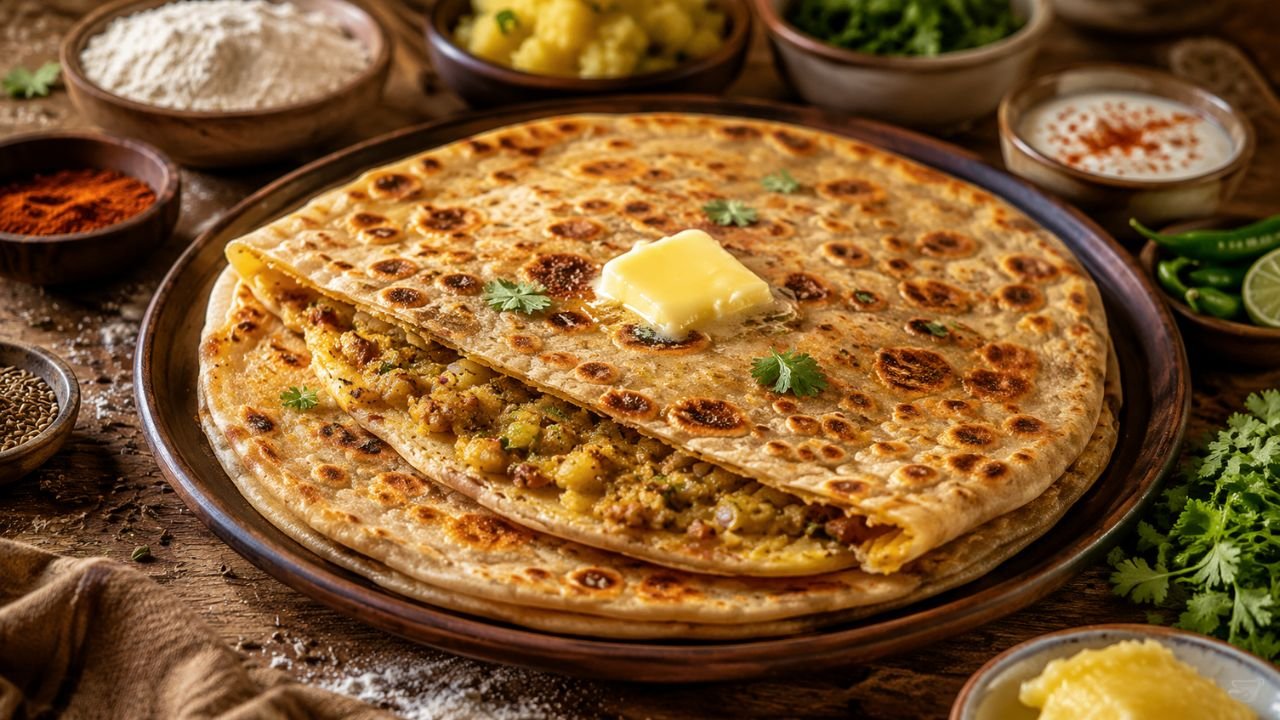
Aloo paratha is one of the most loved flatbreads in North Indian home cooking because it brings together two things people crave in a comforting meal: tender, layered dough and a warm, flavorful potato filling. When made well, it has a crisp golden surface, soft inner layers, and a perfectly spiced center that stays balanced rather than heavy. This version focuses on achieving that ideal texture by using a rested dough, a smooth but not sticky potato mixture, and a rolling method that helps the paratha stay soft while still developing light flaky layers on the tawa. Whether you serve it for breakfast, lunch, or dinner, aloo paratha feels satisfying and familiar, especially with yogurt, pickle, butter, or a cup of masala chai.
The secret to a truly good aloo paratha is not only in the spices, but in the way each part of the recipe works together. The dough must be soft enough to roll easily without cracking, and the filling must be well seasoned but dry enough to prevent tearing. A small amount of ghee or oil during cooking helps create color and gentle crispness, while careful heat control keeps the exterior from becoming hard. This recipe is designed for home cooks who want reliable results: parathas that puff in spots, hold their filling properly, and stay soft even after cooking. With a few thoughtful techniques, you can make aloo parathas that taste like they came straight from a skilled family kitchen.
Recipe Information
- Preparation time: 30 minutes
- Cooking time: 25 minutes
- Total time: 55 minutes
- Recipe category: flatbread
- Servings: 4
- Cuisine: North Indian
- Dish type: Vegetarian
What makes this recipe especially useful is that it balances classic flavor with practical home-style technique. The spice mix is bold enough to make the potato filling taste lively, but not so aggressive that it overpowers the bread. The layers stay soft because the dough is neither stiff nor over-floured while rolling. If you have struggled in the past with parathas breaking, leaking, or turning dense, the method below addresses those common problems step by step. The result is a dependable aloo paratha with a beautiful texture, a fragrant potato center, and a finish that remains soft long after it leaves the pan.
Ingredients
Use fresh ingredients and measure carefully for the best texture. The quantities below make 8 medium aloo parathas.
- 2 cups whole wheat flour
- 1 tablespoon oil or ghee for the dough
- About 3/4 cup water, added gradually as needed
- 1/2 teaspoon salt for the dough
- 4 medium potatoes, boiled, peeled, and cooled completely
- 1 medium green chili, finely chopped
- 2 tablespoons finely chopped fresh coriander leaves
- 1/2 teaspoon grated ginger
- 1/2 teaspoon cumin seeds, lightly crushed
- 1/2 teaspoon red chili powder
- 1/4 teaspoon turmeric powder
- 3/4 teaspoon coriander powder
- 1/2 teaspoon roasted cumin powder
- 1/2 teaspoon garam masala
- 1 teaspoon dry mango powder or 1/2 teaspoon chaat masala
- 3/4 to 1 teaspoon salt for the filling, or to taste
- 2 teaspoons oil or melted ghee for the filling mixture, optional
- Whole wheat flour for dusting while rolling
- 3 to 4 tablespoons ghee or oil for roasting the parathas
- Butter, yogurt, pickle, or chutney for serving
The potatoes should be fully cooked but not waterlogged. Waxy or medium-starch potatoes often work better than overly moist potatoes because they mash smoothly without turning gummy. Cooling them completely before mixing the filling is important because warm potatoes release steam and make the stuffing sticky. Fresh coriander adds brightness, ginger gives warmth, and dry mango powder adds the gentle tang that makes the filling taste more complete. If you prefer a milder version, reduce the green chili and red chili powder slightly, but keep the roasted cumin and garam masala because they contribute much of the signature aroma.
Preparation
Start by making the dough. In a large bowl, combine the whole wheat flour and salt. Add the oil or ghee and rub it lightly through the flour. Gradually add water and bring everything together into a soft dough. Knead for 6 to 8 minutes until smooth and pliable. The dough should feel supple, not tight. Cover it with a plate or damp cloth and let it rest for at least 20 minutes. This resting period allows the flour to hydrate fully, which makes rolling much easier and helps create soft layers after cooking.
While the dough rests, prepare the filling. Mash the cooled boiled potatoes in a wide bowl until smooth. There should be no large chunks because uneven pieces can puncture the dough while rolling. Add the chopped green chili, coriander leaves, ginger, crushed cumin, red chili powder, turmeric, coriander powder, roasted cumin powder, garam masala, dry mango powder, and salt. Mix thoroughly with your hands or a spoon so the spices are evenly distributed. If the mixture feels dry and crumbly, add 2 teaspoons oil or melted ghee to help bind it. If it feels damp, let it sit uncovered for a few minutes. The filling should be soft and cohesive but not wet.
Once the dough has rested, knead it briefly again until smooth. Divide the dough into 8 equal portions and shape them into balls. Divide the potato filling into 8 equal portions as well. Keeping both dough and filling portions similar in size helps make evenly stuffed parathas. Dust your work surface lightly with flour. Take one dough ball and flatten it gently into a small disc. Roll it into a circle about 4 inches wide, keeping the center slightly thicker than the edges. Place one portion of potato filling in the center.
Bring the edges of the dough together over the filling, pleating as needed, and pinch to seal. Remove any excess dough from the top if it feels bulky, but do not leave the seal thin enough to tear. Press the stuffed ball gently between your palms to flatten it. Dust it with flour, place it seam-side down, and roll carefully into a 6 to 7 inch circle. Use light, even pressure and roll outward from the center. If the filling begins to push out, dust lightly and press rather than dragging the rolling pin harshly. A gentle hand helps keep the paratha intact and encourages soft layers instead of compact, compressed bread.
Heat a tawa or flat skillet over medium-high heat. The pan should be hot before the paratha goes on, but not smoking. Place the rolled paratha on the hot tawa. After about 20 to 30 seconds, when small bubbles begin to appear, flip it. Spread a little ghee or oil around the edges and on top. Flip again after another 30 seconds and apply a little more ghee or oil to the other side. Cook by pressing gently with a spatula around the edges and surface until golden brown spots appear on both sides. The paratha may puff in places, which is a good sign. Remove it when both sides are cooked through and lightly crisped while the inside remains soft.
Repeat the same process with the remaining dough and filling. Stack the cooked parathas in a cloth-lined container or covered plate to help them stay warm and soft. Serve immediately with white butter, plain yogurt, boondi raita, mango pickle, green chutney, or a simple cup of tea. The contrast between the warm spiced potato filling and cool yogurt is especially pleasing, and a dab of butter melting over the top gives the paratha a rich finish that makes it even more satisfying.
Tips
The most important tip for successful aloo paratha is to keep the filling dry but soft. Overly moist potatoes are the main reason parathas tear while rolling. Boil the potatoes until just tender, drain them well, and allow them to cool fully before peeling and mashing. If you accidentally make the filling too moist, add a spoonful of roasted gram flour or a little extra mashed potato to absorb the excess moisture without changing the flavor too much.
A soft dough is essential for a tender result. If the dough is too stiff, the edges will crack during stuffing and the cooked paratha can become chewy. Add water slowly while kneading so you stop at the right texture. Resting the dough is not optional; it improves elasticity and helps the flour absorb moisture evenly. After resting, the dough should feel smoother and more relaxed than when first mixed.
Roll with patience instead of force. Many home cooks press too hard once the filling is inside, which causes leaks and uneven thickness. Dust lightly, roll gradually, and rotate the dough frequently. A little flour helps prevent sticking, but too much dry flour can make the surface dusty and reduce softness after cooking. Try to use only enough flour to keep the paratha manageable on the board.
Heat control matters just as much as the dough and filling. A pan that is too cool will dry the paratha before it browns, while a pan that is too hot will char the surface and leave the inside undercooked. Medium to medium-high heat is usually ideal. Once the paratha is on the tawa, keep it moving through the stages with timely flips instead of letting one side sit for too long. Gentle pressing after applying ghee helps the layers cook evenly and develop attractive golden spots.
Variations
Aloo paratha has many regional and household variations, and small changes can create new flavors without losing the essence of the dish. One popular variation includes finely chopped onions in the filling. This gives the center extra sweetness and bite, though the onions should be used sparingly because they release moisture. Another excellent addition is grated paneer, which makes the stuffing richer and slightly creamier while still allowing the potato flavor to lead.
You can also add dried fenugreek leaves for a more aromatic filling. Crush the leaves lightly between your palms before mixing them in. They add an earthy note that pairs beautifully with the potatoes. Some cooks include ajwain in the dough to add digestibility and a subtle herbal flavor. Others increase the tang with extra dry mango powder or use fresh pomegranate seeds in the filling for a Punjabi-style twist that offers little bursts of sweetness and acidity.
For a greener version, mix chopped spinach, fresh mint, or spring onion greens into the potato filling. These ingredients add freshness and color while keeping the paratha hearty. If you want a higher-protein version, serve the paratha with a bowl of yogurt and stuff the potatoes with a little crumbled paneer or boiled peas. Peas give the filling gentle sweetness and texture, creating a classic aloo matar paratha variation that is especially good in winter.
Conclusion
A well-made aloo paratha is much more than stuffed flatbread. It is a dish built on texture, temperature, balance, and attention to simple details. The soft layers come from a well-rested dough and careful rolling. The perfectly spiced filling comes from dry, fluffy potatoes and measured seasoning that includes warmth, tang, and freshness. When these elements come together on a hot tawa with a little ghee, the result is a paratha that is crisp in spots, tender in the center, and deeply satisfying from the first bite to the last.
This recipe offers a dependable way to achieve that balance at home, whether you are making aloo paratha for the first time or refining your usual method. Serve it hot with butter, yogurt, and pickle for a classic experience, or pair it with chutney and tea for a cozy meal any time of day. Once you master the basics, you can adapt the spice level, texture, and fillings to your own taste. No matter how you serve it, aloo paratha remains one of the most comforting and rewarding breads to make, especially when it turns out soft, layered, and filled with perfectly spiced potatoes.