
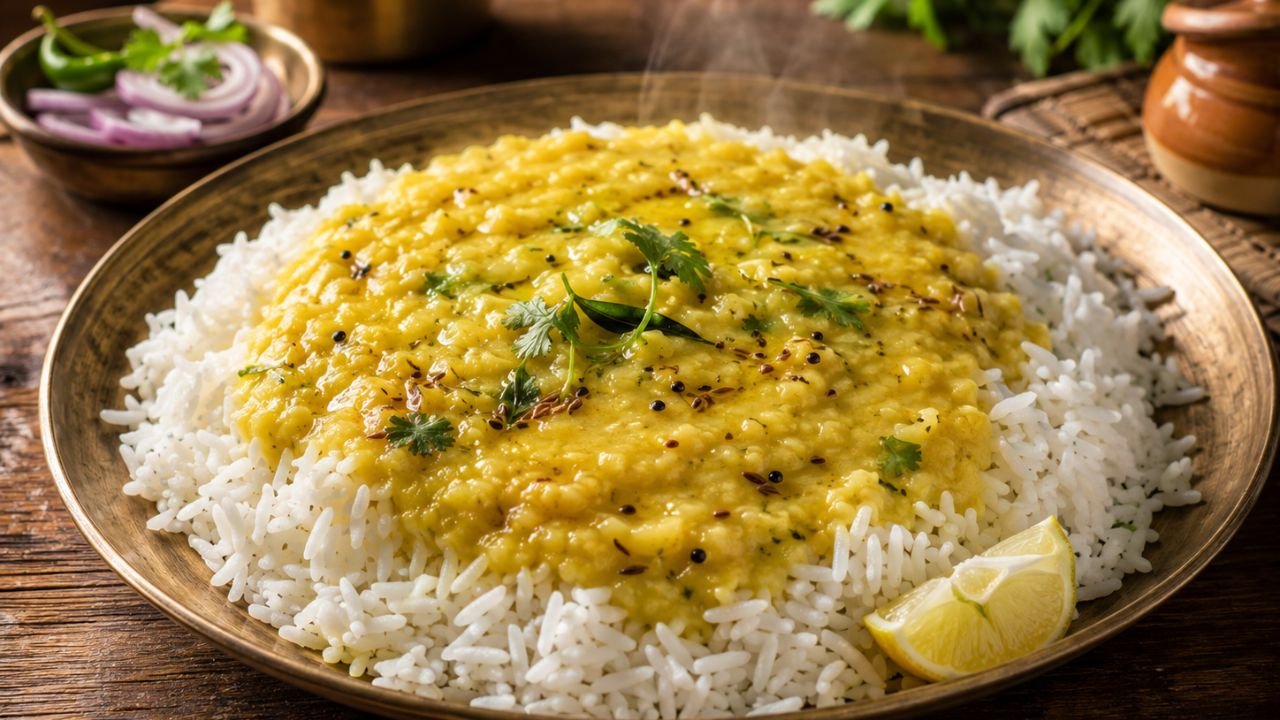
There is something quietly revealing about a person’s comfort food. Long before public image, political identity, or lifestyle branding enter the frame, food tends to tell the more intimate truth. It shows what someone returns to when the day has been too long, the noise too loud, or the outside world too demanding. In the case of varan bhaat with lemon, the appeal lies not in extravagance, novelty, or culinary theatre, but in something far more enduring: emotional steadiness. That Aaditya Thackeray’s comfort food pick is this deeply familiar, deeply Maharashtrian staple says as much about the timeless power of simple food as it does about the dish itself.
At first glance, varan bhaat can seem almost too plain to be discussed at length. It does not carry the glamour of a festive thali, the street-side charisma of a beloved snack, or the social-media sparkle of a plated restaurant creation. But that is precisely the point. Varan bhaat with lemon belongs to a category of meals that do not seek attention because they have never needed it. Their value is already understood where it matters most: at home, at the family table, in moments of fatigue, and in those private parts of life where food serves not as entertainment but as reassurance.
In many Maharashtrian households, varan bhaat is not just another dish in the weekly rhythm of cooking. It is one of the foundational expressions of care. It is what appears when someone is tired, unwell, overstimulated, or simply in need of something gentle. It is what many people grow up eating without ever needing to name its significance. Only later, often after years of rushed eating, ordering in, and navigating modern urban routines, does its meaning become fully visible. The dish begins to represent far more than nourishment. It becomes shorthand for calm, familiarity, and the profound comfort of being understood without having to explain oneself.
Why Simple Food Feels So Powerful Today
The modern food world often rewards excess. Meals are expected to be layered, hybrid, dramatic, and endlessly photographable. Menus lean on surprise, restaurants trade in novelty, and even home cooking is increasingly discussed through the language of upgrades, hacks, and reinventions. Against that backdrop, varan bhaat with lemon offers a striking counterpoint. It reminds us that food does not need to perform in order to matter.
That is one reason the dish resonates so strongly with people today. Many are no longer looking only for excitement on the plate; they are looking for relief. After a day saturated with decisions, screens, traffic, deadlines, and constant input, the appetite changes. What feels desirable is not always richness or stimulation. Often, it is softness. Balance. Predictability in the best sense. A meal that does not ask anything of you except to sit down and exhale.
Comfort food is often misunderstood as indulgent food, but the two are not always the same. There is a difference between food that distracts and food that restores. Varan bhaat with lemon belongs firmly to the second category. It is not about excess, reward, or spectacle. It is about return. Return to appetite that feels natural. Return to a rhythm of eating that respects the body. Return to a kind of emotional baseline that many people do not realize they are missing until they taste it again.
The Emotional Grammar of Varan Bhaat
Some foods are memorable because they are tied to major occasions. Others become unforgettable because they are woven into ordinary life so completely that they begin to shape one’s emotional instincts. Varan bhaat belongs to the second kind. For many people, it is among the earliest tastes that come to define home. It appears in childhood, stays through adolescence, and returns in adulthood with surprising emotional force.
That is the power of repetition in food memory. A celebratory dessert may be loved, but it is often the everyday meal that forms the deeper imprint. Varan bhaat is the lunch served on quiet afternoons, the dinner eaten after travel, the meal prepared when someone is recovering, the plate that waits at the table when conversation is minimal and comfort is enough. Over time, such dishes stop being merely edible objects. They become emotional cues. Their texture, aroma, and warmth start to signal safety.
This is why discussions about comfort food often turn unexpectedly personal. Ask someone about the dish they reach for when they are overwhelmed, and they are rarely describing only flavor. They are describing a feeling state. They are describing the version of themselves that emerges around that food: less guarded, less hurried, less performative. In that sense, varan bhaat with lemon is not simply a meal. It is an atmosphere.
- It speaks the language of home: not through luxury, but through recognition and routine.
- It reassures the body: the meal feels settling rather than dramatic, which is often what real comfort requires.
- It connects generations: grandparents, parents, and children may relate to it differently, but all recognise its place.
- It survives changing trends: because its value does not depend on fashion, it never really goes out of relevance.
- It carries emotional memory: many people taste not just the dish, but the households, voices, and habits around it.
More Than Taste: What the Dish Represents
Food writing often leans heavily on sensory pleasure, as though taste alone explains why a dish matters. But in reality, the meaning of a meal is shaped just as much by context, timing, and emotional use. Varan bhaat with lemon is an excellent example of this. Its importance lies partly in what it tastes like, yes, but even more in what it does in daily life.
It represents trust. One does not approach this dish with uncertainty. There is no need to decode it, no anxiety about whether it will satisfy, no risk of disappointment through overdesign. That feeling of trust is deeply valuable in a cultural moment where so much of eating has become experimental, rushed, or transactional. A dependable meal offers its own kind of luxury.
It also represents humility, though not in a diminished sense. Rather, it signals confidence without display. Traditional home food does not need to announce itself to assert its worth. It knows its place in the emotional and cultural life of a community. That quiet confidence is part of what makes the dish editorially interesting. At a time when so much public conversation about food revolves around excess, here is a meal that demonstrates how meaning often resides in restraint.
For Maharashtrian identity in particular, varan bhaat holds a special symbolic weight. It speaks to everyday culinary values that have endured through modernisation: balance, nourishment, practicality, and an appreciation for food that fits into life rather than interrupting it. It also shows how a regional food tradition can remain relevant not by becoming louder, but by staying deeply itself. In that way, the dish is not just culturally rooted; it is culturally confident.
| Theme | How Varan Bhaat With Lemon Reflects It | Why It Matters Now |
|---|---|---|
| Comfort | It offers warmth, softness, and emotional familiarity without heaviness. | People increasingly want food that soothes rather than overstimulates. |
| Simplicity | The dish is modest and unpretentious, yet deeply satisfying. | There is growing fatigue with food culture that values complexity for its own sake. |
| Home | It is strongly associated with family meals, recovery, and daily domestic life. | Modern routines are making many people rediscover the emotional power of home-style eating. |
| Tradition | It carries regional identity and longstanding household habits. | Classic foods are returning as markers of continuity in fast-changing lifestyles. |
| Balance | It feels complete without being excessive or performative. | It aligns with a renewed interest in moderation, ease, and sustainable everyday habits. |
Why People Are Returning to Foods Like This
There is a noticeable shift happening in the way people talk about food, especially in urban India. While there is still excitement around dining out, experimentation, and global influences, there is also a counter-movement toward the familiar. People are beginning to celebrate dishes that were once taken for granted: everyday dals, rice-based meals, soft rotis, lightly spiced vegetables, homemade snacks, and traditional combinations that prioritise ease over drama.
This return is not driven by nostalgia alone, though nostalgia certainly plays a role. It is also a practical response to the overstimulation of contemporary life. Home-style dishes offer something that highly engineered eating often cannot: a sense of proportion. They fit into a day instead of overwhelming it. They allow the eater to feel nourished rather than hijacked by excess. They support routine instead of disrupting it.
In that context, varan bhaat with lemon begins to look less like a humble fallback and more like an intelligent choice. It aligns with a broader desire for food that feels emotionally coherent. Many people now want meals that work not just for the palate, but for the pace and psychology of real life. They want dishes that can hold memory and usefulness at the same time. They want food that respects the body’s need for rest as much as its appetite for pleasure.
What This Choice Says About Lifestyle and Public Taste
When a public figure is associated with a dish like varan bhaat with lemon, the appeal extends beyond personal preference. The choice becomes culturally legible. It signals relatability, yes, but it also highlights a larger truth about public taste: people are often more moved by authenticity than by aspiration. A glamorous answer might attract momentary attention, but a genuine one lingers because it feels recognisable.
There is something refreshing about the idea that comfort can still be rooted in a household staple. In a world that constantly markets upgrade culture, where everything from coffee to breakfast to dinner is expected to arrive with a backstory, a twist, or a premium identity, this kind of answer cuts through. It suggests that the most meaningful foods are often the least inflated by narrative. They do not need to be sold to us because they already belong to us.
It also speaks to a larger recalibration in urban lifestyles. More people are paying attention to digestion, routine, emotional wellbeing, and the link between food and mental state. The language may be contemporary, but the wisdom behind it is not new. Traditional meals like varan bhaat have long been designed around rhythm, digestibility, comfort, and fit. They were never just about taste in isolation. They were part of a larger understanding of how food supports life.
Seen this way, the popularity of such dishes is not merely sentimental. It is adaptive. It shows that older food habits may still have something important to teach modern living. They remind us that everyday nourishment does not have to be exciting in order to be meaningful. It simply has to be right.
- It values emotional usefulness over visual appeal. The dish matters because of how it makes people feel, not how dramatically it presents itself.
- It reinforces the dignity of everyday meals. Not every meaningful food memory comes from celebration; many come from routine.
- It reflects a growing respect for simplicity. In lifestyle terms, simple food increasingly reads as thoughtful rather than plain.
- It restores cultural intimacy. Familiar regional dishes reconnect people with local habits in an age of constant global food influence.
The Quiet Permanence of a Bowl of Comfort
The beauty of varan bhaat with lemon lies in its refusal to become anything other than itself. It does not bend to trend language. It does not need to be “elevated” to justify affection. It endures because it satisfies a human need that remains constant even as lifestyles change: the need for food that feels grounding, intimate, and emotionally intelligent.
That may be the deepest reason this dish resonates so widely. It proves that simplicity can carry enormous emotional weight. It shows that care is often expressed most powerfully through restraint. It reminds us that the foods we keep closest are not always the rarest or richest, but the ones that return us to ourselves. In a time when meals are often expected to entertain, this one continues to do something quieter and perhaps more valuable. It restores.
And so the significance of Aaditya Thackeray’s comfort food pick is not merely that it is traditional, or regional, or modest. It is that it points to a broader truth about how people live and eat now. Beneath all the speed, variety, and modern choice, there remains a strong hunger for familiarity. For meals that are emotionally literate. For tastes that carry memory without burden. For food that knows the difference between feeding attention and feeding the self.