
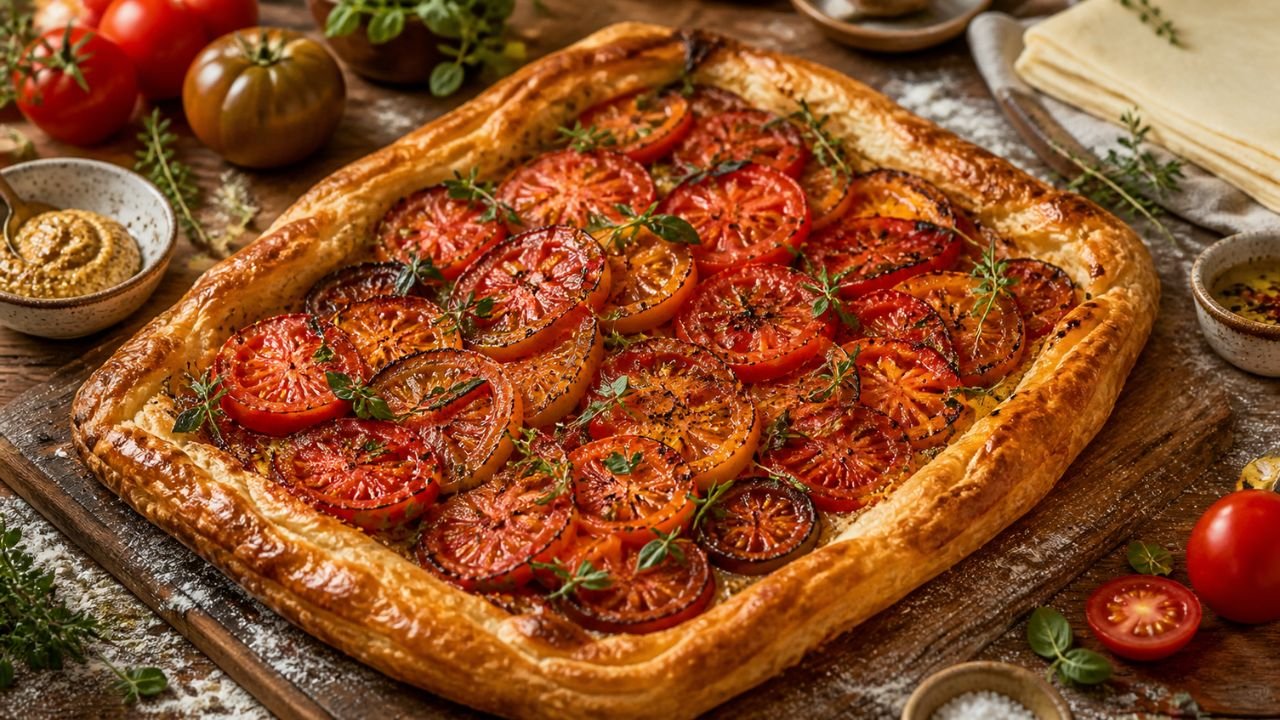
A simple tomato tart with mustard and puff pastry is the kind of recipe that feels both effortless and thoughtful. It turns a handful of everyday ingredients into something that looks elegant on the table and tastes deeply satisfying. The contrast is what makes it memorable: crisp, buttery layers of puff pastry, a thin spread of sharp mustard, juicy tomatoes that soften in the oven, and a savory finish from cheese and herbs. It is rustic enough for a relaxed lunch yet polished enough to serve as a starter for guests.
This tart is especially useful when tomatoes are abundant and you want a dish that highlights their sweet acidity without covering it up. The mustard brings depth and a little bite, while the pastry provides structure and richness. The key is balance. Too much mustard can overpower the tart, and watery tomatoes can soften the crust, so a few smart steps in the preparation make all the difference. Once you know the method, this becomes a recipe you can return to again and again, adapting it for the season, your pantry, or the occasion.
Another reason this tart works so well is that it fits many moments. Serve it warm with a green salad for lunch, add a soup for a light dinner, or cut it into small squares for an appetizer. It can be made for family meals, weekend brunch, picnics, or casual entertaining. The flavors are familiar, but the presentation feels special, which is often the mark of a truly useful recipe.
What keeps this version simple is the use of ready-made puff pastry. Instead of making dough from scratch, you can focus on getting the topping right. A few ripe tomatoes, Dijon or whole-grain mustard, olive oil, cheese, and herbs are all you need to build a tart with impressive flavor. The oven does the final work, transforming the pastry into a golden shell and concentrating the tomatoes until their sweetness deepens.
If you enjoy savory baking but do not want a complicated project, this recipe is ideal. It relies on straightforward techniques, rewards attention to detail, and leaves plenty of room for personal variation. Once you understand why each step matters, the tart becomes easy to master.
Recipe Information
- Recipe Yield: 4 to 6 servings
- Serves: 4 to 6 people
- Preparation time: 20 minutes
- Cooking time: 30 minutes
- Total time: 50 minutes
The flavor profile is balanced and savory, with a buttery crust, tangy mustard, sweet roasted tomato, and a lightly cheesy finish. It belongs to the category of savory tart recipes and is inspired by classic French-style combinations, especially the pairing of tomato and mustard that appears in many home-style bakes. Because the ingredient list is short, quality matters. Good tomatoes, flavorful mustard, and all-butter puff pastry can elevate the final result considerably.
This is also a practical make-ahead recipe in parts. You can slice and season the tomatoes in advance, grate the cheese, and keep the pastry chilled until you are ready to assemble. The tart is simple enough for a weekday but attractive enough for guests, which makes it a reliable addition to any cook’s repertoire.
Ingredients
- 1 sheet puff pastry, thawed if frozen
- 2 tablespoons Dijon mustard or whole-grain mustard
- 4 medium ripe tomatoes
- 1 cup grated Gruyere, Comte, or sharp white cheddar
- 1 tablespoon olive oil
- 1 teaspoon fresh thyme leaves
- 1 tablespoon chopped fresh basil, plus more for finishing
- 1 small clove garlic, very finely grated or minced
- 1 tablespoon finely grated Parmesan, optional
- 1 pinch sugar, only if tomatoes are very tart
- Salt, to taste
- Freshly ground black pepper, to taste
Each ingredient has a clear purpose. Puff pastry creates a flaky base that bakes quickly and feels luxurious without extra effort. Mustard acts as both seasoning and barrier, adding sharpness while helping separate the pastry from the juicy tomatoes. Cheese contributes savoriness and also absorbs some moisture during baking. Fresh herbs brighten the tart and keep it from feeling too rich.
Tomatoes are the star, so choose them carefully. Medium tomatoes are often easiest to slice evenly and arrange neatly. Look for tomatoes that are ripe and flavorful but not so soft that they collapse when sliced. If your tomatoes are especially juicy, lightly salting them and letting them rest for a few minutes before assembly will help draw out excess moisture. A quick blot with paper towels can make a noticeable difference in the final texture of the crust.
Preparation
Begin by preheating the oven to 400°F, or 200°C. Line a baking tray with parchment if available, then place the puff pastry sheet on the tray. If needed, gently roll it just enough to even out the thickness, but do not make it too thin. Fold or score a narrow border, about 1 inch from the edge, all the way around. This border will puff up and frame the filling, giving the tart a defined shape.
Use a fork to prick the center area of the pastry several times, leaving the border untouched. This step helps prevent the middle from rising too much during baking. Keep the pastry cold while you prepare the topping. Puff pastry bakes best when it goes into the oven chilled, as the cold butter layers create the steam that produces lift and flakiness.
Slice the tomatoes into rounds about 1/4 inch thick. Lay them on a plate or tray and sprinkle lightly with salt. Let them sit for 10 minutes so some of their moisture is released. Then blot them gently with paper towels. This is one of the most important steps in the recipe. It helps keep the pastry crisp instead of soggy and concentrates the tomato flavor at the same time.
In a small bowl, stir the mustard with the minced garlic. If you like a gentler mustard flavor, use a combination of Dijon and whole-grain mustard. Spread this mixture evenly over the center of the pastry, staying within the scored border. The layer should be thin but complete, so every bite has a little of that tangy depth.
Scatter most of the grated cheese over the mustard layer, reserving a small handful for the top. The cheese under the tomatoes acts almost like a buffer. It melts into the mustard and pastry, creating a savory layer that helps protect the crust. Arrange the tomato slices over the cheese in slightly overlapping rows or concentric circles, depending on the shape of your pastry. Avoid stacking them too heavily. A single, slightly overlapping layer gives the best texture and allows moisture to evaporate as the tart bakes.
Season the tomatoes with black pepper, thyme, chopped basil, and a very light drizzle of olive oil. Add the remaining cheese over the top, followed by Parmesan if using. If your tomatoes taste particularly sharp rather than sweet, a tiny pinch of sugar can help round out the flavor, but use it sparingly. The goal is not sweetness, only balance.
Bake the tart for 30 minutes, or until the pastry is deeply golden around the edges and underneath, and the tomatoes are softened and slightly concentrated. Ovens vary, so start checking near the end of the cooking time. If the top is done but the base seems pale, move the tray to a lower oven rack for the last few minutes. A well-baked base is essential because the tart should feel crisp and sturdy when sliced.
Once baked, let the tart rest for 5 to 10 minutes before serving. This brief rest helps the juices settle and makes the tart easier to cut. Finish with extra basil or thyme if desired. Serve warm or at room temperature.
The finished tart should have clear layers and contrast in every bite. The border will be airy and crisp, the center slightly creamy from the melted cheese and mustard, and the tomatoes tender with concentrated flavor. That balance is what makes the recipe so appealing. It is simple, but it does not taste plain.
Tips
The most useful tip for this recipe is to manage moisture carefully. Tomatoes contain a lot of water, and puff pastry is delicate. Salting and blotting the slices before assembly is the easiest way to improve texture. You can also choose plum tomatoes if standard slicing tomatoes are especially watery where you live, though the tart may look slightly different.
Keep the pastry cold. If it softens too much while you work, place the assembled tart in the refrigerator for 10 minutes before baking. Cold pastry puffs better and holds its shape more neatly. Warm pastry can become greasy and lose some of its layered structure.
Do not overload the tart. It can be tempting to add extra tomatoes, extra cheese, or a thick layer of mustard, but restraint produces a better result. Too much topping can weigh down the pastry and keep the center from crisping properly. A moderate amount of filling creates better texture and more balanced flavor.
Choose a mustard you enjoy eating on its own. Dijon gives a sharper, smoother taste, while whole-grain mustard adds little bursts of texture and a slightly milder finish. Either works well, and a combination of the two is often ideal. If you are sensitive to mustard’s heat, spread a thinner layer and let the cheese soften its edge.
Pay attention to the underside of the tart. A golden top does not always guarantee a crisp base. Baking on a preheated sheet pan or placing the tart on a lower rack for part of the baking time can improve bottom browning. If you make savory tarts often, this small adjustment can transform the result.
Let the tart cool slightly before cutting. Straight from the oven, the juices are more active and the pastry is fragile. A short rest gives you cleaner slices and a more settled texture. The tart remains delicious at room temperature, so there is no rush to serve it the second it leaves the oven.
Variations
You can vary this tart in many simple ways. Swap Gruyere with Comte, Emmental, fontina, cheddar, or a little goat cheese. Change the herbs with the season, such as thyme, basil, oregano, chives, parsley, or tarragon.
For extra flavor, add caramelized onions under the tomatoes, or use small amounts of zucchini or roasted red peppers. To make it heartier, add thin ham slices, anchovies, olives, or capers.
You can make one large tart or smaller individual tarts. You can also adjust the mustard by using a milder one or mixing it with creme fraiche for a creamier taste.
Different tomatoes also work well. Heirloom tomatoes are great in summer, while vine-ripened tomatoes are more practical in cooler months.
Conclusion
A simple tomato tart with mustard and puff pastry proves that a recipe does not need a long ingredient list or advanced technique to be deeply satisfying. Its appeal comes from the harmony of crisp pastry, vivid tomatoes, sharp mustard, melted cheese, and fresh herbs. Every component has a role, and when they come together, the result feels generous and refined at once.
This is the kind of dish that earns a permanent place in your cooking routine because it adapts so easily to different settings. It can be lunch, dinner, appetizer, or picnic food. It can feel rustic or elegant depending on how you serve it. Most importantly, it delivers strong flavor with relatively little effort, which is exactly what many home cooks want from a reliable recipe.
By keeping the process simple and paying attention to a few details, especially the moisture of the tomatoes and the temperature of the pastry, you can make a tart that looks beautiful and tastes balanced every time. Whether you serve it with a salad, a bowl of soup, or on its own, this savory tart is a reminder that simple combinations are often the most enduring.