
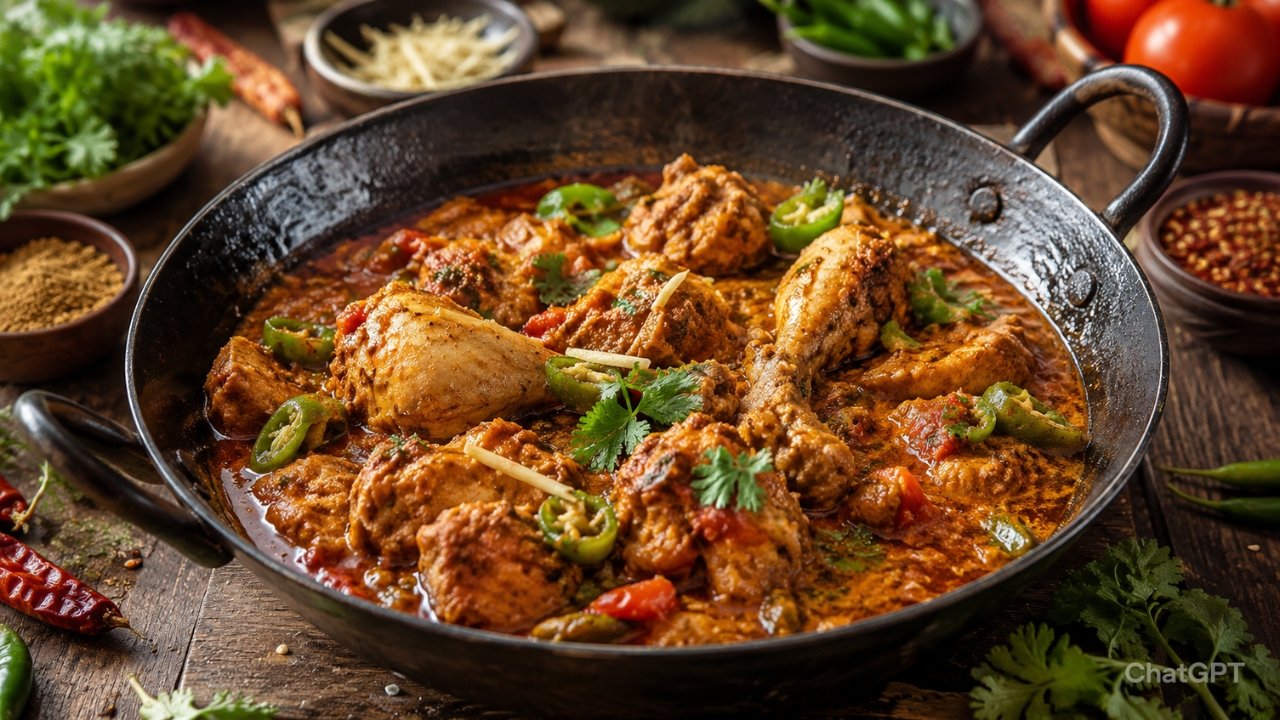
Khurram Shahzad’s Chicken Karahi is the kind of dish that instantly captures attention with its rich aroma, vibrant color, and deeply comforting flavor. This traditional Pakistani-style chicken karahi is cooked in a thick tomato-based masala infused with ginger, garlic, green chilies, and fragrant spices that create a bold and unforgettable taste. Served sizzling hot with naan or roti, the dish feels both rustic and luxurious at the same time.
The beauty of chicken karahi lies in its simplicity. Unlike heavily layered curries, this recipe focuses on fresh ingredients cooked carefully to allow every spice and herb to shine naturally. The chicken absorbs the smoky tomato gravy beautifully, while fresh coriander and julienned ginger add brightness and freshness at the end. It is a dish that works perfectly for family dinners, festive occasions, and even weekend gatherings when you want to impress everyone at the table.
One of the reasons this recipe is so loved is because it balances spice, richness, and freshness perfectly. The tomatoes create a slightly tangy base, while black pepper, cumin, and coriander provide warmth and depth. Yogurt gives the gravy a velvety texture without making it too heavy. Every bite feels hearty and satisfying, making it difficult to stop eating once you start.
This chicken karahi recipe is designed to deliver restaurant-style flavor using ingredients easily available at home. With proper cooking techniques and attention to timing, you can recreate the same irresistible aroma and taste that makes this dish so popular across South Asian kitchens.
Recipe Information
This flavorful chicken karahi recipe serves approximately 4 to 5 people and is ideal for lunch or dinner. The preparation process is straightforward and focuses on building layers of flavor gradually. The cooking method uses a single pan, making cleanup easier while allowing the chicken to absorb the masala thoroughly.
- Preparation Time: 20 minutes
- Cooking Time: 45 minutes
- Total Time: 65 minutes
- Recipe Yield: 4–5 servings
- Recipe Category: Main Course
- Recipe Cuisine: Pakistani
The recipe works best when prepared in a heavy-bottomed wok or traditional karahi because it distributes heat evenly and helps the masala reduce beautifully. Fresh tomatoes are strongly recommended instead of canned ones because they provide a more authentic taste and texture.
Ingredients
- 1 kg chicken, cut into medium pieces
- 5 medium tomatoes, finely chopped
- 3 tablespoons cooking oil or ghee
- 1 large onion, finely sliced
- 1 tablespoon ginger paste
- 1 tablespoon garlic paste
- 2 green chilies, chopped
- 1 teaspoon red chili powder
- 1 teaspoon turmeric powder
- 1 teaspoon cumin powder
- 1 teaspoon coriander powder
- 1 teaspoon black pepper powder
- 1 teaspoon garam masala powder
- 1 teaspoon salt or according to taste
- 1/2 cup yogurt
- 2 tablespoons fresh coriander leaves, chopped
- 1 tablespoon fresh ginger, julienned
- 1 tablespoon lemon juice
- 2 tablespoons butter for finishing
The choice of chicken matters significantly in this recipe. Bone-in chicken pieces provide deeper flavor because the bones release richness into the gravy during cooking. If you prefer boneless chicken, you may use chicken thighs since they remain juicy and tender even after simmering.
Freshly ground spices enhance the flavor dramatically. Toasting cumin and coriander lightly before grinding them can elevate the aroma further. Ghee adds traditional richness, though oil can also be used for a lighter version.
Preparation
Begin by washing the chicken thoroughly and allowing the excess water to drain completely. Pat the pieces dry using paper towels because dry chicken browns better and helps develop deeper flavor during cooking.
Heat oil or ghee in a large karahi or deep pan over medium heat. Add the sliced onions and cook them slowly until they become golden brown. Stir continuously to prevent burning because evenly caramelized onions create the base flavor for the entire dish.
Once the onions are ready, add ginger paste and garlic paste. Cook for about one minute until the raw aroma disappears. This step is essential because undercooked ginger and garlic can leave a harsh aftertaste in the gravy.
Add the chicken pieces into the hot pan and cook on medium-high heat for 8 to 10 minutes. Stir occasionally so all sides are lightly browned. Browning seals the juices inside the chicken while also building a rich foundation for the curry.
Now add red chili powder, turmeric powder, cumin powder, coriander powder, black pepper powder, and salt. Mix thoroughly so the spices coat every piece of chicken evenly. Cook the spices for two minutes to release their aroma properly.
Add the chopped tomatoes and green chilies into the pan. Stir everything together and cook uncovered for about 15 minutes. During this time, the tomatoes will soften and gradually break down into a thick masala. Continue stirring occasionally to prevent sticking.
As the tomatoes cook, the oil will begin separating from the masala. This is a key sign that the gravy is developing correctly. Use the back of a spoon to mash larger tomato pieces for a smoother consistency.
Reduce the heat slightly and add the yogurt slowly while stirring continuously. This prevents the yogurt from curdling and ensures a silky texture in the gravy. Allow the mixture to simmer gently for another 10 minutes.
Cover the pan partially and let the chicken cook until tender. Depending on the size of the chicken pieces, this usually takes around 10 more minutes. The gravy should become thick, glossy, and cling beautifully to the chicken.
Add butter and garam masala during the final stage of cooking. Stir gently and allow the butter to melt completely into the gravy. This finishing touch creates the luxurious restaurant-style richness that makes chicken karahi irresistible.
Turn off the heat and finish the dish with chopped coriander, julienned ginger, and lemon juice. The fresh garnishes balance the rich gravy and add a burst of brightness to every bite.
Serve the chicken karahi immediately while hot. It pairs beautifully with naan, tandoori roti, paratha, or steamed basmati rice. A side of onion salad and mint chutney complements the flavors wonderfully.
Tips
Using ripe tomatoes is one of the most important aspects of achieving authentic flavor. Sour or unripe tomatoes can overpower the dish and create excessive acidity. Choose tomatoes that are deep red, juicy, and naturally sweet.
Cooking the masala patiently is essential. Rushing the tomato reduction stage can result in a watery gravy lacking depth. Allow the tomatoes to cook slowly until the oil separates clearly from the mixture.
If you prefer a smoky restaurant-style flavor, place a small piece of hot charcoal in a metal bowl inside the karahi once cooking is complete. Drizzle a few drops of oil over the charcoal and cover the pan for two minutes. This technique infuses the dish with a subtle smoky aroma.
Green chilies can be adjusted according to spice preference. For a milder version, reduce the quantity or remove the seeds before chopping. For extra heat, add sliced chilies as garnish before serving.
Always use medium heat while cooking spices. High heat can burn them quickly, creating bitterness in the final dish. Gentle cooking allows the spices to bloom properly and release their full fragrance.
Fresh coriander and ginger should be added only at the end. Cooking them too early reduces their freshness and aroma significantly. These garnishes are important because they provide contrast to the rich gravy.
If the gravy becomes too thick during cooking, add a small splash of hot water instead of cold water. Hot water maintains the cooking temperature and preserves the texture of the sauce.
Allow the karahi to rest for five minutes before serving. This helps the flavors settle and intensify further, making the dish even more delicious.
Variations
There are several delicious ways to customize chicken karahi according to personal taste and regional preferences. One popular variation uses extra black pepper and fewer tomatoes to create a richer and slightly drier karahi with intense spice flavor.
Another variation includes capsicum or bell peppers added near the end of cooking. These vegetables bring slight sweetness and crunch that contrast beautifully with the soft chicken and thick gravy.
Some home cooks prefer adding cream for a smoother and more luxurious texture. A few tablespoons of cream stirred in during the final minutes create a milder and silkier gravy perfect for special occasions.
Boneless chicken karahi is also widely loved because it cooks faster and is easier to eat. Chicken thighs work especially well for this version because they remain juicy even after simmering in the masala.
For a healthier approach, reduce the oil quantity slightly and use low-fat yogurt. The flavor will still remain satisfying while making the dish lighter and more suitable for everyday meals.
You can also prepare a spicy green karahi by replacing tomatoes with green chilies, coriander, mint, and yogurt. This variation has a fresh herbal flavor and vibrant color that feels completely different yet equally delicious.
Paneer or mushroom karahi is an excellent vegetarian adaptation. The same masala base can be used with paneer cubes or mushrooms instead of chicken, creating a hearty and flavorful meat-free option.
Some regions add crushed fennel seeds for a sweeter aromatic note, while others include dried fenugreek leaves for earthy complexity. Experimenting with these ingredients allows you to personalize the recipe while maintaining its authentic character.
Conclusion
Khurram Shahzad’s Chicken Karahi truly deserves the attention it receives because it combines simplicity, bold flavor, and comforting richness in every bite. The dish captures the essence of traditional South Asian cooking where fresh ingredients and careful preparation create unforgettable meals.
Its thick tomato masala, tender chicken, aromatic spices, and fresh garnishes make it a complete experience rather than just another curry. Whether served during celebrations, family dinners, or casual weekend meals, chicken karahi always manages to bring warmth and excitement to the table.
What makes this recipe especially rewarding is that it does not require overly complicated ingredients or techniques. With patience and attention to detail, anyone can recreate restaurant-quality chicken karahi at home and enjoy its deeply satisfying flavor.
Once you try this aromatic and rich recipe, it will likely become one of your favorite comfort dishes. Pair it with warm naan, fresh salad, and chilled yogurt for a complete meal that feels both indulgent and unforgettable.