
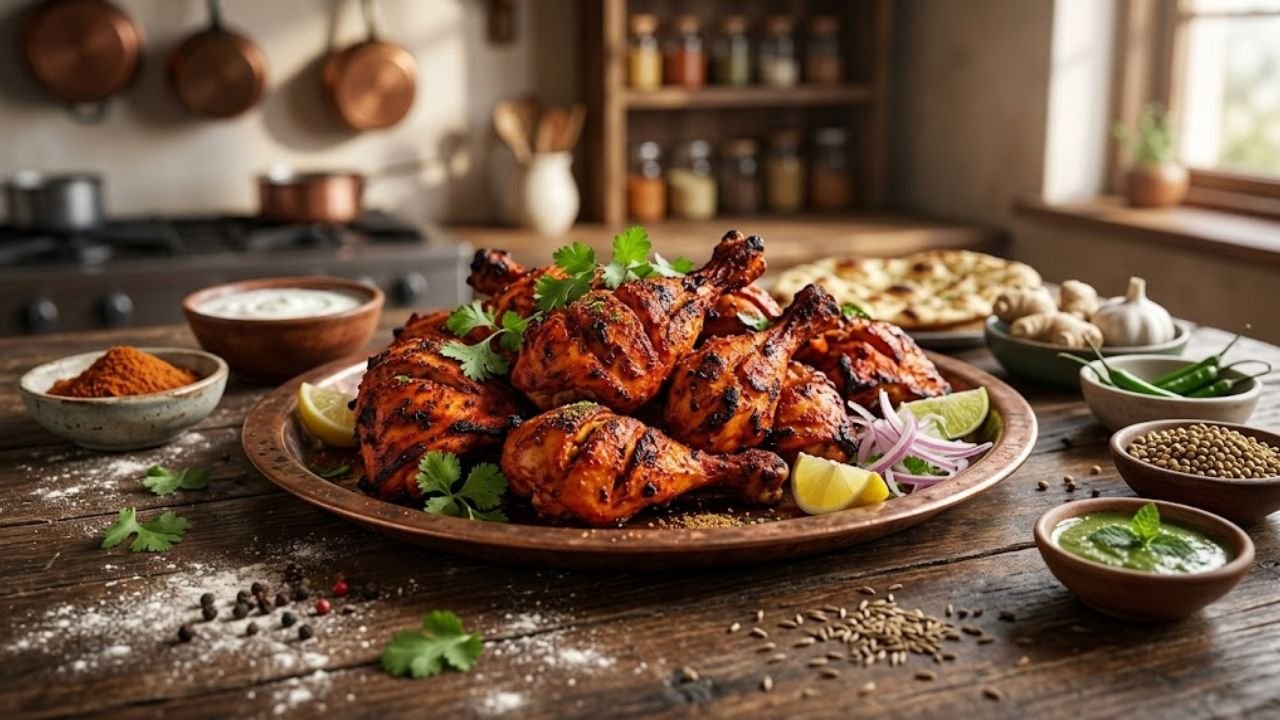
There are some dishes that become more than just food. They turn into rituals, cravings, and comforting memories that stay with people for years. Tandoori chicken is one such classic. Smoky, spicy, deeply marinated, and roasted until beautifully charred around the edges, it carries an irresistible aroma that instantly awakens the appetite. For Bollywood veteran Shakti Kapoor, this iconic dish reportedly became a daily indulgence that he simply could not resist. The secret behind that recurring craving lies not only in the bold spices but also in the careful balance of heat, smokiness, yogurt marinade, and juicy chicken cooked to perfection.
This version of tandoori chicken captures the same restaurant-style intensity while remaining surprisingly achievable at home. Every bite delivers layers of flavor — tangy yogurt, earthy spices, fresh garlic, ginger, smoky paprika, and the unmistakable char that defines authentic tandoori cooking. Unlike dry versions often served in hurried restaurants, this recipe focuses on tenderness, allowing the chicken to remain succulent beneath its crisp, fiery coating.
The beauty of tandoori chicken is its versatility. It can be served as a starter, a main course, a party platter, or even stuffed into wraps and salads. The marinade does most of the heavy lifting, infusing the meat overnight with rich flavor and ensuring every bite tastes deeply seasoned from the inside out. Once roasted or grilled, the chicken develops a dramatic color and smoky finish that makes it almost impossible to stop eating.
What makes this recipe particularly addictive is the combination of spices and cooking technique. The yogurt tenderizes the meat while the lemon juice adds brightness. Kashmiri chili provides color without overwhelming heat, while garam masala contributes warmth and complexity. A final brushing of butter after cooking creates the glossy finish associated with restaurant-style tandoori chicken.
If you have ever wondered why certain celebrities remain obsessed with simple comfort dishes despite having access to luxury dining, this recipe explains everything. The smoky aroma, juicy texture, and perfectly balanced spice profile create a deeply satisfying meal that feels indulgent yet familiar. Once you prepare it properly, the craving becomes completely understandable.
Recipe Information
This recipe creates a restaurant-style tandoori chicken with a rich marinade and authentic smoky flavor. The preparation requires enough resting time for the spices and yogurt to penetrate the meat deeply, resulting in tender and flavorful chicken that tastes far more intense than quick marinades.
- Preparation Time: 25 minutes
- Cooking Time: 40 minutes
- Total Time: 65 minutes
- Recipe Yield: 4 servings
- Recipe Category: Main Course
- Cuisine: Indian
- Difficulty Level: Moderate
The recipe can be prepared in an oven, air fryer, charcoal grill, or traditional tandoor. Each method creates slightly different textures, but all deliver deliciously smoky and spicy chicken when the marinade is prepared correctly.
Ingredients
The secret to exceptional tandoori chicken lies in the marinade. Every ingredient has a purpose, whether it is adding heat, acidity, smokiness, or tenderness. Using fresh spices and full-fat yogurt makes a noticeable difference in the final flavor.
- 1 kg chicken legs and thighs with skin removed
- 1 cup thick full-fat yogurt
- 2 tablespoons lemon juice
- 2 tablespoons ginger-garlic paste
- 2 tablespoons Kashmiri red chili powder
- 1 teaspoon hot red chili powder
- 1 teaspoon turmeric powder
- 2 teaspoons coriander powder
- 1 teaspoon cumin powder
- 1 teaspoon garam masala
- 1 teaspoon smoked paprika
- 1 tablespoon mustard oil
- 1 teaspoon salt
- 1 teaspoon black pepper
- 1 tablespoon butter for brushing
- 1 teaspoon dried fenugreek leaves
- 1 teaspoon chaat masala
- Fresh coriander leaves for garnish
- Lemon wedges for serving
- Sliced onions for serving
Choosing bone-in chicken pieces helps preserve moisture during cooking. The meat remains juicy while the outer layer develops the classic charred coating associated with traditional tandoori dishes.
Thick yogurt is essential because watery yogurt dilutes the marinade and prevents proper coating. If necessary, strain the yogurt for thirty minutes before mixing it with the spices.
Preparation
Begin by washing and patting the chicken dry thoroughly. Using a sharp knife, make deep slits across each piece. These cuts help the marinade penetrate deeply into the meat and also allow the chicken to cook more evenly.
Place the chicken in a large bowl and rub it first with lemon juice and a small amount of salt. Let it rest for about fifteen minutes. This first layer of seasoning starts tenderizing the meat and prepares it for the main marinade.
In another large bowl, combine yogurt, ginger-garlic paste, Kashmiri chili powder, hot chili powder, turmeric, coriander powder, cumin powder, garam masala, smoked paprika, mustard oil, black pepper, and the remaining salt. Mix everything until smooth and creamy.
Add dried fenugreek leaves by crushing them gently between your palms before mixing them into the marinade. This releases their aroma and gives the chicken a more authentic restaurant-style fragrance.
Transfer the chicken into the marinade and coat every piece thoroughly. Massage the marinade deep into the slits and around every surface. Cover the bowl and refrigerate for at least six hours, although overnight marination delivers the best flavor and texture.
Once marinated, remove the chicken from the refrigerator about thirty minutes before cooking. This helps the meat cook more evenly and prevents sudden temperature shock.
For oven cooking, preheat the oven to 220 degrees Celsius. Arrange the chicken pieces on a wire rack placed over a tray. This setup allows hot air to circulate evenly and prevents the chicken from becoming soggy underneath.
Roast the chicken for twenty minutes on one side. Then flip each piece carefully and continue roasting for another fifteen to twenty minutes until the edges become slightly charred and the internal temperature is fully cooked.
For extra smokiness, switch the oven to broil mode during the final few minutes. Watch carefully to avoid burning. The slight charring is what gives tandoori chicken its signature appearance and flavor.
If using a charcoal grill, cook the chicken over medium-high heat while turning occasionally. The charcoal naturally creates a deeper smoky aroma that resembles traditional tandoor cooking.
Air fryers also work beautifully for smaller batches. Cook the chicken at 200 degrees Celsius for approximately twenty-five minutes, flipping halfway through cooking.
Once cooked, immediately brush the hot chicken with melted butter. This adds richness, enhances the glossy finish, and intensifies the flavor. Sprinkle lightly with chaat masala for a tangy finishing touch.
Serve the tandoori chicken hot with onion rings, lemon wedges, mint chutney, or naan bread. The contrast between the smoky chicken and fresh accompaniments creates an unforgettable combination.
One reason this dish becomes addictive is the balance between texture and spice. The outside develops crisp, charred edges while the inside remains tender and juicy. The yogurt-based marinade locks in moisture while carrying layers of spices into the meat itself.
Restaurant chefs often rely on artificial coloring to create dramatic red tandoori chicken, but this recipe avoids unnecessary additives. Kashmiri chili naturally provides a rich reddish-orange hue without making the dish overwhelmingly spicy.
The use of mustard oil is another important detail. It contributes sharpness and authenticity that ordinary cooking oil cannot replicate. Heating the mustard oil slightly before adding it to the marinade helps mellow its raw intensity.
A final smoky effect can be added at home using a simple charcoal technique. Place a small hot charcoal piece in a metal bowl inside the cooked chicken tray, drizzle a little oil on top, and immediately cover the tray for two minutes. The trapped smoke infuses the chicken with a deeper tandoor-like aroma.
Tips
Always use full-fat yogurt because low-fat versions tend to separate during cooking and fail to coat the chicken properly. Thick yogurt creates a richer marinade and better caramelization.
Do not skip the slits in the chicken pieces. They help the marinade penetrate deeper and prevent bland interiors.
Longer marination creates dramatically better flavor. Overnight marination allows the spices and yogurt to transform the texture of the meat completely.
Cooking on a wire rack improves airflow and prevents steaming. This technique helps achieve the dry charred edges associated with authentic tandoori chicken.
Avoid overcrowding the cooking tray. Leave enough space between pieces so the heat circulates evenly and creates proper browning.
Brush butter only after cooking. Applying butter too early can cause burning before the chicken finishes cooking internally.
If the chicken begins browning too quickly, reduce the heat slightly and continue cooking slowly. This prevents burnt spices while keeping the inside juicy.
Fresh lemon juice added right before serving brightens the smoky spices and enhances the overall flavor profile.
For milder spice levels, reduce the hot chili powder while keeping the Kashmiri chili intact for color and balanced flavor.
Rest the chicken for a few minutes after cooking before serving. This helps retain juices inside the meat.
Variations
Tandoori chicken can be customized in several exciting ways without losing its classic identity. Each variation introduces a different texture or flavor profile while preserving the smoky spirit of the dish.
For a creamier version, add a few tablespoons of fresh cream or cashew paste into the marinade. This creates a richer, slightly milder flavor often seen in luxurious restaurant adaptations.
Boneless chicken thighs can replace bone-in pieces for faster cooking and easier serving. They remain juicier than chicken breast and absorb marinade beautifully.
Paneer tandoori is a popular vegetarian alternative. Thick cubes of paneer are marinated similarly and grilled until lightly charred around the edges.
Fish tandoori works especially well with firm fish varieties like salmon or kingfish. Since fish cooks quickly, reduce the cooking time significantly to prevent dryness.
Green tandoori chicken uses mint, coriander, and green chilies blended into the marinade. The result is fresher, herbaceous, and slightly brighter than the traditional red version.
For a healthier approach, skinless chicken breast can be used, although careful cooking is required to avoid drying out the meat.
Tandoori chicken wraps are another excellent option. Slice leftover chicken and wrap it in naan or flatbread with onions, mint chutney, lettuce, and yogurt sauce.
Some cooks add a touch of honey to the marinade for subtle sweetness and enhanced caramelization. This creates a slightly glossy finish that balances spicy flavors beautifully.
You can also transform leftover tandoori chicken into salads, rice bowls, sandwiches, or pasta dishes. The smoky spice blend adapts surprisingly well to modern fusion meals.
Conclusion
The enduring appeal of tandoori chicken comes from its ability to deliver bold flavor, smoky aroma, and comforting satisfaction all at once. It is a dish rooted deeply in Indian culinary tradition while remaining universally loved across cultures and generations.
Once prepared correctly, the obsession becomes understandable. The marinade transforms simple chicken into something intensely flavorful and deeply memorable. Every bite combines spice, char, tanginess, and tenderness in perfect balance.
Whether inspired by celebrity cravings or simply by a love for authentic Indian flavors, this tandoori chicken recipe offers a restaurant-quality experience at home. It feels indulgent enough for celebrations yet comforting enough to enjoy regularly.
The true secret behind the craving is not just the spice mix or smoky finish. It is the emotional comfort that comes from a perfectly cooked dish that delivers warmth, richness, and satisfaction every single time.
Served fresh from the grill with lemon wedges and cooling mint chutney, this tandoori chicken quickly becomes the centerpiece of any meal. Once the aroma fills the kitchen, resisting a second serving becomes almost impossible.