
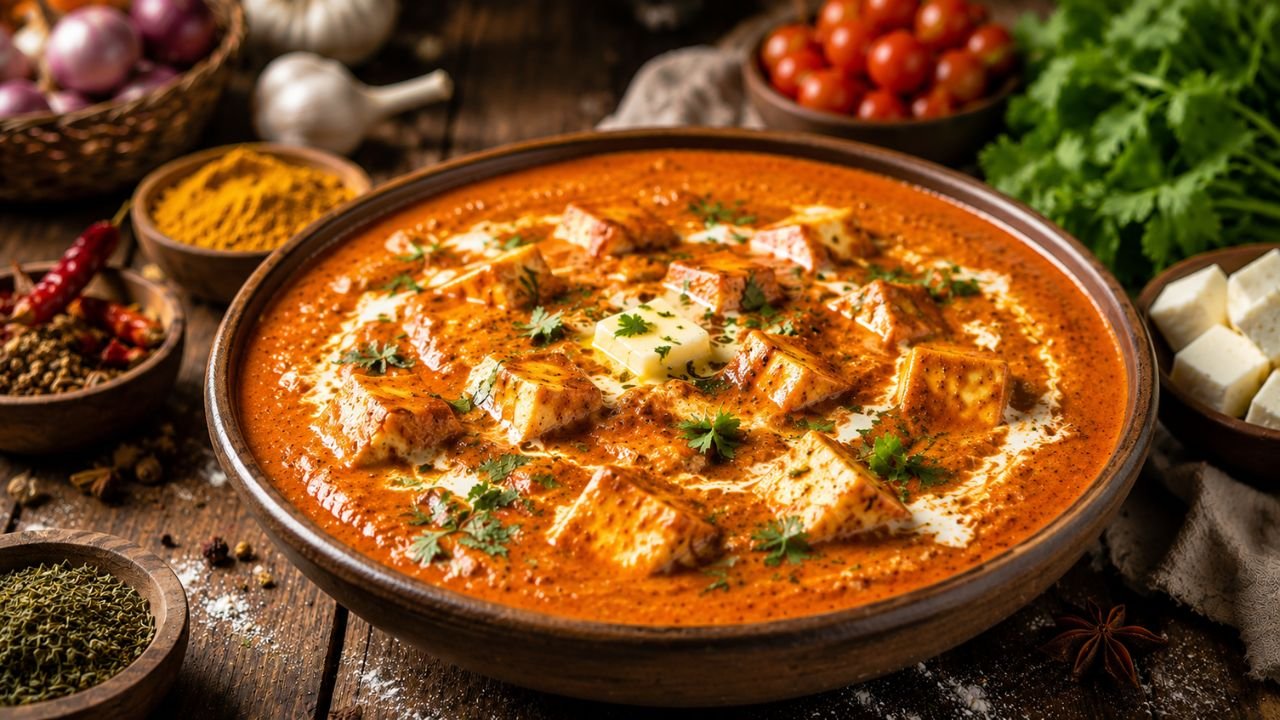
Madhav Tiwari’s Paneer Butter Masala is the kind of dish that instantly wins attention at the table. Rich, fragrant, creamy, and deeply satisfying, it brings together soft paneer cubes and a luxurious tomato-cashew gravy that feels restaurant-style yet approachable enough for a home kitchen. This recipe is designed to give you that familiar North Indian comfort with balanced spice, a silky texture, and a glossy finish that makes every spoonful feel special.
What makes Paneer Butter Masala so loved is its contrast of flavors. The tomatoes add brightness, the cashews bring body and natural sweetness, the butter gives richness, and the cream rounds everything off into a smooth, velvety sauce. Paneer acts like a sponge, absorbing the gravy while still holding its shape, which means every bite is tender, flavorful, and indulgent without becoming heavy if handled carefully. When cooked well, this dish has a beautiful restaurant-style color, a slightly sweet aroma, and a finish that feels festive even on an ordinary day.
This version is written for cooks who want clarity and reliability. It keeps the process simple, avoids unnecessary complexity, and focuses on the essentials that matter most: a well-cooked onion-tomato base, properly blended gravy, gentle spice layering, and paneer added at the right moment so it stays soft. Serve it with naan, roti, tandoori bread, jeera rice, or plain steamed rice, and it becomes a complete meal that feels both comforting and elegant.
Recipe Information
- Preparation Time: 20 minutes
- Cooking Time: 35 minutes
- Total Time: 55 minutes
- Type: Main Course
- Cuisine: Indian
- Keywords: paneer butter masala, paneer curry, Indian vegetarian recipe, creamy paneer, tomato cashew gravy
- Recipe Yield: 4 servings
- Calories: 420 kcal per serving
This recipe is ideal for family dinners, special weekends, festive lunches, or any time you want a dish that feels a little more luxurious than the everyday menu. It is also easy to adapt for different preferences, whether you like a slightly sweeter restaurant profile, a more savory and spiced version, or a lighter home-style interpretation. The beauty of Paneer Butter Masala lies in its flexibility while still staying true to its comforting identity.
Ingredients
- 250 grams paneer, cut into cubes
- 2 tablespoons butter
- 1 tablespoon oil
- 2 medium onions, roughly chopped
- 4 medium tomatoes, roughly chopped
- 10 to 12 cashews
- 1 tablespoon ginger-garlic paste
- 1 teaspoon Kashmiri red chili powder
- 1/2 teaspoon turmeric powder
- 1 teaspoon coriander powder
- 1/2 teaspoon cumin powder
- 1 teaspoon garam masala
- 1 teaspoon sugar, optional
- 1 teaspoon salt, or to taste
- 1/2 cup fresh cream
- 1 to 1 1/2 cups water, as needed
- 1 teaspoon dried fenugreek leaves, crushed
- 1 tablespoon chopped coriander leaves for garnish
- 2 to 3 whole green chilies, optional
The ingredients list is intentionally balanced to create a gravy that tastes rich without becoming overly dense. Cashews help build the signature smoothness, while cream and butter provide the classic finish associated with Paneer Butter Masala. Kashmiri chili powder is especially useful because it gives a bright red color without making the dish too hot. If you prefer stronger heat, a little extra green chili or a sharper chili powder can be added, but the goal here is a smooth, mellow richness with just enough spice to keep the flavor lively.
Good paneer matters more than many people realize. Fresh paneer will stay soft and pleasant after simmering, while older paneer can become rubbery. If your paneer is store-bought and feels firm, soak the cubes in warm water for 10 minutes before cooking. This small step improves texture and helps the paneer stay tender in the final gravy.
Preparation
To begin, prepare the tomato-cashew base. Heat the oil in a pan and add the chopped onions. Cook them on medium heat until they become soft and lightly golden. This stage is important because it gives the gravy natural depth. Add the ginger-garlic paste and cook briefly until the raw smell disappears. Then add the chopped tomatoes and cashews, along with a pinch of salt. Cook this mixture until the tomatoes break down completely and the mixture begins to look soft, glossy, and slightly jammy. The cashews should soften enough to blend smoothly, which helps create the signature creamy texture later.
Once the tomato mixture is well cooked, allow it to cool slightly. Transfer it to a blender and blend into a fine, smooth puree. For the most elegant restaurant-style result, strain the puree through a sieve if you want an extra-silky gravy. This step is optional, but it creates a more polished finish. Smoothness is one of the defining qualities of Paneer Butter Masala, so the finer the base, the better the final dish will taste and look.
Next, return a clean pan to the stove and add the butter. Once it melts, add the tomato-cashew puree. Stir well and let it cook on medium heat for several minutes. The gravy will gradually deepen in color and become richer in aroma. This is the point where you add the Kashmiri red chili powder, turmeric, coriander powder, cumin powder, and salt. Mix everything evenly. Add a little water if the gravy feels too thick. The sauce should simmer gently, not boil aggressively, so the flavors can settle and the butter can emulsify into the base.
After the gravy has cooked and the raw tomato taste has disappeared, add the sugar if you want a subtle restaurant-style balance. The sugar does not make the dish sweet in an obvious way; instead, it softens the acidity of the tomatoes and helps round out the flavor. Add the dried fenugreek leaves at this stage, crushing them between your palms before sprinkling them in. Fenugreek gives Paneer Butter Masala its unmistakable signature aroma, and even a small amount makes a noticeable difference.
Now add the paneer cubes. Stir gently so the cubes are coated without breaking. Simmer the curry for only a few minutes at this stage, because paneer does not need long cooking. Overcooking can make it tough, so the goal is simply to warm it through and let it absorb some of the gravy. Once the paneer is in, lower the heat and add the fresh cream. Stir slowly to create a smooth, glossy finish. If needed, add a little more water to reach your preferred consistency. Some people enjoy a thicker, scoopable gravy, while others prefer a slightly looser sauce for serving with rice or naan.
Finally, taste the curry and adjust the seasoning. Add more salt if needed, a touch more garam masala for warmth, or an extra spoon of butter for a richer finish. Turn off the heat and garnish with chopped coriander leaves. For a restaurant-style presentation, add a swirl of cream on top and serve immediately. The curry tastes best when it is fresh, aromatic, and just hot enough to release the fragrance of the butter and spices.
If you are serving this dish for guests, timing matters. Make the gravy a little ahead of time and add paneer just before serving so the texture stays soft and inviting. The sauce can sit for a short while without losing quality, and that makes it convenient for dinners or celebrations. Paneer Butter Masala is one of those recipes that rewards calm, careful cooking rather than speed. Each stage contributes to the final result, from browning the onions to finishing with cream at the end.
For serving, pair it with butter naan, lachha paratha, tandoori roti, or steamed basmati rice. If you want a fuller spread, add a simple salad, sliced onions with lemon, and a light lentil dish on the side. The richness of the curry works beautifully with soft breads, while rice gives a cleaner, more delicate contrast that allows the gravy to shine.
Tips
Use ripe tomatoes for the best base flavor. They should be juicy and bright, because the dish depends heavily on the tomato foundation. If tomatoes are too sour or too pale, the gravy may need extra balancing. Cashews help smooth out acidity and improve body, so do not skip them unless you have a specific dietary reason. A small amount of sugar can also help create that familiar restaurant taste without making the dish noticeably sweet.
Cook the onion-tomato mixture patiently. Rushing this stage can leave the gravy tasting raw or sharp. The mixture should look fully softened before blending, and the final sauce should simmer long enough for the flavors to come together. If the puree is not cooked properly, the curry may taste flat or unfinished. This patience is what separates a good Paneer Butter Masala from a great one.
Avoid overcooking the paneer. Add it near the end and keep the simmer short. If you want extra-soft paneer, soak the cubes in warm water before adding them. This is especially useful when using packaged paneer that has been chilled for a long time. Also, stir gently once the paneer is in the pan. Aggressive stirring can break the cubes and disturb the look of the dish.
Butter and cream should be added with care. Too much heat after adding cream may cause separation, so keep the flame low once the finishing ingredients go in. If the gravy is too thick, thin it with a little warm water rather than cold water, which keeps the texture smoother. A final sprinkle of crushed fenugreek leaves adds a signature aroma, so try not to skip it even if you use it sparingly.
Taste as you go. Because the dish is rich and balanced, even small adjustments can make a noticeable difference. A bit more salt sharpens the profile, while an extra pinch of garam masala adds warmth. If the curry feels too tangy, a little more cream or butter can soften it. If it feels too mild, a touch more chili powder or ginger can brighten the flavor. The best result comes from subtle corrections rather than dramatic changes.
Variations
There are several ways to personalize Paneer Butter Masala without losing its identity. For a lighter version, reduce the butter slightly and replace some of the cream with milk or cashew milk. The curry will still remain rich, but it will feel less heavy. This is useful for everyday meals when you want comfort food with a more moderate finish.
For a more traditional restaurant-style version, increase the cream and finish with a little extra butter on top just before serving. You can also add a few drops of kasuri-infused oil or use a small piece of cinnamon while cooking the base for a deeper aroma. Some cooks like to blend in a few blanched almonds with the cashews for an even silkier texture. This variation makes the gravy slightly more luxurious and gives it a fuller mouthfeel.
If you like stronger spice, add a slit green chili while the gravy simmers or increase the garam masala very slightly. The dish will still stay creamy, but the flavor will become more assertive. You can also add a few roasted bell pepper pieces for a sweeter, smoky profile. This works especially well if you enjoy a colorful presentation and a curry that feels a little more layered.
For a smoky restaurant-style touch, you can briefly infuse the dish with charcoal smoke after cooking. This technique gives the gravy a dramatic aroma, but it should be used carefully so it enhances rather than overwhelms the creaminess. Another variation is to blend in a small amount of roasted onion for a deeper savory note. Each variation changes the mood of the dish while preserving the comforting core of paneer, tomato, butter, and cream.
Conclusion
Paneer Butter Masala is a rich, comforting Indian curry with a creamy tomato gravy, soft paneer, and mild spices. This easy version keeps the method simple while still giving you a smooth, restaurant-style result by properly cooking the base, blending it well, and finishing with butter, cream, and paneer at the right time. Perfect for both special occasions and cozy meals at home, it pairs beautifully with naan, roti, or rice and is always a crowd-pleaser.