
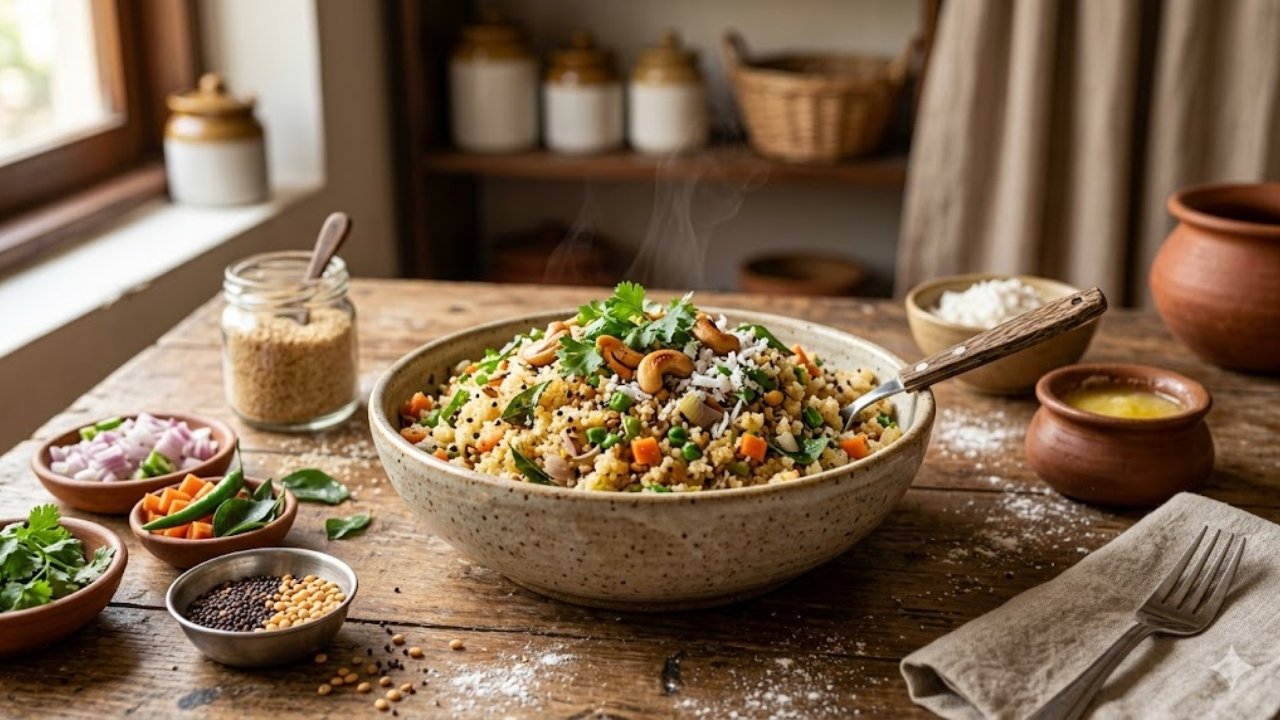
Upma Recipe with Roasted Rava for a Light and Comforting Breakfast is one of those simple Indian breakfast dishes that feels warm, filling, and easy on the stomach without being heavy. Made with roasted semolina, vegetables, mild spices, and a gentle tempering of mustard seeds, curry leaves, ginger, and green chili, this recipe gives you a soft, fluffy, and comforting bowl that can be enjoyed on busy mornings as well as relaxed weekends. The real secret of good upma is roasted rava, because it gives the dish a nutty aroma, prevents stickiness, and helps every spoonful stay light. This breakfast is popular because it uses everyday pantry ingredients, cooks quickly, and can be adjusted according to taste. You can keep it plain and simple, add vegetables for color and nutrition, or finish it with lemon juice and coriander for freshness.
Recipe Information
This upma recipe is designed for a soft, balanced, and homestyle breakfast using roasted rava. The preparation time is 10 minutes, and the cooking time is 15 minutes, making the total time 25 minutes. It serves 3 people and works well as a breakfast, light brunch, or evening snack. The cuisine is Indian, especially inspired by South Indian home cooking, where upma is loved for its comfort, speed, and simple flavor. The recipe uses fine or medium semolina, also known as rava or sooji. Roasting the rava before cooking is important because it improves texture and aroma. If you already have roasted rava, the recipe becomes even faster.
The final texture should be soft, moist, and fluffy, not dry or pasty. To get this result, water quantity and heat control matter. For a softer upma, use a little more water. For a firmer texture, reduce the water slightly. This version uses a balanced ratio that gives a light breakfast feel while still keeping the dish satisfying. Vegetables like carrots, peas, beans, and onions add mild sweetness, color, and nutrition. Cashews are optional but give a pleasant crunch. A spoon of ghee can be added at the end for a richer aroma, but oil alone also works well.
- Preparation time: 10 minutes
- Cooking time: 15 minutes
- Total time: 25 minutes
- Servings: 3
- Recipe category: Breakfast
- Recipe cuisine: Indian
- Main ingredient: Roasted rava
Ingredients
The ingredients for this roasted rava upma are simple and easy to find. The base of the dish is rava, which should be roasted until lightly aromatic. If you roast it at home, keep the flame low to medium and stir continuously so it does not brown too much. The aim is not to make it dark, but to remove the raw smell and create a light nutty fragrance. A good tempering builds the main flavor of upma. Mustard seeds, cumin seeds, urad dal, chana dal, curry leaves, ginger, and green chili come together to create a classic breakfast aroma. Onion adds mild sweetness, while vegetables make the dish more colorful and balanced.
Water is another key ingredient because it decides the texture. Hot water is preferred because it helps the roasted rava cook evenly without forming lumps. Salt should be added to the water before adding rava, so the flavor spreads properly. Lemon juice and fresh coriander are added at the end to brighten the dish. Ghee is optional, but even a small amount makes the upma taste more comforting. You can also use only oil if you want a lighter version. This recipe keeps spices mild because upma is usually enjoyed as a soft and soothing breakfast rather than a very spicy dish.
- 1 cup roasted rava or semolina
- 2 tablespoons oil or 1 tablespoon oil and 1 tablespoon ghee
- 1 teaspoon mustard seeds
- 1/2 teaspoon cumin seeds
- 1 teaspoon urad dal
- 1 teaspoon chana dal
- 8 to 10 curry leaves
- 1 tablespoon finely chopped ginger
- 1 to 2 green chilies, finely chopped
- 1 medium onion, finely chopped
- 1/4 cup finely chopped carrot
- 1/4 cup green peas
- 1/4 cup finely chopped beans
- 8 to 10 cashews, optional
- 2 and 1/2 cups hot water
- Salt to taste
- 1 tablespoon lemon juice
- 2 tablespoons chopped fresh coriander
- 1 teaspoon ghee for finishing, optional
Preparation
Start by checking whether your rava is already roasted. If it is not, place a pan on low to medium heat and add the rava. Dry roast it for 5 to 6 minutes, stirring continuously. The rava should become aromatic and slightly lighter in texture, but it should not turn brown. Once roasted, transfer it to a plate and keep it aside. This step is important because unroasted rava can make upma sticky and heavy. Roasted rava absorbs water better and gives the dish a fluffy finish. While roasting, do not leave the pan unattended because rava can burn quickly at the bottom.
Now heat oil or a mix of oil and ghee in a deep pan or kadai. Add mustard seeds and let them crackle. Add cumin seeds, urad dal, and chana dal. Stir until the dals turn lightly golden. This small step adds a nutty crunch and a traditional upma flavor. Add cashews if using, and fry them until lightly golden. Then add curry leaves, chopped ginger, and green chilies. Stir for a few seconds until fragrant. Be careful because curry leaves may splutter when added to hot oil. The ginger should release a fresh aroma but should not burn.
Add chopped onion and cook until it turns soft and slightly translucent. There is no need to brown the onion deeply. Upma tastes best when the onion is soft and sweet but still light in color. Add carrot, peas, and beans. Stir well and cook for 2 to 3 minutes. The vegetables should soften slightly but still hold their shape. If you like very soft vegetables, you can cook them a little longer. Add salt at this stage so the vegetables absorb flavor. Then pour in the hot water carefully. Stir everything and let the water come to a gentle boil.
Once the water is boiling, reduce the heat to low. Slowly add the roasted rava in a thin stream while stirring continuously with your other hand. This is the most important step for avoiding lumps. Do not add all the rava at once. Keep stirring as the rava falls into the water. The mixture will begin to thicken quickly. After all the rava is added, stir well, cover the pan, and cook on low heat for 3 to 4 minutes.
Turn off the heat and add lemon juice, chopped coriander, and a small spoon of ghee if desired. Mix gently without pressing the upma too much. Let it rest for 2 minutes before serving. Resting helps the texture settle and makes the upma easier to serve. Serve it hot with coconut chutney, pickle, curd, or simply enjoy it plain. A good upma should feel light, soft, and warm, with small bursts of flavor from curry leaves, ginger, green chili, and roasted rava.
- Roast the rava on low to medium heat until aromatic.
- Prepare the tempering with mustard seeds, dals, curry leaves, ginger, and chili.
- Cook onion and vegetables until lightly soft.
- Add hot water and bring it to a gentle boil.
- Add roasted rava slowly while stirring continuously.
- Cover and cook until the rava absorbs the water.
- Finish with lemon juice, coriander, and optional ghee.
Tips
The first and most important tip for perfect upma is to roast the rava properly. Roasting removes the raw taste and helps the grains stay separate after cooking. If your upma often turns sticky, the rava may not be roasted enough, or it may have been added too quickly into the water. Always add it gradually and keep stirring. Another useful tip is to use hot water instead of cold water. Hot water helps the rava cook evenly and gives a smoother texture. Cold water can slow down cooking and may create uneven lumps.
Do not cook upma on high heat after adding the rava. Once the rava is added, low heat is best. It allows the grains to absorb water gently without sticking to the bottom. If the mixture becomes too thick too quickly, sprinkle a little hot water and mix gently. If it feels too loose, cover and cook for another minute. The dish thickens slightly as it rests, so do not make it too dry in the pan. A moist upma tastes much better than a dry one.
Balance is also important in seasoning. Upma has mild ingredients, so the salt level should be correct. Taste the boiling water before adding rava; it should taste slightly seasoned. Lemon juice should be added after turning off the heat, because fresh lemon flavor becomes dull if cooked too long. Fresh coriander also tastes better when added at the end. For richer flavor, use a small amount of ghee with oil. For a lighter version, use only oil and add more vegetables. If serving kids, reduce green chili and increase carrots or peas for natural sweetness.
- Use roasted rava for a fluffy and light texture.
- Add rava slowly to boiling water while stirring.
- Keep the flame low after adding rava.
- Use hot water for even cooking.
- Do not skip curry leaves and ginger for classic flavor.
- Add lemon juice only after turning off the heat.
- Let the upma rest for 2 minutes before serving.
Variations
One of the best things about upma is how easily it can be changed according to taste and available ingredients. For a vegetable upma, add more finely chopped vegetables such as capsicum, cabbage, sweet corn, or cauliflower. Keep the pieces small so they cook quickly and blend well with the soft rava. For a protein-rich version, you can add roasted peanuts, more dals, or a handful of cooked moong dal.
For a softer South Indian hotel-style texture, increase the water slightly and use fine rava. This gives a smooth and moist upma that feels almost creamy. For a firmer texture, use medium rava and reduce the water a little. You can also make tomato upma by adding chopped tomatoes after the onions and cooking them until soft. This gives a mild tangy taste and a slightly deeper color. For lemon upma, increase lemon juice and add a pinch of turmeric during tempering. This gives the dish a fresh yellow color and brighter flavor.
If you want a no-onion version, simply skip onion and increase ginger, curry leaves, and vegetables. It will still taste good because the tempering carries a lot of flavor. For a festive or special breakfast version, add ghee-roasted cashews, a few raisins, and a little grated coconut at the end. For a healthier version, add more vegetables, reduce oil, and serve it with curd. You can also prepare the roasted rava in advance and store it in an airtight jar. This saves time during busy mornings and makes the recipe quicker.
- Vegetable upma: Add capsicum, cabbage, corn, or cauliflower.
- Tomato upma: Add chopped tomatoes and cook until soft.
- Lemon upma: Add extra lemon juice and a pinch of turmeric.
- No-onion upma: Skip onion and increase ginger and curry leaves.
- Cashew upma: Add fried cashews for a richer breakfast.
- Soft hotel-style upma: Use fine rava and slightly more water.
- Healthy upma: Use less oil and add more vegetables.
Conclusion
Upma Recipe with Roasted Rava for a Light and Comforting Breakfast is a practical, flavorful, and reliable dish for anyone who wants a quick morning meal without too much effort. The roasted rava gives it a soft and nutty base, while the tempering adds warmth and aroma. Vegetables make it colorful and more nourishing, and the final touch of lemon juice keeps it fresh. This recipe is simple enough for beginners but still satisfying for people who love traditional Indian breakfasts. Once you understand the right water ratio, slow addition of rava, and gentle cooking method, making perfect upma becomes easy every time.