
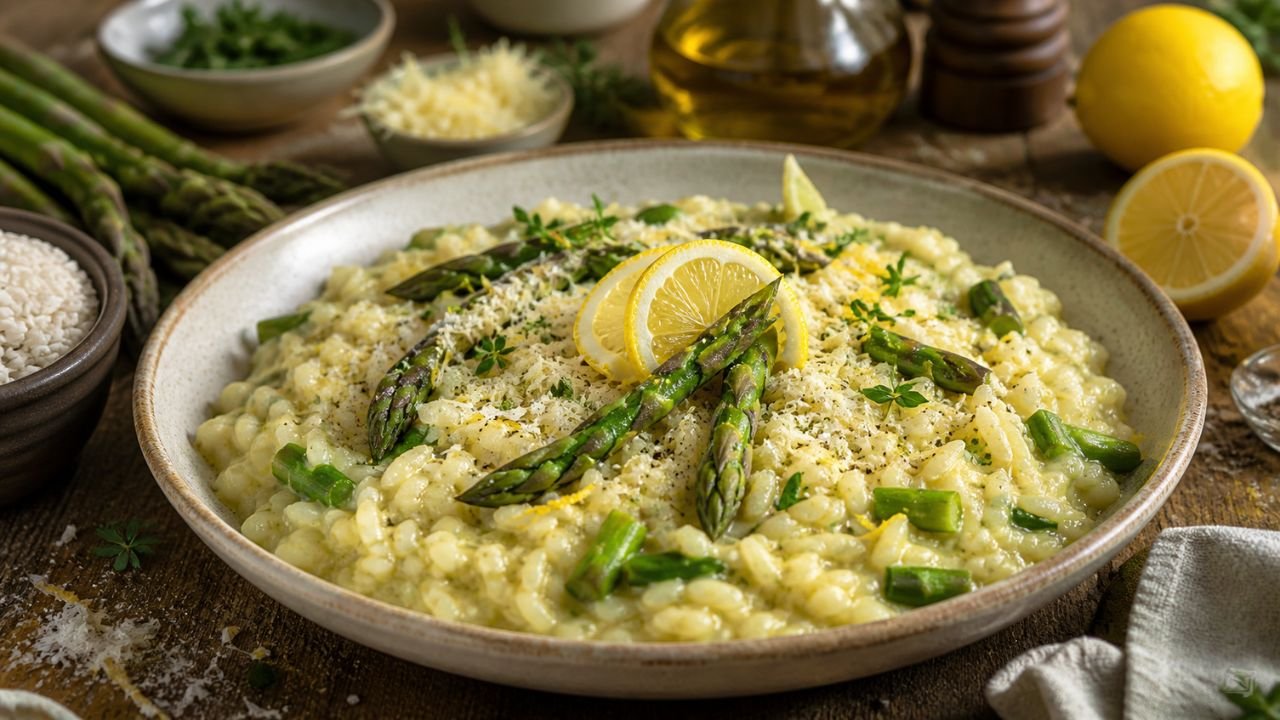
Asparagus Risotto With Lemon for a Light Spring Dinner is the kind of dish that feels elegant without being heavy, fresh without being complicated, and comforting without losing its bright seasonal character. Creamy risotto has a reputation for being rich, but when it is balanced with tender asparagus, fragrant lemon, and a gentle finish of Parmesan, it becomes something much lighter and more graceful. This recipe brings together the silky texture of Arborio rice, the grassy sweetness of spring asparagus, and the clean lift of citrus in a way that works beautifully for a weeknight dinner or a special meal at home.
What makes this risotto especially appealing is the contrast of textures and flavors. The rice is cooked slowly so it absorbs warm broth and develops a velvety consistency, while the asparagus keeps a subtle bite that prevents the dish from feeling too soft or monotonous. Lemon zest and juice sharpen the flavor profile, cutting through the creaminess and making each spoonful taste vivid and alive. A small amount of butter and Parmesan at the end adds depth, but the result still feels light enough to serve in spring, when meals often call for freshness and restraint rather than richness.
Another advantage of this dish is its flexibility. It can be served as a satisfying vegetarian main course, especially with a crisp green salad or a simple starter, or it can appear as a refined side alongside roasted fish, seared scallops, or chicken. It also looks beautiful on the plate: the pale gold rice, green asparagus, and bright lemon garnish create a clean, seasonal presentation that feels restaurant-worthy with very little effort. If you are looking for a dinner that is comforting yet lively, this risotto delivers that balance in every bite.
Recipe Information
This asparagus risotto is a medium-level recipe that rewards slow attention and steady stirring. The method is traditional, but the flavor profile is bright and modern, making it a dependable spring favorite.
- Preparation Time: 15 minutes
- Cooking Time: 30 minutes
- Total Time: 45 minutes
- Servings: 4
- Course: Main Course
- Cuisine: Italian-inspired
- Diet: Vegetarian
- Difficulty: Moderate
The total time is intentionally kept efficient so the dish remains practical for a home dinner, yet it still has the slow-cooked character that makes risotto so satisfying. Because the ingredients are simple, the quality of each one matters. Choose firm asparagus spears, a good vegetable broth, fresh lemons, and a decent Parmesan for the best result.
Ingredients
Use the freshest ingredients you can find, because this recipe depends on clean flavors rather than heavy seasoning. The asparagus should be bright green and crisp, the lemon should be aromatic and unwaxed if possible, and the broth should taste savory enough to support the rice without overpowering the vegetables.
- 1 1/2 cups Arborio rice
- 1 pound fresh asparagus, trimmed and cut into 1-inch pieces
- 5 to 6 cups warm vegetable broth
- 1 small onion, finely chopped
- 2 cloves garlic, minced
- 2 tablespoons olive oil
- 2 tablespoons unsalted butter
- 1/2 cup dry white wine
- 1 lemon, finely grated zest and 2 to 3 tablespoons juice
- 1/2 cup freshly grated Parmesan cheese
- 2 tablespoons chopped fresh parsley
- Salt, to taste
- Black pepper, to taste
- Optional: extra lemon zest or shaved Parmesan for serving
Arborio rice is the classic choice because its starch creates the creamy texture risotto is known for. If you do not have Arborio, another risotto rice such as Carnaroli or Vialone Nano also works well. The white wine is optional but strongly recommended, because it adds acidity and a gentle complexity that complements the lemon and asparagus. If you prefer not to use wine, replace it with a little extra broth and a squeeze of lemon at the end.
Preparation
Before beginning, keep the broth warm in a saucepan on low heat. Warm broth is one of the secrets to smooth risotto, because cold liquid slows the cooking process and can interrupt the creamy texture. Set out a heavy saucepan or deep skillet, since even heat helps the rice cook evenly.
- Step 1: Trim the asparagus and cut it into short pieces. If the stalks are thick, peel the lower part lightly so they cook evenly and stay tender.
- Step 2: Bring the vegetable broth to a gentle simmer and keep it warm throughout the cooking process.
- Step 3: Heat the olive oil in a wide pan over medium heat. Add the chopped onion and cook for 4 to 5 minutes until soft and translucent, stirring often.
- Step 4: Add the garlic and cook for 30 seconds, just until fragrant. Do not let it brown.
- Step 5: Stir in the Arborio rice and cook for 1 to 2 minutes so the grains become lightly toasted and coated with oil.
- Step 6: Pour in the white wine and stir until it is mostly absorbed. This step adds brightness and gives the risotto a layered flavor.
- Step 7: Add the warm broth one ladle at a time, stirring frequently and waiting until each addition is nearly absorbed before adding the next.
- Step 8: After about 12 minutes of cooking, stir in the asparagus pieces. Continue adding broth and stirring until the rice is creamy and just tender, about 8 to 10 minutes more.
- Step 9: When the rice is al dente and the asparagus is bright green and tender, remove the pan from the heat.
- Step 10: Stir in the butter, Parmesan, lemon zest, lemon juice, parsley, salt, and black pepper. Mix gently until glossy and creamy.
- Step 11: Taste and adjust the seasoning. Add a little more lemon juice for brightness or a small splash of broth if you prefer a looser texture.
- Step 12: Serve immediately while the risotto is fluid and silky, topped with extra Parmesan or a final dusting of lemon zest if desired.
The risotto should move slowly on the plate rather than sit in a stiff mound. That loose, creamy texture is the hallmark of a properly cooked dish. If it thickens too much while you are finishing the last steps, stir in a little hot broth or hot water until it reaches the right consistency.
One important detail is timing the asparagus correctly. Adding it too early can cause it to lose its color and fresh flavor, while adding it too late may leave it undercooked. The middle of the process is ideal because it allows the asparagus to soften just enough while still tasting vivid and seasonal. For a more delicate finish, you can blanch the asparagus separately for 1 minute and fold it in at the very end.
Stirring is essential, but it does not need to be frantic. Gentle, regular stirring helps the rice release starch and prevents sticking. A wooden spoon or heatproof spatula works well. The goal is to encourage creaminess while letting the grains retain their shape. When done correctly, each bite should feel silky and cohesive without becoming heavy or gluey.
Tips
Good risotto depends on rhythm, temperature, and seasoning. Once you understand those three elements, the dish becomes much easier to reproduce confidently. The following tips will help you achieve a result that tastes polished and balanced every time.
- Keep the broth warm so the cooking process stays steady and the rice cooks evenly.
- Stir often, but not constantly. Regular attention is enough to release starch without breaking the grains.
- Taste the rice near the end of cooking. It should be tender with a slight bite in the center, not soft all the way through.
- Use fresh lemon zest, not bottled juice alone, because the zest contributes the most aromatic citrus flavor.
- Add Parmesan only after removing the pan from the heat so it melts smoothly instead of becoming stringy.
- Season gradually, especially if your broth and cheese already contain salt.
- Serve risotto right away. It is at its best when freshly finished and still silky.
If you enjoy a more pronounced lemon flavor, add a little extra zest at the end rather than too much juice during cooking. Juice can brighten the dish, but too much may make the flavor sharp or cause the risotto to taste thinner. Zest gives a cleaner, more elegant citrus note that blends beautifully with the asparagus and Parmesan.
Texture can also be adjusted easily. For a richer version, stir in a small extra knob of butter at the end. For a lighter version, reduce the butter slightly and use a little more broth to loosen the final consistency. Risotto is forgiving in this way, as long as you respect the basic balance of rice, liquid, and finishing ingredients.
Variations
This recipe is flexible enough to adapt for different preferences, dietary needs, and occasions. The core idea remains the same: spring asparagus, creamy rice, and lemon for brightness. From there, you can shape the dish in several directions.
- Add peas for extra sweetness and a more colorful spring presentation.
- Use fresh mint instead of parsley for a cooler, more aromatic finish.
- Replace Parmesan with a vegetarian hard cheese if needed.
- Top the risotto with a poached egg for a richer brunch-style meal.
- Serve it with pan-seared salmon or white fish for a more complete dinner.
- Fold in sautéed mushrooms for deeper savory flavor and a more earthy profile.
- Finish with toasted pine nuts or chopped almonds for a light crunch.
- Add a spoonful of mascarpone for an even creamier, more luxurious texture.
For a more distinctly spring-inspired version, combine asparagus with fresh peas, scallions, and dill. The result is lighter and greener, with a fresher herbal note. If you are preparing the risotto as a side dish, keep the flavor slightly more restrained so it supports rather than competes with the main course. If you are serving it as the centerpiece, make the lemon and Parmesan finish a little more generous so the dish feels complete on its own.
There are also ways to make the recipe more rustic. A handful of chopped wild herbs, a touch of garlic confit, or a small amount of sautéed leek can shift the flavor toward a softer countryside style. On the other hand, if you want a sharper, more modern plate, keep the garnish minimal and focus on clean, bright lemon notes with a few attractive asparagus tips on top.
Conclusion
Asparagus Risotto With Lemon for a Light Spring Dinner is a beautiful example of how simple ingredients can produce a meal that feels both comforting and refined. The rice is creamy, the asparagus is fresh, and the lemon adds the brightness that makes the dish feel perfectly suited to the season. It is elegant enough for guests, easy enough for a relaxed evening, and flexible enough to adapt to your taste.
What makes this recipe especially worthwhile is its balance. It gives you the richness you expect from risotto without overwhelming the palate, and it uses spring produce in a way that lets the vegetables remain the star. Once you learn the rhythm of adding broth and stirring, the method becomes intuitive, and the result is consistently satisfying. Serve it as a centerpiece meal or alongside a simple protein, and it will bring a fresh, polished note to the table.
Whether you are cooking for family, friends, or just yourself, this risotto offers a meal that feels thoughtful and seasonal from the first spoonful to the last. It is the kind of dinner that reminds you how rewarding it can be to cook slowly, season carefully, and let a few bright ingredients shine.