
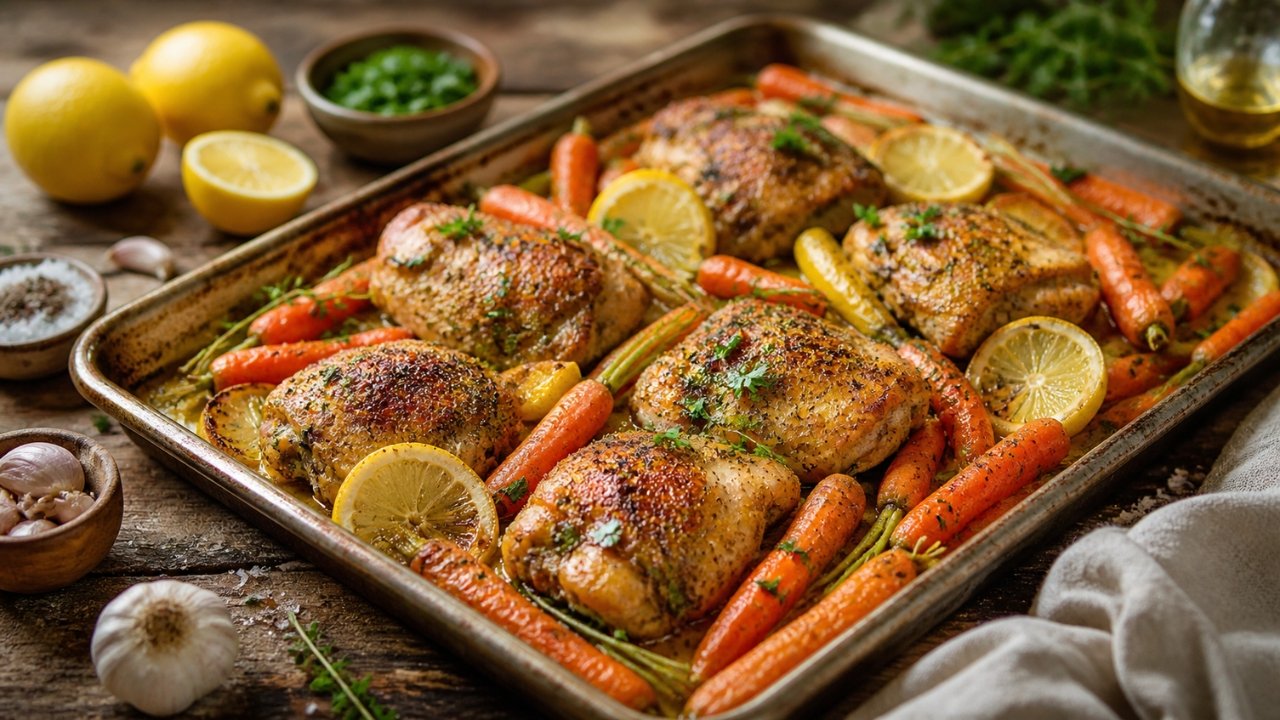
Sheet Pan Lemon Chicken With Spring Carrots is the kind of bright, practical dinner that feels fresh enough for spring yet satisfying enough for a full family meal. Juicy chicken roasts alongside sweet young carrots, garlic, olive oil, herbs, and plenty of lemon, creating a one-pan dish with crisp edges, tender vegetables, and a naturally flavourful pan sauce. It is simple, colourful, and built for busy evenings when you want real food without juggling several pots. The beauty of this recipe is balance. Lemon brings acidity, carrots add sweetness, chicken provides richness, and herbs give the whole pan a fragrant finish. As everything roasts together, the carrots soak up the chicken juices while the lemon softens and caramelizes. The result is a dinner that tastes layered and thoughtful, even though the preparation is straightforward.
Recipe Information
- Preparation Time: 15 minutes
- Cooking Time: 35 minutes
- Total Time: 50 minutes
- Servings: 4 servings
- Category: Main Course
- Cuisine: American
- Method: Sheet Pan Roasting
- Best Season: Spring
Ingredients
- 4 bone-in, skin-on chicken thighs, about 2 pounds total
- 1 pound spring carrots, scrubbed, trimmed, and halved lengthwise if thick
- 1 medium red onion, cut into wedges
- 3 tablespoons extra virgin olive oil
- 2 tablespoons fresh lemon juice
- 1 tablespoon finely grated lemon zest
- 1 lemon, thinly sliced
- 4 garlic cloves, minced
- 1 teaspoon Dijon mustard
- 1 teaspoon honey
- 1 teaspoon kosher salt, plus more to taste
- 1/2 teaspoon freshly ground black pepper
- 1 teaspoon dried oregano
- 1/2 teaspoon dried thyme
- 1/4 teaspoon crushed red pepper flakes, optional
- 2 tablespoons chopped fresh parsley
- 1 tablespoon chopped fresh dill or chives, optional
Preparation
Preheat the oven to 425°F. Place a large rimmed sheet pan in the oven while it heats. Preheating the pan helps the carrots and chicken begin roasting immediately, which encourages browning instead of steaming. Pat the chicken thighs very dry with paper towels. This small step is important because excess moisture prevents the skin from crisping properly.
In a large bowl, whisk together the olive oil, lemon juice, lemon zest, minced garlic, Dijon mustard, honey, kosher salt, black pepper, oregano, thyme, and red pepper flakes if using. The mustard helps the marinade cling to the chicken and vegetables, while the honey supports gentle caramelization. Add the chicken thighs to the bowl and turn them until fully coated. Let them sit while you prepare the vegetables.
Add the carrots and red onion wedges to the same bowl. Toss well so the vegetables are lightly coated in the lemon-garlic mixture. If your carrots are very slim, leave them whole. If they are thick, halve or quarter them lengthwise so they cook at the same pace as the chicken. Even sizing makes the finished dish more consistent and prevents some carrots from staying firm while others become too soft.
Carefully remove the hot sheet pan from the oven. Arrange the carrots and onions across the pan in a single layer. Nestle the chicken thighs among the vegetables, skin side up. Avoid covering the chicken skin with vegetables, because exposed skin will brown better. Tuck the lemon slices around the pan, placing a few near the chicken and a few among the carrots.
Roast for 30 to 35 minutes, rotating the pan once halfway through cooking. The chicken is ready when the skin is golden, the carrots are tender, and the thickest part of the chicken reaches 165°F. If the chicken is fully cooked but you want deeper browning, place the pan under the broiler for 1 to 2 minutes, watching closely so the lemon and garlic do not burn.
Remove the pan from the oven and let the chicken rest for 5 minutes. Resting keeps the meat juicy and allows the pan juices to settle. Spoon some of the lemony juices from the pan over the chicken and carrots. Sprinkle with fresh parsley and dill or chives before serving. Taste the carrots and add a small pinch of salt or a fresh squeeze of lemon if needed.
This meal is excellent on its own, but it also pairs well with rice, couscous, quinoa, roasted potatoes, or warm crusty bread. If serving guests, transfer everything to a shallow platter and pour the pan juices over the top. The roasted lemon slices are edible, though they can be intense, so they are best enjoyed in small bites with chicken or carrots.
Tips
- Use bone-in, skin-on chicken thighs for the juiciest result. They stay tender during roasting and create flavourful juices for the vegetables.
- Dry the chicken thoroughly before seasoning. Dry skin browns and crisps much better than damp skin.
- Do not overcrowd the pan. If the ingredients are packed too tightly, they will steam instead of roast.
- Cut the carrots evenly. Similar sizes help them finish cooking at the same time.
- Use fresh lemon juice and zest. Bottled lemon juice tastes flat compared with fresh citrus.
- Let the chicken rest before serving. Five minutes makes the meat noticeably juicier.
- Add delicate herbs after roasting. Parsley, dill, and chives taste brighter when added at the end.
For the best texture, choose a sheet pan that gives the ingredients room. A standard half-sheet pan is ideal. If you only have a smaller pan, divide the recipe between two pans. Space matters because roasting depends on hot air moving around the food. When vegetables release moisture in a crowded pan, that moisture has nowhere to go, and the edges never develop the sweet roasted flavour that makes this dish special.
Spring carrots are naturally tender and sweet, so they do not need heavy seasoning. A light coating of lemon, garlic, herbs, and olive oil is enough to enhance them. If your carrots still have their green tops, trim them before roasting because the greens can burn quickly. You can leave a small bit of stem attached for presentation, especially if the carrots are young and slender.
Chicken thighs are forgiving, but temperature still matters. An instant-read thermometer is the easiest way to avoid guessing. Insert it into the thickest part of the thigh without touching the bone. Once it reaches 165°F, the chicken is safe to eat. Many cooks prefer thighs slightly above that temperature because the dark meat becomes even more tender, but the key is not to overcook them until dry.
If your chicken skin is browning too quickly before the carrots are tender, loosely cover the chicken pieces with small pieces of foil and continue roasting. If the carrots are done before the chicken, move them to one side of the pan or remove them to a plate, then return the chicken to the oven until fully cooked. These small adjustments keep the recipe flexible.
Leftovers store well in an airtight container in the refrigerator for up to 3 days. Reheat gently in a 350°F oven until warmed through. The microwave works for convenience, but the chicken skin will soften. To refresh the flavour after reheating, add a squeeze of lemon and a sprinkle of herbs. Leftover chicken can also be sliced and served over salads, grain bowls, or wrapped in flatbread with yogurt sauce.
Variations
For a Mediterranean version, add pitted olives, cherry tomatoes, and a little crumbled feta after roasting. The salty olives and creamy feta pair beautifully with the lemony chicken and sweet carrots. Keep the tomatoes whole so they soften without releasing too much liquid early in the cooking process.
For an herb-forward version, replace the dried oregano and thyme with fresh rosemary, thyme, and parsley. Use fresh rosemary lightly because it can dominate the dish. A few small sprigs tucked around the chicken will perfume the pan without overpowering the lemon.
For a heartier dinner, add baby potatoes. Cut them into small halves or quarters so they cook within the same time as the chicken. Toss them with the carrots in the lemon mixture, then spread them in a single layer. Because potatoes absorb seasoning, taste before serving and add a little extra salt if needed.
For a lighter, boneless version, use boneless skinless chicken thighs. Reduce the cooking time to about 22 to 25 minutes, depending on thickness. Since boneless thighs produce less rendered fat and fewer pan juices, add an extra tablespoon of olive oil to keep the vegetables glossy and flavourful.
For a sweeter spring profile, add a handful of snap peas or asparagus during the last 10 minutes of roasting. These vegetables cook quickly and bring a fresh green contrast to the carrots. Do not add them at the beginning, or they may become limp before the chicken is finished.
For a spicy variation, increase the red pepper flakes and add a pinch of smoked paprika. The paprika gives the chicken a deeper colour and a subtle smoky note. This version is especially good with a cooling side such as cucumber salad or plain yogurt with herbs.
For a dairy-free creamy finish, whisk a spoonful of tahini with lemon juice, warm water, salt, and garlic, then drizzle it over the finished pan. The nutty sauce turns the meal into something richer while still keeping the bright lemon flavour at the center.
Conclusion
Sheet Pan Lemon Chicken With Spring Carrots is a reliable recipe for anyone who wants a fresh, flavourful dinner with minimal clean-up. It uses everyday ingredients but delivers a meal that feels seasonal and complete. The chicken becomes juicy and golden, the carrots roast until sweet and tender, and the lemon-garlic pan juices tie everything together.This recipe works because it respects simplicity. Instead of relying on complicated steps, it builds flavour through proper roasting, fresh citrus, balanced seasoning, and a smart mix of protein and vegetables. Whether served for a weeknight dinner or a relaxed spring gathering, it brings brightness, comfort, and ease to the table.