
There are sweets that ask for patience, and then there are sweets that understand the rhythm of a real kitchen. This 2-ingredient coconut barfi belongs firmly to the second kind. It is the kind of recipe I keep close for those moments when the doorbell rings sooner than expected, tea is already being poured, and something fragrant, tender, and celebratory needs to appear without fuss.
What makes this barfi so graceful is its simplicity. Desiccated coconut brings its soft, snowy texture and mellow nuttiness, while condensed milk gives sweetness, body, and that unmistakable milky richness associated with traditional Indian mithai. As the mixture warms in the pan, the coconut blooms, the milk thickens, and the whole kitchen takes on the gentle aroma of festive cooking.
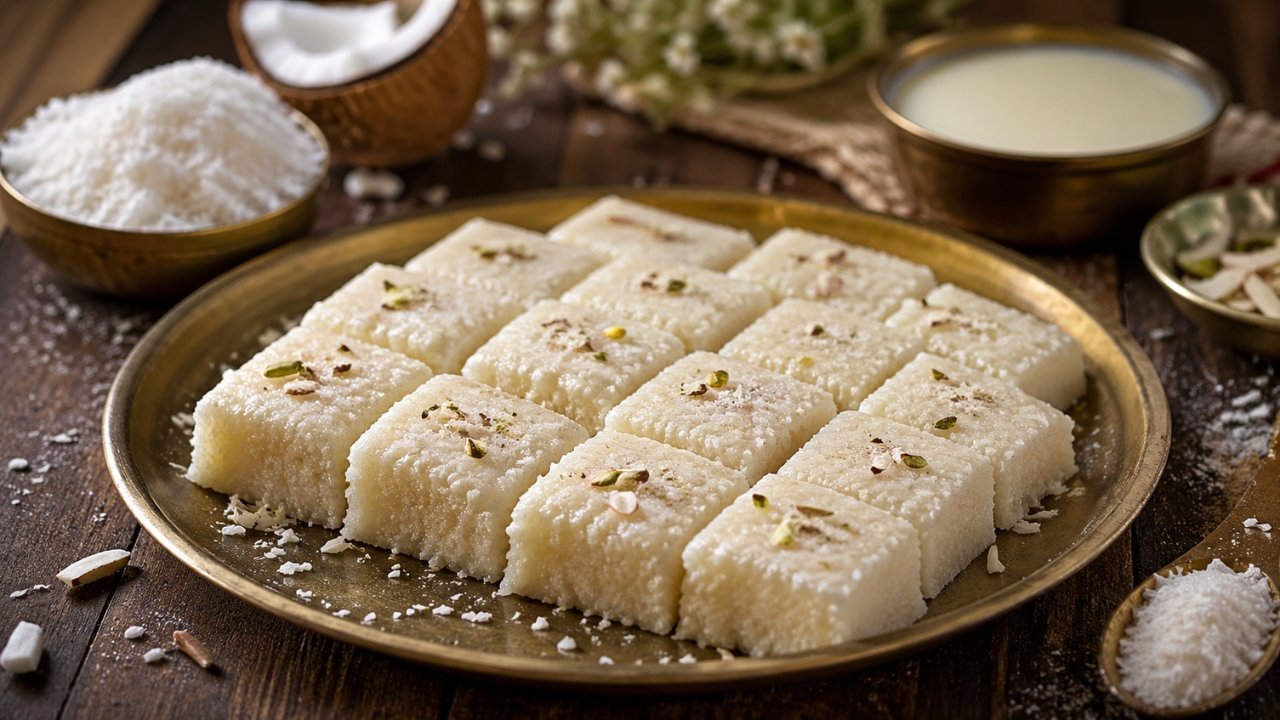
The finished sweet is delicate but not fragile, rich but not heavy. Cut into small squares or diamonds, it has the charm of a classic mithai box and the ease of a modern pantry recipe. When guests arrive unexpectedly, this is the quick sweet I trust because it delivers comfort, elegance, and generosity in under half an hour.
Recipe Information
- Recipe Name: 2-Ingredient Coconut Barfi
- Description: A quick, soft, milk-rich coconut barfi made with only desiccated coconut and sweetened condensed milk, perfect for festive trays, tea-time serving, or last-minute guests.
- Servings: 16 small pieces
- Preparation Time: 8 minutes
- Cooking Time: 12 minutes
- Cooling Time: 25 minutes
- Total Time: 20 minutes
- Difficulty: Easy
- Recipe Category: Dessert, Sweet, Mithai
- Cuisine: Indian
Ingredients
For the Coconut Barfi
- 2 cups desiccated coconut, preferably fine or medium-fine
- 1 cup sweetened condensed milk
Optional Finishing Touches
- 1 tablespoon extra desiccated coconut, for dusting the tray
- A few sliced pistachios or almonds, for garnish
- A tiny pinch of ground cardamom, if you want a more traditional aroma
The core recipe needs only two ingredients. The optional additions are not required, but they can help dress the barfi for a more festive table. If you are keeping the recipe strictly two-ingredient, simply leave them out; the sweet will still be beautifully balanced.
Kitchen Tools
- Heavy-bottomed non-stick pan or kadai
- Spatula or wooden spoon
- Small square tray or plate
- Parchment paper or a lightly greased surface
- Measuring cups
- Sharp knife for cutting
Preparation
Preparing the Tray
- Set up before heating: Line a small square tray or shallow plate with parchment paper, or grease it very lightly. Coconut barfi sets quickly once it reaches the right texture, so having the tray ready keeps the process smooth and controlled.
- If desired, scatter a thin layer of desiccated coconut over the base of the tray. This prevents sticking and gives the underside of the barfi a clean, snowy finish. It also makes the pieces look more refined when placed on a serving plate.
Cooking the Coconut Mixture
- Place the desiccated coconut in a heavy-bottomed pan over low heat. Stir it gently for 1 to 2 minutes, just until it feels slightly warm and fragrant. The goal is not to brown the coconut; it should remain pale, soft, and sweet-smelling.
- Pour in the sweetened condensed milk and begin stirring immediately. The mixture will first look loose and glossy, then gradually become thicker as the coconut absorbs the milk.
- Texture check: Keep the heat low to medium-low and stir continuously for about 8 to 10 minutes. The barfi mixture is ready when it gathers together into a soft mass, leaves the sides of the pan, and looks moist rather than wet. It should not be dry or crumbly at this stage.
- Important: Do not overcook the mixture. Coconut can become chewy if cooked too long, and condensed milk can catch at the bottom if the heat is too high. A good coconut barfi should feel tender, slightly dense, and creamy when bitten.
Shaping and Setting
- Transfer the hot coconut mixture into the prepared tray. Use the spatula to spread it evenly, pressing gently into the corners. Aim for a thickness of about 1 to 1 1/4 inches, which gives each piece a generous but elegant bite.
- Tip: For a smooth surface, lightly grease the back of a spoon or spatula and press the top until even. If using nuts, scatter them while the mixture is still warm and press them in gently so they adhere.
- Let the barfi cool at room temperature for about 25 minutes, or until firm enough to cut neatly. This cooling time is separate from the total time and allows the sweet to settle into its final texture.
- Once set, cut into squares or diamonds with a sharp knife. Wipe the knife between cuts for cleaner edges, especially if you are preparing the barfi for guests or a festive platter.
Serving Suggestions
Serve this 2-ingredient coconut barfi at room temperature, when the texture is at its most pleasing: soft, compact, and gently creamy. Arrange the pieces on a small brass plate, a ceramic platter, or alongside cups of masala chai for a warm and graceful presentation. A light scattering of extra desiccated coconut on the serving plate can make the pieces look especially delicate, almost like little snow-dusted squares of mithai.
For an elegant tea table, place the barfi in small paper cups or line the pieces in neat rows with a little space between them. The simplicity of the sweet works beautifully with cardamom tea, saffron milk, or strong filter coffee. It is rich enough to feel festive, yet light enough to serve after a meal without overwhelming the palate. If you are serving it after lunch or dinner, keep the portions modest; small pieces allow guests to enjoy the sweetness without it feeling too heavy.
For a more festive presentation, garnish each piece with a single sliver of pistachio or almond while the barfi is still slightly warm, so the nuts settle gently into the surface. If you want the platter to feel more refined, arrange the pieces in a circular pattern and leave a small bowl of roasted nuts or dried rose petals in the center. Even with only two essential ingredients, the final presentation can feel generous and thoughtfully composed.
If guests arrive in the afternoon, I like to cut the barfi into smaller pieces and serve it while still faintly warm from the kitchen. The aroma of coconut and milk is especially inviting at that moment, and the sweet feels freshly made rather than pulled from storage. It is also lovely served as part of a quick mithai assortment with dates, roasted makhana, or a few pieces of dark chocolate for contrast.
Chef Tips
Choose the Right Coconut
Fine or medium-fine desiccated coconut gives the best texture for quick barfi. Very coarse coconut can make the sweet feel rough, while fresh coconut releases more moisture and requires a different cooking time. For this recipe, desiccated coconut is dependable, fast, and beautifully consistent.
Cook Gently for a Softer Bite
Low heat is the secret to keeping the barfi tender. The condensed milk needs time to thicken and bind with the coconut without scorching. If the mixture cooks too aggressively, the milk sugars can caramelize too far and the coconut may toughen.
Watch the Pan, Not the Clock Alone
The cooking time is a guide, but the pan will tell you when the mixture is ready. Look for the point where it pulls away from the sides and moves as one soft mass. It should still look slightly glossy. If it appears dry in the pan, it will be drier once cooled.
Keep Flavors Clean
This is a minimalist sweet, and that is its charm. A pinch of cardamom is lovely, but too many additions can distract from the pure coconut-milk character. When serving it as a last-minute mithai, I prefer keeping the flavor direct and refined.
Storage and Make-Ahead Tips
Store coconut barfi in an airtight container at room temperature for up to 1 day if the weather is cool and dry. For longer storage, refrigerate it for 4 to 5 days. Place parchment between layers to prevent the pieces from sticking together.
Before serving refrigerated barfi, let it stand at room temperature for 10 to 15 minutes. This softens the texture and brings back the gentle creaminess that makes the sweet so appealing. Straight from the refrigerator, the pieces will be firmer and slightly less aromatic.
This barfi can be made ahead for small gatherings, festive trays, or lunchbox treats. Cut it only after it has cooled properly, then store the pieces neatly. If you plan to serve it to guests, garnish just before presenting or press the nuts into the warm mixture during shaping so they remain secure.
Additional Information
Coconut barfi has a beloved place in Indian home kitchens because it carries the spirit of mithai without demanding the long concentration of more elaborate sweets. Traditional versions may use freshly grated coconut, sugar syrup, milk solids, or slow reduction, but this condensed milk version is a clever modern adaptation that preserves the comfort of the original while respecting the pace of everyday life.
In many homes, coconut sweets appear during festivals, pujas, family visits, and celebratory meals. Coconut is valued not only for its flavor, but also for the way it absorbs sweetness and fragrance so gracefully. In this quick version, condensed milk replaces both sugar and dairy richness, creating a smooth structure with very little effort.
What I appreciate most about this quick coconut barfi is how composed it feels despite its simplicity. It does not pretend to be complicated. It relies on good technique: gentle heat, careful stirring, and stopping at the right moment. That is often the difference between an ordinary quick sweet and one that feels polished enough for guests.
When made well, this 2-ingredient coconut barfi has the quiet luxury of something prepared with intention. It is snowy, fragrant, tender at the center, and just sweet enough to feel festive. For the cook, it is reassuringly simple; for the guest, it feels like a thoughtful welcome.