
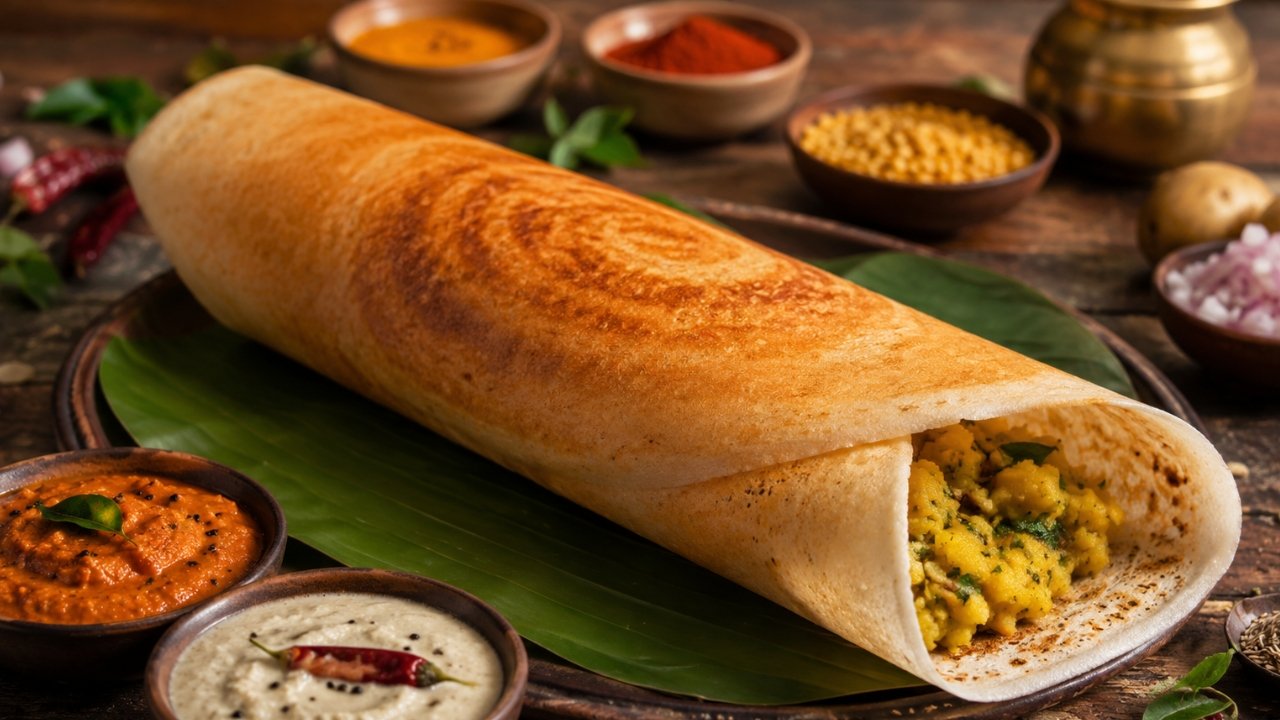
Sreeleela may enjoy many comforting dishes, but few are as universally loved as a hot, crisp masala dosa served with coconut chutney and sambar. This classic South Indian favorite is the kind of meal that feels satisfying at breakfast, lunch, or even dinner, and it is easy to understand why so many fans want to try it at home after seeing it featured in celebrity food moments. A good masala dosa is all about balance: the dosa should be thin and golden, the potato masala should be warmly spiced but not heavy, and the accompaniments should add freshness, creaminess, and gentle heat.
This recipe is written for home cooks who want restaurant-style results without complicated steps. The dosa batter needs to be fermented properly so it develops flavor and a light, airy texture. The potato filling should be soft, fragrant, and slightly tangy from onions, curry leaves, and a touch of lemon or yogurt if desired. Once you learn the rhythm of making the batter, spreading it, and cooking it on the tawa, the dish becomes much easier than it first appears. The reward is a plate of crisp dosas that crack slightly at the edges and fold beautifully around the filling.
A masala dosa is more than just a stuffed crepe. It is a complete experience built from texture, aroma, and contrast. The dosa batter has a subtle sour note from fermentation. The potato filling offers comfort and warmth. Coconut chutney adds coolness and sweetness, while sambar brings spice and depth. When all of these parts come together, the final dish feels vibrant, balanced, and deeply satisfying. That is exactly why it remains one of the most loved dishes across India and beyond.
In this recipe, you will find everything needed to make a delicious version at home: ingredients, step-by-step preparation, practical tips, popular variations, and serving ideas. Even if you are making dosa for the first time, the method below is designed to guide you clearly. With a little planning and the right batter consistency, you can create dosas that look beautiful, taste authentic, and disappear quickly from the plate.
Recipe Information
Preparation Time: 20 minutes
Cooking Time: 25 minutes
Total Time: 45 minutes
Servings: 4
Difficulty: Medium
Meal Type: Breakfast or Snack
Cuisine: South Indian
Ingredients
For the dosa batter:
- 2 cups idli rice or dosa rice
- 1 cup parboiled rice
- 1/2 cup urad dal
- 1/4 cup chana dal
- 1/2 teaspoon fenugreek seeds
- Salt to taste
- Water as needed for soaking and grinding
For the potato masala:
- 4 medium potatoes, boiled and peeled
- 2 tablespoons oil or ghee
- 1 teaspoon mustard seeds
- 1 teaspoon cumin seeds
- 1/2 teaspoon urad dal
- 1/2 teaspoon chana dal
- 1 large onion, thinly sliced
- 2 green chilies, finely chopped
- 1 teaspoon grated ginger
- 8 to 10 curry leaves
- 1/4 teaspoon turmeric powder
- Salt to taste
- 2 tablespoons chopped coriander leaves
- 1 tablespoon lemon juice, optional
For serving:
- Coconut chutney
- Sambar
- Extra ghee or oil for cooking dosas
Preparation
To begin, prepare the batter. Rinse the rice, urad dal, chana dal, and fenugreek seeds thoroughly. Soak them in separate bowls or together if you prefer a simpler method. Rice should soak for about 4 to 6 hours, while the dal and fenugreek seeds should also soak well until they become soft enough to grind smoothly. Good soaking helps create a batter that ferments evenly and cooks into a light dosa with a delicate crisp edge.
Once soaked, drain the ingredients and grind them with just enough water to form a smooth but slightly thick batter. The batter should not be too watery because that makes spreading difficult, and it should not be too stiff because the dosa may turn dense. The texture should resemble a pourable batter that can spread easily on a hot pan. Transfer it to a large bowl, add salt, and mix well. Leave enough space in the bowl for fermentation because the batter will rise.
Cover the batter and let it ferment in a warm place for 8 to 12 hours, depending on room temperature. In cooler weather, fermentation may take longer. A properly fermented batter will look slightly airy, smell pleasantly tangy, and have tiny bubbles on the surface. If the batter seems too thick after fermentation, add a little water and mix gently. Do not over-stir once it has fermented because that can reduce airiness.
While the batter ferments or after it is ready, prepare the potato filling. Heat oil or ghee in a pan. Add mustard seeds and let them splutter. Add cumin seeds, urad dal, and chana dal, and cook them until lightly golden. This step adds nuttiness and depth. Then add sliced onions, green chilies, curry leaves, and grated ginger. Sauté until the onions become soft and translucent, allowing the aromatics to release their flavor.
Next, add turmeric powder and salt. Crumble the boiled potatoes into the pan and mix gently so they absorb the seasoning. Some cooks prefer a chunky filling, while others like a softer mash. Either version works well, as long as the mixture remains moist and flavorful. Add coriander leaves and lemon juice if you want a slightly brighter finish. Turn off the heat and keep the filling covered so it stays warm.
Now prepare to make the dosas. Heat a cast-iron tawa or non-stick pan until it is medium hot. A dosa cooks best on a well-heated surface, but the pan should not be smoking hot. Lightly grease it with a few drops of oil. Pour a ladleful of batter onto the center of the pan and quickly spread it outward in a circular motion to form a thin dosa. The first few dosas may be imperfect, but the technique improves quickly with practice.
Drizzle a little oil or ghee around the edges and over the surface if you like a richer, more golden finish. Let the dosa cook on medium heat until the bottom turns crisp and the surface looks set. If you prefer extra crunch, cook it a little longer. For a softer dosa, remove it slightly earlier. Place a portion of the potato masala in the center of the dosa, fold it over, and serve immediately while it is hot and crisp.
Repeat the process with the remaining batter, stirring the batter gently before each dosa. This helps maintain even texture because fermentation can cause the mixture to separate slightly. Adjust the heat as needed during cooking. If the pan becomes too hot, the dosa may brown too quickly; if it is too cool, the dosa may stick or turn pale. A steady medium heat usually gives the best result.
Serve the masala dosa with coconut chutney and sambar for the most traditional experience. The chutney adds coolness and creaminess, while the sambar contributes a savory, spiced broth that complements the crispy dosa beautifully. If you want a fuller meal, add filter coffee or a light salad on the side. Freshly made masala dosa is best enjoyed right away, while the outer layer is still crisp and the potato filling remains warm.
Tips
- Use good-quality rice and urad dal for a batter that ferments well and spreads smoothly.
- Keep the batter neither too thick nor too thin. A balanced consistency is essential for crisp dosas.
- Ferment the batter in a warm place. In colder weather, keep it in an oven with the light on or near a mildly warm corner of the kitchen.
- Do not add too much salt before fermentation if your climate is very warm, because it may slow the process.
- Heat the pan properly before pouring batter, but avoid overheating it.
- Use a ladle to spread the batter in one steady motion for a thin, even dosa.
- For extra crispness, cook a little longer and use a small amount of ghee around the edges.
- If the dosa sticks, the pan may need better seasoning, more heat, or slightly more oil.
- Keep the potato filling warm and slightly moist so it sits well inside the dosa without drying out.
- Stir the batter gently before making each dosa to keep the texture consistent.
Variations
There are many ways to enjoy masala dosa while keeping the same comforting spirit. A classic version is always a favorite, but small changes can make the dish more suited to your taste, season, or pantry. One popular variation is the cheese masala dosa, where grated cheese is added over the potato filling before folding. This creates a richer, more indulgent version that is especially popular with children and young snack lovers.
You can also make a healthier variation by reducing the amount of oil and using more vegetables in the filling. Finely chopped carrots, peas, capsicum, or spinach can be mixed with the potatoes to add color and nutrition. Another option is to replace part of the potato with sweet potato for a slightly sweeter, softer filling. This works especially well if you enjoy a milder flavor profile.
For those who like extra spice, a green masala version can be made by adding a paste of coriander, mint, green chilies, and ginger to the filling. This creates a brighter and more aromatic dosa that pairs nicely with plain coconut chutney. If you prefer a more rustic texture, you can make a slightly thicker batter and cook the dosa to a soft center with crisp edges, which gives a more hearty feel.
Some cooks like to prepare a rava dosa style batter for a quicker version, although that changes the texture significantly. Another variation is the paper dosa style, where the batter is spread very thin and cooked until extremely crisp. You can also try ghee roast masala dosa by adding more ghee during cooking for a rich, fragrant finish. Each version offers a slightly different experience, yet all of them keep the essential charm of dosa alive.
If you are serving a crowd, set up a dosa station with chutneys, sambar, and optional fillings. Guests can enjoy the basic version or choose their preferred variation. That flexibility is one reason masala dosa remains such a popular dish for family meals and special gatherings. It is comforting, customizable, and always satisfying.
Conclusion
Masala dosa is the kind of recipe that feels special even though it uses simple ingredients. Once the batter is fermented and the filling is prepared, the rest is about timing, heat control, and a little confidence at the tawa. The result is a dish that combines crispness, softness, spice, and comfort in every bite. It is easy to see why a plate of masala dosa can become the kind of meal people remember, share, and recreate again and again at home.
This version is designed to help you make a dependable, flavorful masala dosa with a restaurant-like finish. The potato masala is warm and aromatic, the dosa is thin and crisp, and the overall dish feels complete with chutney and sambar. Whether you are making it for a weekend breakfast, a family brunch, or a comforting evening meal, it is a recipe that brings both familiarity and joy.
Once you make it a few times, you will start to notice how small adjustments change the final result. A little more fermentation gives a stronger flavor. A slightly hotter pan creates a crisper edge. A richer filling makes it more indulgent. That is the beauty of masala dosa: it is flexible, satisfying, and always worth making from scratch. Try it once, and it may become one of your most requested homemade dishes.