
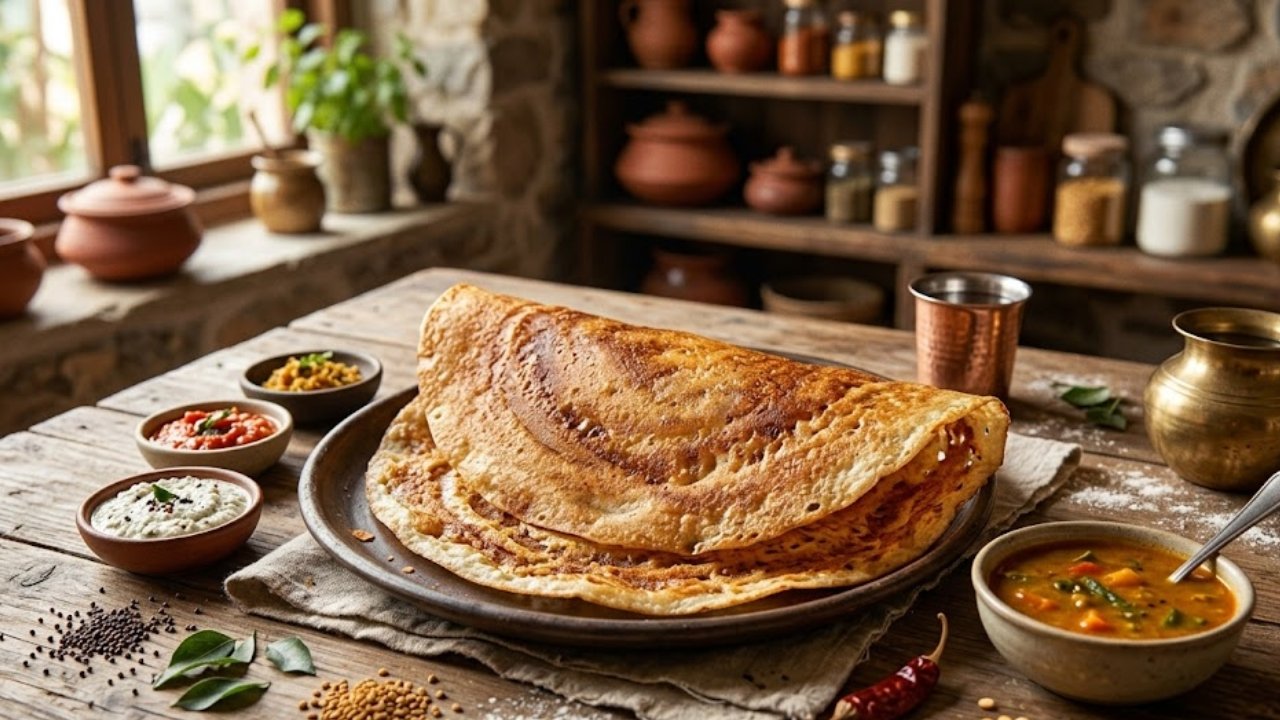
Rachin Ravindra’s favorite dosa is a celebration of South Indian culinary tradition, brought alive with a perfectly fermented batter, a golden crisp texture, and an irresistible aroma that fills the kitchen as soon as it hits the hot tawa. This dosa is not just food—it is an experience that blends comfort, crunch, and subtle tanginess in every bite. Loved by cricket fans and food lovers alike, this version of dosa is designed to be simple at its core but rich in flavor, making it suitable for breakfast, brunch, or even a light dinner.
The charm of dosa goes far beyond its ingredients. It represents patience, balance, and technique. From soaking the grains to watching the batter rise after fermentation, every step has its own rhythm. In South Indian households, dosa is often associated with early mornings, the sound of sizzling batter on hot iron pans, and the comforting pairing of chutneys and sambar. It is a dish deeply rooted in tradition, yet endlessly adaptable to modern kitchens and tastes.
The magic of this dosa lies in its fermentation process and the balance of rice and lentils. When prepared correctly, the batter transforms into a light, airy mixture that spreads effortlessly on a hot pan and crisps up beautifully along the edges. The slight tang from fermentation combined with the nutty aroma of urad dal creates a flavor profile that is both simple and deeply satisfying. This natural fermentation also improves digestion and adds a subtle probiotic benefit, making dosa both delicious and wholesome.
Unlike many quick breakfast recipes, dosa demands patience and attention. However, the reward is extraordinary. A perfectly cooked dosa has lace-like edges, a golden center, and a crunch that can be heard with every bite. This recipe is inspired by traditional South Indian homes where dosa-making is treated as an art passed down through generations, often perfected through years of practice and small personal adjustments in batter consistency and fermentation timing.
In this detailed recipe, you will not only learn how to prepare Rachin Ravindra’s favorite crispy dosa but also understand the science behind fermentation, batter consistency, and cooking temperature control. These insights are essential for achieving consistent restaurant-style results at home. Whether you are a beginner or an experienced cook, this guide will refine your skills and help you master one of India’s most iconic dishes.
One of the most beautiful aspects of dosa is its versatility. While the plain crispy dosa remains the most loved version, it can be transformed into multiple variations such as masala dosa, butter dosa, or even modern cheese dosa. Each variation offers a different taste experience while preserving the original identity of the dish. This adaptability is one reason why dosa has become popular not only across India but also internationally.
In Indian cuisine, dosa is also considered a balanced meal. The combination of fermented rice and lentils provides carbohydrates, plant-based protein, and beneficial bacteria for gut health. This makes it a complete and nourishing food suitable for all age groups. It is often paired with coconut chutney, tomato chutney, or hot sambar, each adding its own layer of flavor and nutrition.
Another important aspect of dosa is its cultural significance. In South Indian households, dosa is not just a meal but a daily ritual. The sound of batter spreading on a hot tawa is often associated with comfort and home. Many families have their own secret ratios, fermentation techniques, and cooking methods that make their dosa unique. This shared culinary heritage adds emotional value to every bite.
Even though dosa may appear simple, achieving perfection requires understanding small details such as grain texture, soaking time, grinding consistency, and pan temperature. Slight variations in any of these can change the final result significantly. This is why mastering dosa is considered a milestone for many home cooks.
Today, dosa has evolved into a global dish found in restaurants around the world. Despite this global popularity, its essence remains deeply rooted in South Indian tradition. Whether served in a street-side stall or a fine dining restaurant, the core identity of dosa remains unchanged—crispy, golden, and satisfying.
Recipe Information
This dosa recipe is designed for home kitchens and delivers authentic South Indian flavor with simple, easily available ingredients. The process involves soaking, grinding, fermenting, and cooking on a hot griddle. Each stage contributes to the final texture and taste, making timing and technique extremely important.
Fermentation is the heart of this recipe. It not only develops flavor but also affects texture and digestibility. A well-fermented batter should be light, airy, and slightly tangy. Cooking temperature also plays a crucial role; too hot and the dosa burns, too low and it becomes soft instead of crisp.
- Preparation Time: 20 minutes
- Cooking Time: 30 minutes
- Total Time: 50 minutes
- Recipe Category: Breakfast / Main Course
- Recipe Cuisine: South Indian
- Recipe Yield: 4 servings (8–10 dosas)
Ingredients
The ingredients used in dosa are simple yet powerful in their function. Rice provides structure and crispness, urad dal contributes softness and fermentation, and fenugreek seeds enhance flavor and help in natural fermentation. Each ingredient must be measured carefully for best results.
- 2 cups parboiled rice
- 1 cup raw rice
- 1 cup urad dal (split black gram)
- 1 teaspoon fenugreek seeds
- Salt to taste
- Water as required for soaking and grinding
- Oil or ghee for cooking
Using good-quality ingredients ensures better fermentation and texture. Fresh urad dal is especially important because older dal may not ferment properly, leading to dense batter and soft dosas instead of crispy ones.
Preparation
The preparation of dosa batter begins with thorough washing and soaking. Wash rice, urad dal, and fenugreek seeds until the water runs clear. Soak them separately for 6 to 8 hours or overnight. This step is essential because proper soaking ensures smooth grinding and effective fermentation.
Once soaked, drain the water completely. Begin by grinding urad dal into a light, fluffy batter by adding water gradually. The texture should be airy and soft, almost like whipped cream. This airiness is what helps dosa become soft inside and crisp outside.
Next, grind the rice into a slightly coarse batter. Avoid over-grinding into a smooth paste, as slight graininess improves the crisp texture of dosa. Combine both batters in a large vessel and mix thoroughly to ensure uniform consistency.
Mixing with hands is recommended because body heat helps activate fermentation naturally. Add salt and cover the batter. Allow it to ferment for 8 to 12 hours in a warm place. In colder climates, fermentation may take longer. The batter should double in volume and develop a slightly sour aroma.
After fermentation, gently mix the batter without deflating the air bubbles. Adjust consistency with water if needed. The batter should flow easily but should not be watery. Proper consistency is key for spreading thin dosas.
Heat a tawa on medium-high flame. Sprinkle water to check readiness; it should sizzle instantly. Pour a ladle of batter and spread in a circular motion. Drizzle oil or ghee around edges and cook until golden and crisp.
Repeat for remaining batter, maintaining consistent heat throughout cooking for even results.
Tips
Perfect dosa requires practice and attention to detail. These tips help improve consistency and flavor.
- Use cast iron tawa for best crisp texture.
- Maintain proper fermentation temperature for better rise.
- Avoid over-grinding rice for better structure.
- Keep batter slightly thick, not watery.
- Preheat pan properly before each dosa.
- Do not spread batter too thick.
- Wipe pan lightly between dosas for consistency.
Variations
Dosa can be customized in many ways depending on taste and preference. Each variation offers a unique experience while preserving the base recipe.
Masala Dosa: Filled with spiced potato mixture for a hearty meal.
Butter Dosa: Rich and soft version cooked with generous butter.
Rava Dosa: Instant crispy dosa made with semolina and rice flour.
Cheese Dosa: Modern fusion version topped with melted cheese.
Millet Dosa: Healthy variation using millets instead of rice.
Conclusion
Rachin Ravindra’s favorite dosa represents tradition, patience, and culinary excellence. It is a dish that connects generations and cultures through its simple yet powerful flavors. From its crispy edges to its soft interior, every bite offers comfort and satisfaction. What makes this dosa truly special is not only its taste but also the journey it takes to reach perfection—from soaking and fermentation to the final moment it hits the hot tawa and turns golden brown with a delicate crunch.
This dosa is a reminder that great cooking is never rushed. It teaches the importance of timing, observation, and care in the kitchen. The transformation of a simple batter into a beautifully crisp dosa is a process that reflects both science and tradition working together in harmony. The aroma, texture, and flavor all come together to create something that feels both homely and extraordinary at the same time.
For many, dosa is more than just a meal—it is a memory. It brings back images of family breakfasts, shared plates, and warm conversations around the dining table. This emotional connection is what makes dosa such a timeless dish, cherished across different regions and generations.
With practice and attention to detail, anyone can master this recipe at home. Once perfected, dosa becomes more than just food—it becomes a skill, a ritual, and a source of joy in everyday cooking. It also builds confidence in understanding fermentation, batter handling, and heat control, which can be applied to many other traditional recipes.
Whether enjoyed with coconut chutney, spicy tomato chutney, or a bowl of hot sambar, this dosa remains endlessly versatile and satisfying. Some prefer it plain and crispy, while others enjoy it filled with masala or topped with butter, but in every form it retains its identity and charm.
Whether enjoyed with chutneys, sambar, or simply on its own, this dosa remains timeless, loved, and unforgettable across every kitchen it enters. Its legacy continues to grow, not just in South India but across the world, proving that simple food made with care can leave a lasting impression on anyone who tastes it.