
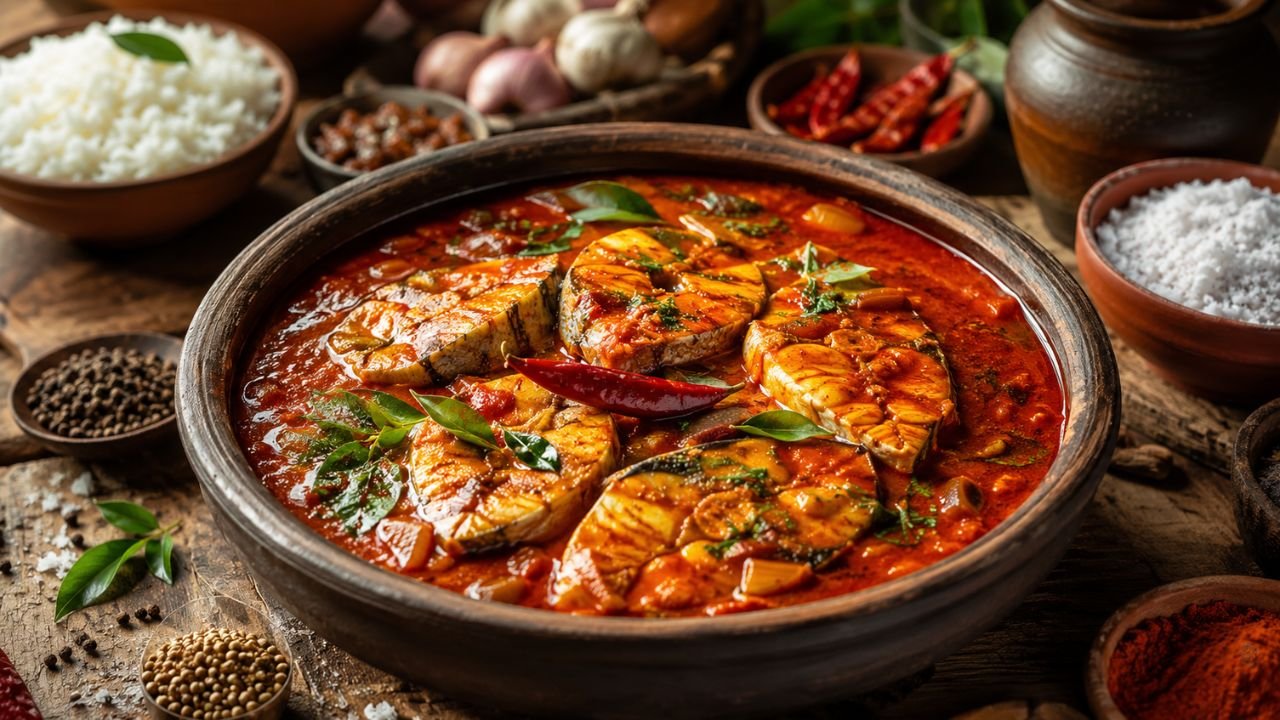
VD Satheesan’s favorite fish curry dinner is the kind of comforting coastal meal that instantly captures attention with its vibrant color, aromatic spices, and rich coconut-infused gravy. Inspired by the flavors of Kerala cuisine, this fish curry combines fresh fish, tangy tamarind, fragrant curry leaves, and warming spices into one deeply satisfying dish that feels both luxurious and homely. The beauty of this recipe lies in its balance. The heat from red chili powder is softened by creamy coconut milk, while the tamarind gives the curry a deliciously sharp edge that keeps every bite exciting.
Fish curry is one of the most beloved dinner dishes across South India, especially in Kerala where seafood and spices form the heart of traditional cooking. Families often prepare this dish for special dinners, weekend gatherings, and festive occasions because it pairs wonderfully with steamed rice, appam, or soft Kerala parotta. The aroma alone is enough to bring everyone to the dining table.
This particular fish curry dinner stands out because it feels indulgent without being overly complicated. Fresh ingredients, slow simmering, and careful layering of flavors create a curry that tastes like it has been perfected over generations. Every spoonful delivers tender fish soaked in a spicy, tangy, and creamy gravy that feels deeply comforting.
Whether you are already a seafood lover or someone exploring coastal Indian cuisine for the first time, this recipe offers an unforgettable culinary experience. It is bold, flavorful, and elegant enough to impress guests while still simple enough to make for a comforting family dinner. Once you try this delicious fish curry, it may easily become one of your favorite homemade seafood recipes.
Recipe Information
This flavorful fish curry recipe serves as a hearty dinner option packed with authentic South Indian flavors. The preparation focuses on freshness and proper spice balance to create a restaurant-style result at home. Using firm fish varieties like kingfish, seer fish, or snapper helps maintain texture while cooking in the rich curry gravy.
Preparation Time: 25 minutes
Cooking Time: 35 minutes
Total Time: 60 minutes
Recipe Yield: 4 servings
Recipe Category: Dinner
Cuisine: Kerala Indian Cuisine
The curry develops even deeper flavor when allowed to rest for a short time before serving. This resting period allows the spices and tamarind to fully blend into the coconut-based gravy. Traditionally, fish curry tastes even better the next day because the fish absorbs the aromatic sauce more thoroughly.
This dish works beautifully as a complete dinner when paired with hot rice and a vegetable side dish. The gravy is intensely flavorful, making even simple steamed rice taste extraordinary. While spicy, the coconut milk ensures the heat remains balanced and smooth rather than overpowering.
Ingredients
- 700 grams firm fish pieces such as kingfish or snapper
- 2 tablespoons coconut oil
- 1 teaspoon mustard seeds
- 1 teaspoon fenugreek seeds
- 2 medium onions, finely sliced
- 1 tablespoon ginger, finely chopped
- 6 garlic cloves, minced
- 3 green chilies, slit lengthwise
- 2 medium tomatoes, chopped
- 12 curry leaves
- 2 tablespoons Kashmiri red chili powder
- 1 teaspoon turmeric powder
- 1 tablespoon coriander powder
- 1 teaspoon black pepper powder
- Small lemon-sized tamarind soaked in warm water
- 1 1/2 cups thick coconut milk
- 1 cup thin coconut milk or water
- Salt to taste
- Fresh coriander leaves for garnish
The quality of the fish plays a major role in the final taste of the curry. Fresh fish with firm flesh absorbs the spices beautifully without breaking apart during simmering. Coconut oil is strongly recommended because it adds authentic Kerala flavor and enhances the aroma of curry leaves and mustard seeds.
Kashmiri red chili powder is preferred because it gives the curry its deep red appearance without making it excessively spicy. Tamarind provides the signature tanginess that balances the richness of the coconut milk, creating the perfect harmony of flavors.
Preparation
Begin by cleaning the fish thoroughly under cold running water. Pat the pieces dry and lightly season them with a pinch of turmeric and salt. Allow the fish to rest while preparing the curry base. This simple step helps remove any raw smell and lightly seasons the seafood before cooking.
Heat coconut oil in a traditional clay pot or a heavy-bottomed pan. Once the oil becomes hot, add mustard seeds and allow them to crackle. Add fenugreek seeds carefully because they can burn quickly. Stir in curry leaves immediately to release their aroma into the oil.
Add sliced onions and sauté them over medium heat until they turn soft and lightly golden. Properly cooking the onions is essential because it creates sweetness that balances the spices later. Stir in ginger, garlic, and green chilies. Continue sautéing until the raw aroma disappears completely.
Add chopped tomatoes and cook them until soft and pulpy. The tomatoes should break down fully into the onion mixture, creating a thick masala base. Sprinkle turmeric powder, Kashmiri chili powder, coriander powder, and black pepper powder into the pan. Stir continuously for a minute to prevent the spices from burning.
Extract tamarind juice from the soaked tamarind and pour it into the curry base. Add thin coconut milk or water and bring the mixture to a gentle simmer. Allow the curry to cook for around 10 minutes so the spices blend properly and the raw taste of tamarind disappears.
Carefully place the fish pieces into the simmering gravy. Avoid stirring aggressively because delicate fish can break apart. Instead, gently swirl the pan occasionally to coat the fish evenly with the curry. Cover and cook for approximately 10 to 12 minutes until the fish becomes tender and absorbs the spices.
Reduce the heat to low and slowly pour in the thick coconut milk. Stir gently to combine everything without breaking the fish pieces. Simmer for another 3 to 4 minutes. Avoid boiling the curry vigorously after adding thick coconut milk because it may separate.
Taste the curry and adjust salt or tanginess if necessary. Some people prefer a slightly sharper tamarind flavor while others enjoy a creamier balance from extra coconut milk. Once satisfied, switch off the heat and allow the curry to rest for at least 15 minutes before serving.
Garnish with fresh coriander leaves and additional curry leaves fried in coconut oil for extra aroma. Serve the fish curry hot with steamed rice, appam, idiyappam, or flaky parotta for a complete Kerala-inspired dinner experience.
The slow cooking process allows the spices to deepen naturally. Unlike rushed curries, this method creates a layered flavor where the fish remains tender while the gravy becomes intensely aromatic and silky. The final texture should be rich yet pourable, coating rice beautifully without becoming overly thick.
Tips
Always choose firm fish varieties because soft fish can disintegrate during simmering. Seer fish, kingfish, snapper, or pomfret are excellent choices for this recipe. Fresh seafood produces the best flavor and texture, so avoid frozen fish whenever possible.
Cooking the curry in a clay pot enhances authenticity and adds subtle earthy depth to the gravy. Traditional Kerala fish curries are often prepared this way because clay distributes heat evenly and preserves flavor beautifully.
Do not skip curry leaves. They are one of the most important flavor components in South Indian seafood dishes. Frying them in hot coconut oil releases their natural oils and creates the signature aroma associated with Kerala cuisine.
Balance the spice level according to your preference. Kashmiri chili powder mainly adds color, but if you prefer more heat, you can add a small amount of hot red chili powder separately.
Allowing the curry to rest before serving is extremely important. Freshly cooked fish curry tastes wonderful, but resting for even 15 to 20 minutes allows the fish to absorb the gravy more effectively.
If the curry becomes too thick, add a small amount of warm water or thin coconut milk. If it feels too thin, simmer uncovered for a few extra minutes until the desired consistency is reached.
For a richer dinner experience, pair the curry with coconut rice or ghee rice instead of plain rice. The fragrant rice complements the spicy tangy gravy beautifully.
Leftover fish curry can be refrigerated for up to two days. Reheat gently over low heat without vigorous stirring to preserve the fish texture.
Variations
One popular variation replaces coconut milk with roasted coconut paste for a thicker and more intense flavor profile. The roasted coconut adds smoky depth that pairs exceptionally well with seafood.
You can also prepare this curry using prawns instead of fish. Prawns cook faster and absorb the spices quickly, creating a luxurious seafood dinner with slightly sweeter flavor notes.
For a lighter version, reduce the amount of thick coconut milk and increase tomato content slightly. This creates a tangier and less creamy curry while still preserving authentic flavors.
Mango fish curry is another delicious adaptation often enjoyed during mango season in Kerala. Small pieces of raw mango are added during simmering to create natural tanginess and fruity sweetness.
Some households prefer adding drumsticks or okra to the curry for extra texture and nutrition. These vegetables absorb the gravy beautifully and turn the curry into a more filling meal.
If you enjoy smoky flavors, lightly grill the fish before adding it to the curry. This extra step gives the dish a charred aroma that tastes incredible with the coconut-based gravy.
Vegetarians can even adapt the recipe using paneer or tofu instead of fish. While the flavor profile changes slightly, the curry base itself remains wonderfully rich and aromatic.
Conclusion
VD Satheesan’s favorite fish curry dinner truly showcases the irresistible beauty of Kerala seafood cuisine. Rich coconut milk, fragrant spices, tangy tamarind, and tender fish come together in a dish that feels comforting, luxurious, and deeply satisfying all at once.
This recipe proves that traditional flavors never go out of style. The careful layering of spices, the aroma of curry leaves sizzling in coconut oil, and the silky texture of the gravy create a dining experience that feels both authentic and memorable.
Whether served for a family dinner, festive gathering, or weekend indulgence, this fish curry delivers restaurant-quality flavor with homemade warmth. Paired with rice or soft breads, it becomes the kind of meal people remember long after the plates are empty.
Once you experience the bold yet balanced flavors of this delicious seafood curry, it is easy to understand why it remains such a cherished favorite. Every spoonful offers warmth, spice, creaminess, and comfort in perfect harmony, making this recipe truly too delicious to miss.