
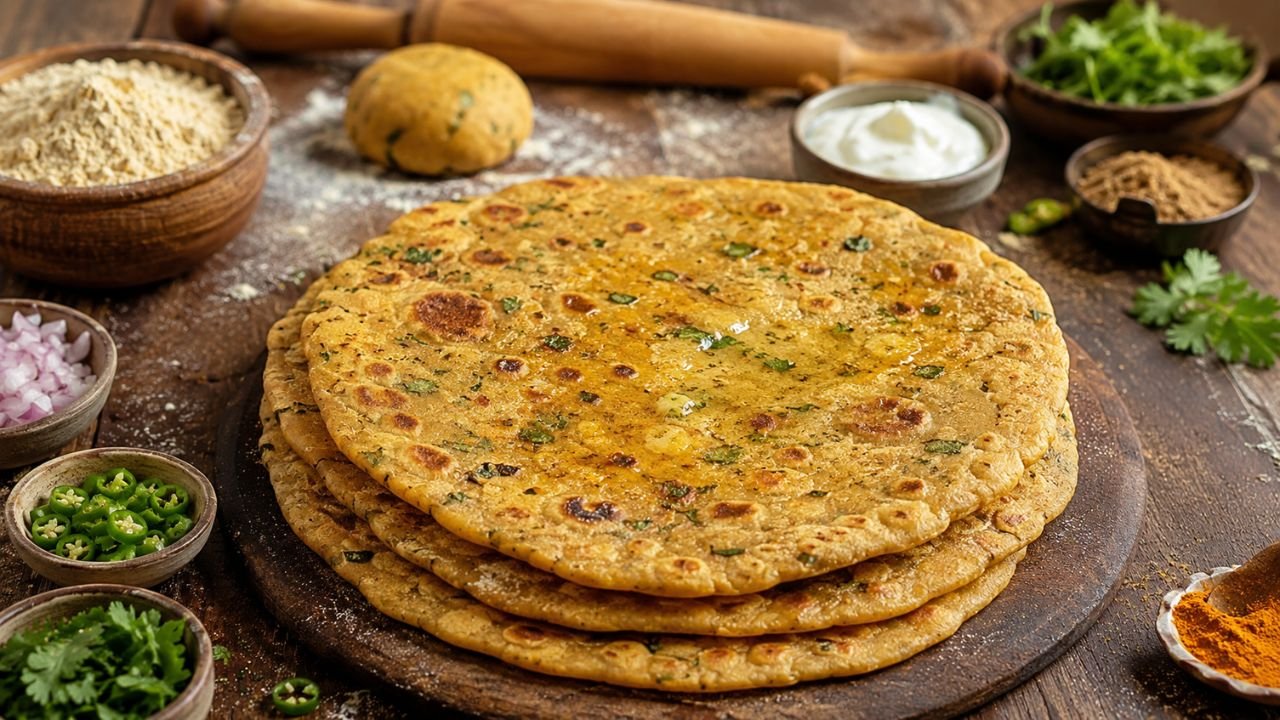
Mulayam Singh Yadav Loved This Healthy Besan Roti : You Should Taste is a simple, hearty, and deeply comforting Indian flatbread inspired by the kind of rustic food often loved in traditional homes. Besan roti is made with gram flour, wheat flour, spices, herbs, and a little patience. It is not a fancy restaurant dish, yet it carries the warmth of homemade cooking, the strength of rural meals, and the clean satisfaction of food that fills the stomach without feeling heavy. This roti is naturally rich in plant-based protein, fiber, and earthy flavor, making it a smart choice for breakfast, lunch, or dinner. Unlike plain wheat roti, besan roti has a nutty taste, a slightly firm texture, and a beautiful aroma when cooked on a hot tawa. With curd, pickle, dal, or a light vegetable curry, it becomes a complete meal. This recipe keeps the method practical, healthy, and easy for everyday kitchens.
Recipe Information
This healthy besan roti recipe is designed for home cooks who want a nutritious Indian flatbread without making the process complicated. Besan, also known as gram flour or chickpea flour, gives the roti a rich taste and adds protein, while whole wheat flour helps bind the dough and keeps the roti soft enough to roll. The balance between both flours is important because besan alone can make the dough crumbly. By mixing it with wheat flour, the roti becomes easier to handle and pleasant to eat.
The preparation time for this recipe is 15 minutes, which includes measuring ingredients, mixing the dough, and allowing it to rest briefly. The cooking time is 20 minutes, as each roti needs to be cooked patiently on both sides until brown spots appear and the inner texture is properly done. The total time is 35 minutes. This recipe makes 6 medium rotis, suitable for 3 servings if served with a side dish.
Besan roti belongs to the Indian flatbread category and fits beautifully into North Indian cuisine. It can be enjoyed as a breakfast with curd, as a lunch with dal, or as a light dinner with vegetables. Its flavor is earthy, slightly spicy, and satisfying. The use of carom seeds, cumin, green chili, coriander, and onion makes the roti more aromatic. However, the spice level can easily be adjusted according to personal taste. For a milder version, skip green chili and add only cumin and coriander.
- Preparation time: 15 minutes
- Cooking time: 20 minutes
- Total time: 35 minutes
- Recipe yield: 6 medium rotis
- Serving size: 2 rotis per person
- Recipe category: Indian flatbread
- Recipe cuisine: North Indian
- Best served with curd, pickle, dal, or sabzi
Ingredients
The ingredients for this besan roti are simple, affordable, and commonly available in Indian kitchens. The main ingredient is besan, which gives the roti its special taste and nutritional value. Whole wheat flour is added to make the dough smoother and easier to roll. Finely chopped onion and fresh coriander bring freshness, while spices add depth. A small amount of oil helps improve texture and prevents the roti from becoming too dry.
For a healthier version, use minimal oil while cooking. A light brushing of ghee can be added after cooking if you want a softer and richer roti, but it is completely optional. If you are preparing this recipe for a weight-conscious meal, cook the roti dry on a hot tawa and serve it with plain curd or a fresh salad. If you want it more filling, pair it with dal or a vegetable curry.
- 1 cup besan, also called gram flour or chickpea flour
- 1 cup whole wheat flour
- 1 small onion, finely chopped
- 2 tablespoons fresh coriander leaves, finely chopped
- 1 green chili, finely chopped, optional
- 1 teaspoon cumin seeds
- 1 teaspoon carom seeds
- 1 teaspoon red chili powder
- 1/2 teaspoon turmeric powder
- 1/2 teaspoon salt, or as needed
- 1 tablespoon oil for the dough
- Warm water as needed for kneading
- Extra wheat flour for dusting while rolling
- 1 to 2 teaspoons oil or ghee for cooking, optional
The onion should be chopped very finely because large pieces can tear the dough while rolling. Coriander should also be fresh, as it gives a better aroma. Carom seeds are especially useful in besan-based recipes because they support digestion and add a sharp, traditional flavor. If you do not like the strong taste of carom seeds, reduce the quantity to half a teaspoon.
Preparation
Start by taking a large mixing bowl. Add besan and whole wheat flour to the bowl. Mix both flours with your hand or a spoon so that they combine evenly. Now add cumin seeds, carom seeds, red chili powder, turmeric powder, and salt. Stir again to spread the spices through the flour. This step is important because it ensures that every bite of the roti has balanced flavor.
Add finely chopped onion, chopped coriander leaves, and green chili if using. Mix everything gently. The onion will release a little moisture, so do not add too much water at once. Add 1 tablespoon of oil and rub it into the flour mixture. This helps the roti become softer and gives the dough a smoother feel.
Now begin adding warm water slowly. Add a little water, mix, and then add more only as needed. Besan absorbs water differently from wheat flour, so the dough may feel sticky in the beginning. Knead carefully until you get a firm but workable dough. It should not be too soft like regular chapati dough because onion and besan can make it loose after resting. Once kneaded, cover the dough and let it rest for 10 minutes.
After resting, knead the dough again for one minute. Divide it into 6 equal portions and roll each portion into a smooth ball. Dust the rolling board with wheat flour. Take one dough ball, flatten it gently, dust it again, and roll it slowly into a medium roti. Do not press too hard while rolling because besan roti can crack at the edges. If cracks appear, gently press the edges together with your fingers and continue rolling.
Heat a tawa or flat pan on medium heat. Place the rolled roti on the hot tawa. Cook for about 40 to 50 seconds until small bubbles appear. Flip it and cook the other side. Press gently with a spatula so the roti cooks evenly. Flip again and cook until both sides have golden brown spots. You can apply a little oil or ghee if desired, but for a lighter version, cook it without extra fat. Repeat the same process with the remaining dough balls.
- Mix besan, wheat flour, spices, onion, coriander, and oil in a bowl.
- Add warm water slowly and knead into a firm dough.
- Rest the dough for 10 minutes before rolling.
- Roll gently with light dusting to avoid cracks.
- Cook on medium heat until both sides are golden and fully done.
- Serve hot with curd, pickle, dal, or vegetable curry.
The key to a good besan roti is cooking it on medium heat. If the heat is too high, the outside may brown quickly while the inside stays slightly raw. If the heat is too low, the roti may become dry and hard. A steady medium flame gives the best texture: cooked, fragrant, and lightly crisp at the edges.
Tips
To make soft and flavorful besan roti, always balance besan with wheat flour. Besan has no gluten, so it does not stretch like wheat dough. If you use too much besan and very little wheat flour, the dough can break while rolling. A 1:1 ratio is practical for beginners and gives a nice balance of nutrition, taste, and texture.
Resting the dough is another important step. Even a short rest of 10 minutes helps the flour absorb moisture properly. This makes rolling easier and improves the final texture. However, do not rest onion-based dough for too long because onion releases water over time and can make the dough sticky. If the dough becomes sticky, add a little wheat flour and knead again.
Use warm water rather than cold water for kneading. Warm water helps the dough come together smoothly and improves softness. Add water slowly because besan can become sticky very quickly. The dough should feel firm, not loose. If it sticks heavily to your fingers, sprinkle extra wheat flour and knead until manageable.
While rolling, use gentle pressure. Besan roti is more delicate than regular roti. Dust both sides lightly, but do not use too much dry flour, as it can make the cooked roti dusty and dry. If the edges crack, press them with your fingers and continue. A slightly rustic shape is perfectly fine. Homemade besan roti does not need to be perfectly round to taste good.
- Use equal parts besan and wheat flour for easy rolling.
- Chop onion very finely to prevent tearing.
- Rest the dough briefly, but do not leave it for too long.
- Cook on medium heat for even cooking.
- Add curd to the side for a cooling and balanced meal.
- For a lighter version, avoid ghee and cook dry on the tawa.
- For extra softness, cover cooked rotis in a clean cloth.
If you are making this recipe for children or elderly family members, reduce the chili and keep the spices mild. You can also skip onion if needed and add grated bottle gourd or spinach for a softer version. The roti can be packed in a lunchbox, but it tastes best when served fresh and warm.
Variations
Besan roti is flexible, and you can change it according to your taste, season, and health goals. One popular variation is methi besan roti. Add finely chopped fresh fenugreek leaves to the dough. Methi gives a slightly bitter, earthy flavor that works very well with besan. It also increases the nutritional value of the roti and makes it more aromatic.
Another healthy variation is spinach besan roti. Add finely chopped spinach or lightly blanched spinach puree to the flour mixture. If using puree, reduce the amount of water because spinach already contains moisture. Spinach adds color, softness, and nutrients, making the roti attractive and wholesome.
For a high-fiber version, add grated carrot, grated radish, or finely chopped cabbage. These vegetables add texture and moisture. However, squeeze excess water from radish before adding it to the dough, otherwise the dough may become sticky. You can also add a spoon of flaxseed powder or sesame seeds for more nutrition.
If you prefer a richer village-style roti, cook it with a small amount of ghee and serve it with homemade white butter, curd, or garlic chutney. For a lighter everyday version, cook it without oil and pair it with plain yogurt. The same dough can also be used to make small thick rotis for breakfast, which are easier to handle and more filling.
- Methi besan roti: Add chopped fenugreek leaves for a rustic flavor.
- Spinach besan roti: Add chopped spinach for color and softness.
- Vegetable besan roti: Add grated carrot or cabbage for extra fiber.
- Spicy besan roti: Add green chili, ginger, and crushed coriander seeds.
- Plain healthy besan roti: Skip onion and chili for a simple version.
- Lunchbox version: Make smaller rotis and cook with very little oil.
You can also make a travel-friendly version by cooking the rotis slightly firmer and brushing them with a tiny amount of ghee. This helps them stay soft for a longer time. Serve with dry chutney, pickle, or curd. For diabetic-friendly meals, portion control is important, and the roti should be paired with protein-rich sides like curd, dal, or paneer bhurji rather than sugary accompaniments.
Conclusion
Mulayam Singh Yadav Loved This Healthy Besan Roti You Should Taste is more than just a simple flatbread recipe. It represents the beauty of Indian home cooking: honest ingredients, practical method, strong flavor, and real nourishment. Besan gives the roti a nutty taste and protein-rich base, while wheat flour helps keep it soft and easy to roll. Spices like cumin and carom seeds add warmth and support digestion, and fresh coriander brings brightness to every bite.
This recipe is ideal for anyone who wants a satisfying meal without depending on heavy or complicated dishes. It can be served for breakfast, lunch, or dinner and can be adjusted for different tastes. Make it spicy, mild, rich, or light depending on your need. With curd, pickle, dal, or sabzi, besan roti becomes a balanced and comforting plate.
The best part is that it does not require expensive ingredients or advanced cooking skills. A hot tawa, a simple dough, and a few careful steps are enough. Once you learn the texture of the dough and the right cooking heat, this roti can easily become part of your regular meal plan. It is healthy, traditional, filling, and full of character.