
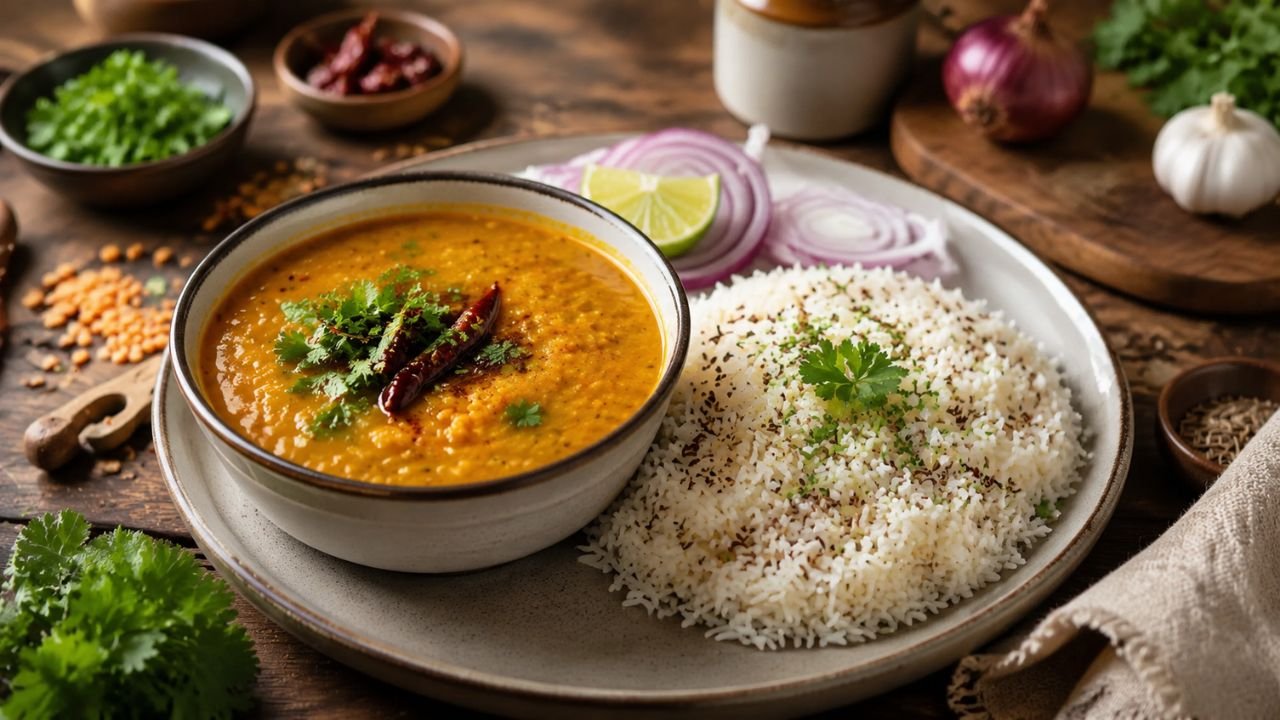
Neha Dhupia’s comforting dal fry and jeera rice dinner is the perfect example of how simple Indian food can become deeply satisfying with the right balance of flavors and textures. This classic combination has long been a favorite in Indian households because it delivers warmth, nutrition, and rich aroma in every bite. Dal fry, made with lentils tempered in ghee and spices, pairs beautifully with fragrant jeera rice infused with cumin seeds and subtle whole spices. Together, they create a wholesome meal that feels both luxurious and homely.
The beauty of this dinner lies in its simplicity. Even with everyday pantry ingredients, the recipe produces restaurant-style flavors that are ideal for weeknight dinners, family gatherings, or even special occasions. The creamy consistency of the dal balances the fluffy jeera rice perfectly, making every spoonful comforting and hearty. Inspired by the flavors associated with Neha Dhupia’s favorite style of home-cooked food, this recipe focuses on authenticity, rich texture, and aromatic seasoning.
Dal fry is especially popular because it combines protein-rich lentils with the robust flavors of onion, tomatoes, garlic, ginger, and spices. The tempering process elevates the humble lentils into something unforgettable. Jeera rice, on the other hand, may appear simple but requires careful cooking techniques to achieve perfectly separated grains infused with the earthy aroma of toasted cumin seeds.
This recipe guide explains every step in detail so you can prepare a complete dinner that tastes delicious and looks impressive. From choosing the right lentils and rice to balancing spices and achieving the ideal texture, everything is covered thoroughly. Whether you are a beginner learning Indian cooking or someone looking to perfect your dal fry and jeera rice skills, this article provides practical instructions, useful tips, and creative variations to make the meal even more exciting.
Recipe Information
This comforting Indian dinner recipe serves four people and works wonderfully for lunch or dinner. The preparation process is straightforward, making it ideal even for busy weekdays.
- Preparation Time: 20 minutes
- Cooking Time: 40 minutes
- Total Time: 60 minutes
- Recipe Yield: 4 servings
- Cuisine: Indian
- Recipe Category: Main Course
The recipe combines creamy dal fry with aromatic jeera rice to create a balanced meal rich in protein, fiber, and comforting flavors. It pairs beautifully with papad, pickle, yogurt, or salad.
Ingredients
For the dal fry, selecting fresh lentils and aromatic spices is essential. The combination of toor dal and moong dal creates a creamy texture while maintaining depth of flavor.
- 1/2 cup toor dal
- 1/4 cup yellow moong dal
- 3 cups water
- 1 medium onion, finely chopped
- 2 tomatoes, finely chopped
- 1 tablespoon ginger-garlic paste
- 2 green chilies, chopped
- 1 teaspoon turmeric powder
- 1/2 teaspoon chili powder
- 1 teaspoon coriander powder
- 1/2 teaspoon garam masala
- Salt to taste
- 2 tablespoons ghee
- 1 tablespoon oil
- 1 teaspoon cumin seeds
- 1 dry red chili
- A pinch of asafoetida
- Fresh coriander leaves for garnish
- 1 tablespoon butter
For the jeera rice, using long-grain basmati rice helps achieve fluffy grains and restaurant-style presentation.
- 1 1/2 cups basmati rice
- 3 cups water
- 2 tablespoons ghee
- 2 teaspoons cumin seeds
- 1 bay leaf
- 2 green cardam pods
- 1 small cinnamon stick
- 2 cloves
- Salt to taste
- Fresh coriander for garnish
Optional accompaniments can further elevate the meal. Crispy papad, cucumber salad, mango pickle, or chilled yogurt work especially well alongside this comforting dinner.
Preparation
Begin by washing the lentils thoroughly under running water until the water appears clear. Soaking the lentils for fifteen to twenty minutes helps them cook faster and improves texture. While soaking is optional, it contributes to a creamier consistency and more even cooking.
Transfer the washed lentils to a pressure cooker and add three cups of water along with a pinch of turmeric and a little salt. Cook for about three to four whistles or until the lentils become completely soft. Once the pressure releases naturally, whisk the dal gently using a spoon or ladle to create a smooth and creamy consistency. If the mixture appears too thick, add a little warm water to adjust the texture.
While the dal cooks, prepare the jeera rice. Wash the basmati rice gently until the water runs clear. Soak the rice for around twenty minutes. This helps the grains elongate beautifully during cooking and prevents them from becoming sticky.
Heat ghee in a heavy-bottomed pan. Add cumin seeds and allow them to crackle gently. Their nutty aroma should become noticeable within seconds. Add the bay leaf, cardam pods, cinnamon, and cloves. Sauté briefly until the whole spices release their fragrance into the ghee.
Drain the soaked rice and add it carefully to the pan. Stir gently so the grains coat evenly with the spiced ghee. This step is important because it enhances flavor while helping maintain separate grains after cooking.
Add three cups of water and salt. Bring everything to a gentle boil before lowering the heat. Cover the pan tightly and cook for approximately twelve to fifteen minutes until the rice absorbs all the water. Once done, let the rice rest covered for another five minutes before fluffing with a fork.
Now prepare the flavorful tempering for the dal fry. Heat ghee and oil together in a deep pan. Adding both creates a balanced flavor while preventing the ghee from burning too quickly. Once hot, add cumin seeds and allow them to splutter.
Add the dry red chili and asafoetida briefly. Immediately stir in chopped onions and sauté until they turn golden brown. This step forms the flavor base of the dish and should not be rushed. Properly caramelized onions add sweetness and depth to the dal.
Next, add ginger-garlic paste and chopped green chilies. Cook for two minutes until the raw smell disappears completely. Stir in chopped tomatoes and cook until soft and mushy. The oil should begin separating slightly from the masala, indicating that the mixture has cooked properly.
Add turmeric powder, chili powder, and coriander powder. Stir continuously for about one minute to prevent the spices from burning. The spices should become aromatic and blend smoothly with the onion-tomato mixture.
Pour the cooked lentils into the pan and mix thoroughly with the prepared masala. Simmer the dal on low heat for ten to twelve minutes so the flavors meld beautifully. Stir occasionally to prevent sticking.
Add garam masala and butter during the final stage of cooking. This preserves the freshness and aroma of the finishing spices. Taste the dal and adjust salt or spice levels according to preference.
For a restaurant-style finish, prepare an optional final tempering. Heat a small spoonful of ghee in a tiny pan and add a little cumin, red chili powder, and crushed garlic. Pour this sizzling mixture directly over the hot dal before serving. The aroma instantly transforms the dish and adds rich depth.
Garnish the dal fry generously with freshly chopped coriander leaves. Serve hot alongside fluffy jeera rice. The creamy lentils and fragrant rice create a delicious balance that feels both comforting and satisfying.
Presentation also plays a role in making this meal special. Serve the jeera rice in a wide bowl and spoon the dal beside it rather than directly over the rice. Garnishing with coriander and a drizzle of ghee creates an inviting restaurant-style appearance.
If preparing the meal ahead of time, store the dal and rice separately. Reheat the dal gently with a splash of water to restore creamy texture. Jeera rice can be reheated in a covered pan or microwave while maintaining its fluffy consistency.
This meal also works beautifully as part of a larger Indian spread. It pairs wonderfully with paneer dishes, dry vegetable curries, or stuffed flatbreads. However, even on its own, the combination remains deeply satisfying because it balances flavor, texture, and nutrition perfectly.
Tips
Always use fresh spices for maximum flavor. Old cumin seeds or stale garam masala can reduce the aromatic quality that makes this dish special.
Do not overcook the rice. Slightly undercooked rice can continue steaming while resting, but overcooked rice may become mushy and sticky.
Adding a little moong dal to the toor dal creates creamier consistency without making the dish overly heavy. This combination works particularly well for restaurant-style dal fry.
Cooking onions until golden brown is essential for depth of flavor. Undercooked onions can leave the dal tasting sharp and incomplete.
Use ghee generously for authentic taste. While oil works fine, ghee contributes richness and aroma that define traditional dal fry and jeera rice.
For smoky flavor, you can try the dhungar method by placing a small piece of hot charcoal in a bowl inside the cooked dal and pouring a little ghee over it. Cover briefly to infuse smokiness.
Always rest the rice after cooking before fluffing. This allows moisture to distribute evenly and keeps the grains intact.
Adding a squeeze of lemon juice before serving can brighten the flavors of the dal and balance the richness beautifully.
Variations
One popular variation involves adding paneer cubes to the dal fry. Soft paneer absorbs the spices beautifully and makes the dish richer and more filling.
You can also include vegetables such as spinach, carrots, or bell peppers in the dal for added nutrition and color. Spinach especially complements the earthy lentil flavors while increasing iron and vitamin content.
For spicier jeera rice, sauté finely chopped green chilies along with the cumin seeds. This variation adds gentle heat without overpowering the aroma of the rice.
Brown basmati rice may be used instead of white rice for a healthier version. Although the texture becomes slightly nuttier, it pairs very well with creamy dal fry.
Another delicious variation is tadka dal with butter and smoked paprika. This creates richer color and slightly smoky flavor while maintaining traditional character.
You can make the meal vegan by replacing ghee with neutral oil or vegan butter. Coconuts and plant-based fats still provide good flavor while making the recipe suitable for vegan diets.
Some people prefer adding kasuri methi to the dal during the final simmering stage. The dried fenugreek leaves introduce subtle bitterness and aroma that complement the creamy lentils wonderfully.
Jeera rice can also be transformed into peas pulao by adding peas, carrots, or fried onions. This creates a more festive variation suitable for celebrations and dinner parties.
If you enjoy garlic-heavy flavors, increase the amount of garlic in the tempering. Crispy garlic pieces poured over the dal just before serving add incredible texture and aroma.
Conclusion
Neha Dhupia’s delicious dal fry and jeera rice dinner captures the essence of comforting Indian home cooking. With simple ingredients, balanced spices, and careful preparation, this classic combination transforms into a deeply satisfying meal that appeals to all age groups. The creamy lentils, aromatic cumin rice, and rich tempering together create layers of flavor that feel both nourishing and indulgent.
What makes this recipe truly special is its versatility. It can be prepared as a quick weekdaynight dinner, a cozy weekend meal, or part of a festive spread for guests. The dish is economical, nutritious, and packed with protein and fiber while still tasting luxurious and restaurant-worthy.
By following the detailed instructions and practical tips in this guide, you can easily recreate authentic dal fry and jeera rice at home. From selecting quality ingredients to perfecting the tempering and rice texture, every step contributes to achieving the best possible results.
This meal reminds us that comfort food does not need complicated techniques or expensive ingredients. Sometimes the most memorable dishes come from humble lentils, fragrant rice, and carefully balanced spices prepared with warmth and attention. Serve this delicious dinner hot with your favorite accompaniments and enjoy a timeless Indian classic that never disappoints.