
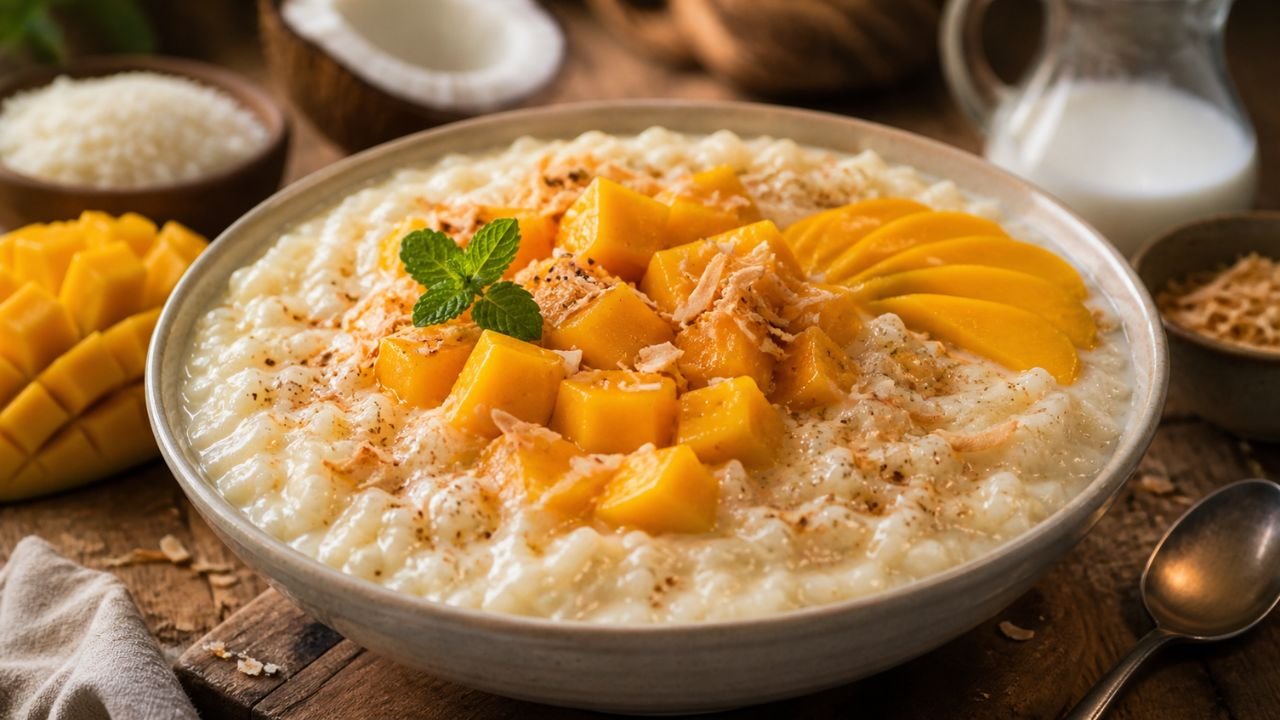
Coconut rice pudding with mango is the kind of dessert that feels made for warm evenings: cool, creamy, fragrant, and bright with tropical fruit. It is comforting without being heavy, sweet without being cloying, and simple enough to prepare ahead before dinner begins. The combination of tender rice, coconut milk, vanilla, cardamom, and ripe mango creates a bowl that tastes both nostalgic and refreshing.
This recipe is inspired by classic rice puddings from many home kitchens, but it leans into a lighter, summery style. Instead of relying only on dairy, it uses full-fat coconut milk for richness and a little regular milk or plant-based milk to keep the texture spoonable. The mango is added at the end so its fresh flavor stays vivid. When chilled slightly, the pudding becomes silky and lush, while the fruit brings brightness to every bite.
The best part is that this dessert does not require complicated techniques. The rice simmers slowly, absorbing the coconut milk until creamy, while gentle stirring prevents sticking and helps release starch. Once cooked, it rests and thickens naturally. Serve it warm, at room temperature, or chilled, depending on the evening. For hot weather, a cool bowl topped with juicy mango, toasted coconut, and a squeeze of lime is especially satisfying.
Recipe Information
- Recipe name: Coconut Rice Pudding With Mango for Warm Evenings
- Preparation time: 15 minutes
- Cooking time: 35 minutes
- Total time: 50 minutes
- Servings: 6 servings
- Category: Dessert
- Cuisine: Tropical-inspired comfort dessert
- Difficulty: Easy
- Best served: Warm, room temperature, or chilled
This coconut rice pudding is designed for relaxed cooking. It works well as a make-ahead dessert because the pudding thickens as it cools and the mango can be added just before serving. If you plan to serve it chilled, prepare the pudding earlier in the day, cover it, and refrigerate it. Before serving, loosen it with a splash of milk or coconut milk if needed, then spoon the mango over the top.
Short-grain rice gives the creamiest result because it releases more starch during cooking, but medium-grain rice also works well. Long-grain rice can be used in a pinch, though the texture will be slightly looser and less custardy. The key is gentle simmering rather than boiling. A calm heat lets the rice soften evenly and allows the coconut milk to thicken without scorching.
The sweetness is intentionally balanced. Ripe mango adds natural sugar, so the pudding itself does not need to be overly sweet. Taste near the end of cooking and adjust with a little more sugar if your mangoes are tart. A pinch of salt is important because it sharpens the coconut flavor and keeps the dessert from tasting flat.
Ingredients
- 3/4 cup short-grain white rice, rinsed until the water runs mostly clear
- 1 can full-fat coconut milk, about 13.5 ounces
- 2 cups whole milk, oat milk, or almond milk
- 1/2 cup water
- 1/3 cup granulated sugar, plus more to taste
- 1/4 teaspoon fine sea salt
- 1 teaspoon vanilla extract
- 1/2 teaspoon ground cardamom
- 1/4 teaspoon ground cinnamon
- 2 ripe mangoes, peeled and diced
- 1 tablespoon fresh lime juice
- 1 teaspoon lime zest
- 1/4 cup toasted coconut flakes
- 2 tablespoons chopped pistachios or cashews, optional
- 1 tablespoon maple syrup or honey, optional for finishing
Choose mangoes that smell sweet at the stem end and give slightly when pressed. They should not be mushy, but they should feel heavy and fragrant. Ataulfo, Alphonso, Kent, or any ripe dessert mango will work beautifully. If fresh mangoes are not available, thawed frozen mango can be used, but drain any excess liquid so the topping does not water down the pudding.
Full-fat coconut milk gives the pudding its luxurious texture. Light coconut milk can be used, but the dessert will be thinner and less creamy. If using plant-based milk, choose an unsweetened variety so you can control the sweetness. Oat milk adds body, almond milk keeps the flavor delicate, and soy milk gives a slightly richer finish.
Preparation
- Rinse the rice in a fine-mesh sieve under cool running water, stirring it with your fingers until the water is mostly clear. This removes excess surface starch while leaving enough starch for a creamy pudding.
- In a medium heavy-bottomed saucepan, combine the rinsed rice, coconut milk, milk, water, sugar, and salt. Stir well to loosen the rice from the bottom of the pan.
- Place the saucepan over medium heat and bring the mixture to a gentle simmer. Stir often as it heats so the coconut milk does not separate or scorch.
- Once small bubbles appear around the edges, reduce the heat to low. Cook uncovered for 30 to 35 minutes, stirring every few minutes, until the rice is tender and the mixture looks creamy.
- If the pudding thickens too quickly before the rice is fully tender, add a splash of milk or water and continue cooking slowly.
- When the rice is soft, stir in the vanilla extract, cardamom, and cinnamon. Taste and adjust the sweetness with a little more sugar if desired.
- Remove the pan from the heat and let the pudding rest for 10 minutes. It will continue to thicken as it stands.
- In a small bowl, toss the diced mango with lime juice and lime zest. This keeps the fruit bright and adds a fresh finish.
- Spoon the pudding into bowls. Top with mango, toasted coconut flakes, and nuts if using.
- For extra gloss and sweetness, drizzle lightly with maple syrup or honey just before serving.
The pudding is ready when the grains of rice are fully tender and suspended in a creamy sauce. It should not look dry in the pot because it thickens as it rests. If you prefer a looser pudding, stir in a little warm milk after resting. If you prefer a thicker dessert, let it cool longer before serving.
Stirring matters, but constant stirring is not necessary. The goal is to keep the bottom from catching and to help the rice release starch gradually. A heavy saucepan makes this easier because it distributes heat evenly. Avoid high heat, especially once the mixture begins to thicken, because coconut milk can scorch quickly.
For warm evenings, the most refreshing option is to cool the pudding to room temperature and then chill it for at least one hour. The flavors settle, the coconut becomes more pronounced, and the mango tastes even brighter against the cool, creamy base. Add toppings after chilling so they stay fresh and crisp.
Tips
- Use ripe mango for the best flavor. Underripe mango will taste sharp and firm instead of juicy and floral.
- Do not skip the salt. Even a small amount balances the sweetness and deepens the coconut flavor.
- Keep the heat low after simmering begins. Slow cooking creates the smoothest texture.
- Stir more often near the end of cooking, when the pudding becomes thicker and more likely to stick.
- Add the spices after cooking so their fragrance stays fresh and clear.
- For a chilled version, slightly loosen the pudding before refrigerating because it firms up as it cools.
- Toast coconut flakes in a dry pan for a few minutes to bring out a nutty aroma.
- Serve in small bowls or glasses for an elegant make-ahead dessert.
If the pudding becomes too thick after refrigeration, stir in a spoonful or two of milk, coconut milk, or even a little water. Add the liquid gradually until the texture becomes creamy again. Rice continues absorbing moisture as it sits, so this is normal and easy to fix.
If the pudding tastes dull, it probably needs either salt, lime, or both. Creamy desserts benefit from contrast. The lime juice in the mango topping adds just enough acidity to lift the richness of the coconut milk. A little zest adds fragrance without making the dessert sour.
For the smoothest serving experience, cut the mango into small, even cubes. Large pieces can overwhelm the spoonful, while smaller pieces blend naturally with the rice. If the mango is extremely juicy, spoon some of the juice over the pudding as a simple sauce.
Variations
- Make it vegan by using plant-based milk and finishing with maple syrup instead of honey.
- Add grated fresh ginger during the last five minutes of cooking for a warm, fragrant note.
- Use jasmine rice for a lighter floral aroma, though the pudding will be slightly less creamy.
- Fold in a spoonful of coconut cream at the end for an extra-rich version.
- Replace mango with pineapple, roasted peaches, passion fruit, or sliced bananas.
- Add a pinch of saffron for a golden color and delicate aroma.
- Top with crushed cardamom cookies or shortbread crumbs for texture.
- Layer the pudding and mango in glasses for a parfait-style dessert.
For a more tropical version, add diced pineapple along with the mango and finish with toasted macadamia nuts. For a more elegant dinner-party version, chill the pudding in small cups, top with mango just before serving, and add a few flakes of toasted coconut. For a breakfast-style version, reduce the sugar slightly and serve it with extra fruit.
You can also turn this recipe into a coconut mango rice pudding parfait. Chill the pudding completely, then layer it with mango, toasted coconut, and chopped nuts in clear glasses. This presentation looks polished but requires no extra cooking. It is especially useful when entertaining because the pudding can be made ahead and assembled close to serving time.
For a spiced version, increase the cardamom slightly and add a tiny pinch of nutmeg. For a brighter version, add more lime zest to the mango. For a richer version, replace half of the milk with additional coconut milk. Each variation keeps the basic method the same, so the recipe remains dependable.
Conclusion
Coconut rice pudding with mango is a simple dessert with a beautiful balance of comfort and freshness. The rice becomes soft and creamy, the coconut milk adds richness, and the mango brings a juicy brightness that makes the dish perfect for warm evenings. It feels indulgent but not heavy, familiar but still special.
This is also a practical recipe to keep in your warm-weather rotation. It uses pantry ingredients, can be made ahead, and adapts easily to different diets and toppings. Serve it after a casual family meal, bring it out for guests, or enjoy a chilled bowl on a quiet evening when you want something soothing and sweet.
The most important details are simple: cook the rice gently, season with enough salt, keep the sweetness balanced, and use ripe mango. With those steps in place, the pudding becomes creamy, fragrant, and refreshing every time. Whether served warm from the pot or chilled with fruit on top, it is a dessert that makes the evening feel softer, slower, and a little more tropical.