
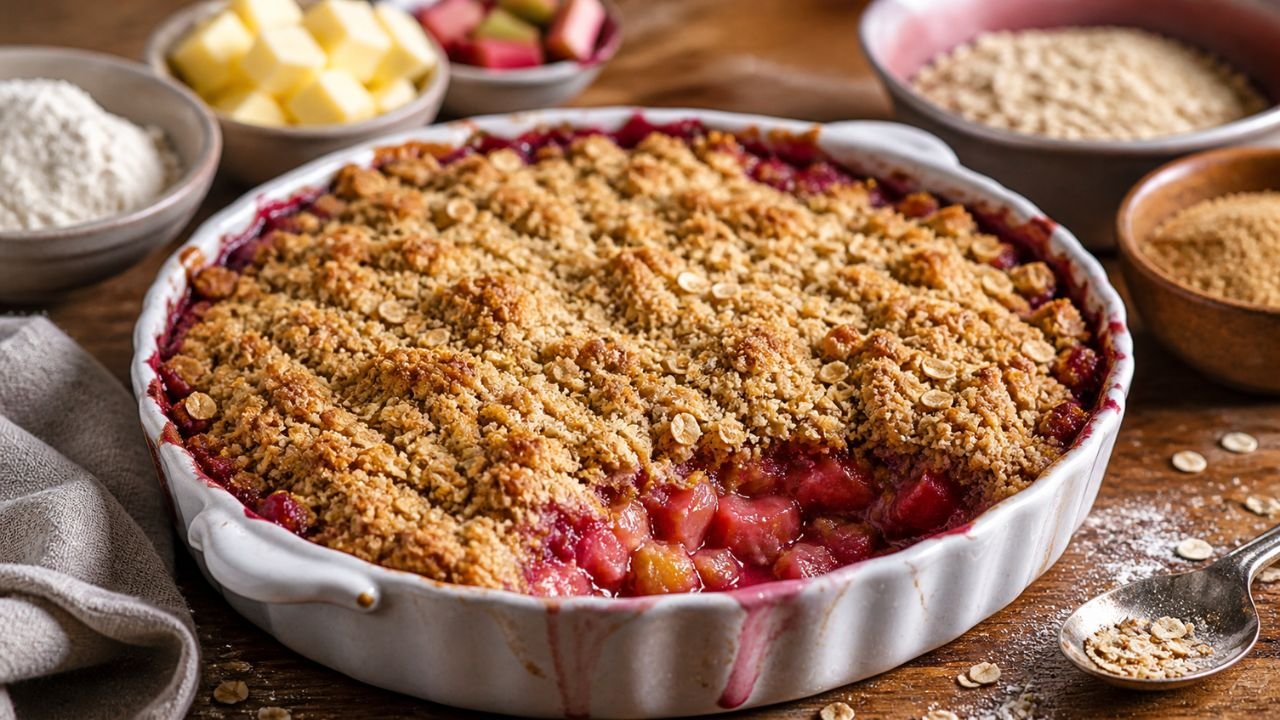
Rhubarb crumble with a simple oat topping is the kind of dessert that feels both rustic and special. It celebrates rhubarb’s bright, tangy flavor while balancing it with a buttery, golden topping that turns crisp at the edges and tender underneath. The result is a warm fruit dessert with contrast in every spoonful: soft ruby-pink filling, lightly caramelized juices, and a crumbly oat layer that adds comfort without being fussy.
This recipe is designed for home bakers who want a dependable crumble that does not require pastry, complicated equipment, or advanced technique. Rhubarb naturally has a sharp, refreshing tartness, so the filling needs just enough sugar to soften its edge while still letting its character shine. A little cornstarch helps the juices thicken as the crumble bakes, creating a spoonable filling rather than a watery one. The oat topping is made with pantry staples and comes together quickly by rubbing butter into flour, oats, sugar, and a pinch of salt.
Serve this rhubarb crumble warm from the oven with vanilla ice cream, whipped cream, custard, or plain Greek yogurt. It is also excellent at room temperature and can be reheated the next day. Because the topping is simple and the filling is fruit-forward, this dessert works for spring gatherings, weekend baking, casual family dinners, or any time you want something homemade with very little stress.
Recipe Information
- Recipe name: Rhubarb Crumble With a Simple Oat Topping
- Preparation time: 20 minutes
- Cooking time: 40 minutes
- Total time: 60 minutes
- Yield: 6 servings
- Category: Dessert
- Cuisine: British-inspired home baking
- Best served: Warm, with ice cream, custard, cream, or yogurt
This crumble is built around fresh rhubarb, but frozen rhubarb can also be used when fresh stalks are not available. If using frozen rhubarb, do not thaw it completely before baking, as excess liquid can make the filling too loose. Add it to the dish while still cold or only slightly softened, and consider adding an extra teaspoon of cornstarch if the pieces look especially icy.
The ideal baking dish is a medium ovenproof dish, roughly 8 inches square or similar in capacity. The fruit layer should be deep enough to stay juicy but not so thick that the topping browns before the rhubarb softens. A shallow dish gives more crisp topping, while a slightly deeper dish gives more saucy fruit. Both versions are delicious, so choose based on the texture you prefer.
Ingredients
- For the rhubarb filling:
- 700 g fresh rhubarb, trimmed and cut into 2 cm pieces
- 130 g granulated sugar
- 1 tablespoon cornstarch
- 1 teaspoon vanilla extract
- 1 teaspoon finely grated orange zest
- 1 tablespoon fresh orange juice or lemon juice
- For the simple oat topping:
- 120 g all-purpose flour
- 90 g rolled oats
- 100 g light brown sugar
- 115 g cold unsalted butter, cut into small cubes
- 1 teaspoon ground cinnamon
- 1 small pinch of salt
Choose firm rhubarb stalks with a fresh appearance. The color can range from pale green to deep pink or red, and color alone does not determine flavor. Redder stalks may give a brighter filling, while greener stalks can be just as tasty but slightly less vivid. Avoid stalks that are limp, bruised, or dry at the ends. Always discard rhubarb leaves, as they are not edible.
Rolled oats are best for the topping because they hold their shape and create a pleasantly chewy-crisp texture. Quick oats can be used in a pinch, but the topping will be softer and finer. Steel-cut oats are not recommended because they remain too firm in this style of crumble. Cold butter is important because it helps form small crumbs that bake into a light, crisp topping rather than melting immediately into the flour.
Preparation
- Preheat the oven to 180°C. Lightly butter a medium baking dish.
- Place the chopped rhubarb in the dish. Add the granulated sugar, cornstarch, vanilla extract, orange zest, and orange juice or lemon juice. Toss until the rhubarb is evenly coated.
- In a separate bowl, combine the flour, rolled oats, light brown sugar, cinnamon, and salt.
- Add the cold cubed butter to the dry topping mixture. Rub it in with your fingertips until the mixture forms uneven crumbs, with some small sandy pieces and some larger buttery clumps.
- Scatter the oat topping evenly over the rhubarb filling. Do not press it down firmly; a loose topping bakes more evenly and becomes crisper.
- Bake for 40 minutes, or until the topping is golden and the rhubarb juices are bubbling around the edges.
- Let the crumble rest for 10 to 15 minutes before serving so the filling can thicken slightly.
The resting time is more important than it may seem. When the crumble first comes out of the oven, the filling will be extremely hot and may look quite loose. As it cools slightly, the fruit juices settle and thicken, making it easier to spoon into bowls. The topping also firms up a little, giving a better contrast between crisp crumbs and tender fruit.
When making the topping, aim for an irregular texture rather than a perfectly smooth mixture. Larger butter-rich pieces become crunchy clusters, while smaller crumbs fill in the surface and create an even golden layer. This variety is part of what makes crumble so appealing. If the butter starts to soften while you are mixing, place the bowl in the refrigerator for 10 minutes before topping the fruit.
Check the crumble near the end of the baking time. The topping should be golden brown, and the filling should visibly bubble in several places. Bubbling shows that the fruit has released its juices and the cornstarch has had enough heat to activate. If the topping browns too quickly, loosely cover the dish with foil for the final few minutes. If the topping looks pale after 40 minutes, bake for another 5 minutes while watching closely.
Tips
- Use fresh, firm rhubarb for the best texture and flavor.
- Do not reduce the sugar too much, because rhubarb is naturally tart and needs sweetness for balance.
- Keep the butter cold when making the topping for a crisper finish.
- Let the crumble rest before serving so the fruit filling thickens.
- Place the baking dish on a tray if it is very full, as the juices may bubble over.
- Serve warm for the best contrast between the saucy fruit and crisp oat topping.
For a balanced crumble, taste and texture matter equally. Rhubarb’s sharpness is the heart of the dessert, so the goal is not to hide it but to round it out. Brown sugar in the topping adds a gentle caramel note, while orange zest brings brightness without making the dessert taste strongly of citrus. Vanilla softens the tartness and gives the filling a warmer, more rounded aroma.
If your rhubarb is especially thin and tender, it may bake a little faster. Thicker stalks may need the full cooking time to soften properly. Cut the pieces evenly so they cook at the same rate. Very large chunks can stay fibrous, while very tiny pieces can collapse completely. Pieces around 2 cm create a filling that is soft but still has some body.
Storage is straightforward. Cover leftovers and refrigerate for up to 3 days. The topping will soften as it sits, but the flavor remains excellent. To reheat, warm individual portions in the microwave or place the baking dish in a moderate oven until heated through. For a crisper topping, reheating in the oven is best. This crumble can also be assembled a few hours ahead: keep the fruit and topping separate, then add the topping just before baking.
Variations
- Add strawberries for a sweeter spring crumble. Replace 200 g of the rhubarb with hulled, halved strawberries.
- Add apple for a milder filling. Replace 200 g of the rhubarb with peeled, diced apple.
- Add ginger for warmth. Stir 1 teaspoon grated fresh ginger into the fruit filling or add 1 teaspoon ground ginger to the topping.
- Add nuts for crunch. Mix 50 g chopped almonds, pecans, or walnuts into the oat topping.
- Make it extra citrusy by using lemon zest instead of orange zest.
- Make it richer by adding 2 tablespoons of ground almonds to the topping mixture.
Strawberry and rhubarb is a classic pairing because strawberries bring natural sweetness and a softer texture. This variation may need slightly less sugar if the strawberries are very ripe. Apple and rhubarb gives a more mellow crumble, ideal for those who enjoy rhubarb but prefer less sharpness. Ginger is especially good when you want a warmer dessert with a little spice, and nuts add a bakery-style crunch that works beautifully with oats.
You can also adjust the topping to suit the occasion. For a lighter finish, use slightly less butter and accept a looser, drier crumb. For a more indulgent topping, keep the butter amount as written and make sure some larger clumps remain. A spoonful of demerara sugar sprinkled over the top before baking adds sparkle and crunch, though the crumble is already satisfying without it.
For a dairy-free version, use a firm plant-based butter alternative in place of dairy butter. Choose one that is suitable for baking and use it cold, just as you would regular butter. For a gluten-free version, use a gluten-free all-purpose flour blend and certified gluten-free oats. The texture may be slightly more delicate, but the crumble will still be flavorful and comforting.
Conclusion
Rhubarb crumble with a simple oat topping is a dependable dessert that turns a few humble ingredients into something memorable. The rhubarb becomes tender and juicy, the sugar and citrus balance its tartness, and the oat topping bakes into a golden layer with just the right amount of crunch. It is simple enough for everyday baking but good enough to serve after a special meal.
The beauty of this recipe is its flexibility. You can keep it classic, add strawberries, include apple, stir in ginger, or make the topping nuttier and richer. Once you understand the basic method, it becomes an easy dessert to adapt throughout the season. Serve it warm, give it a short rest before spooning, and pair it with something creamy for the full crumble experience.