
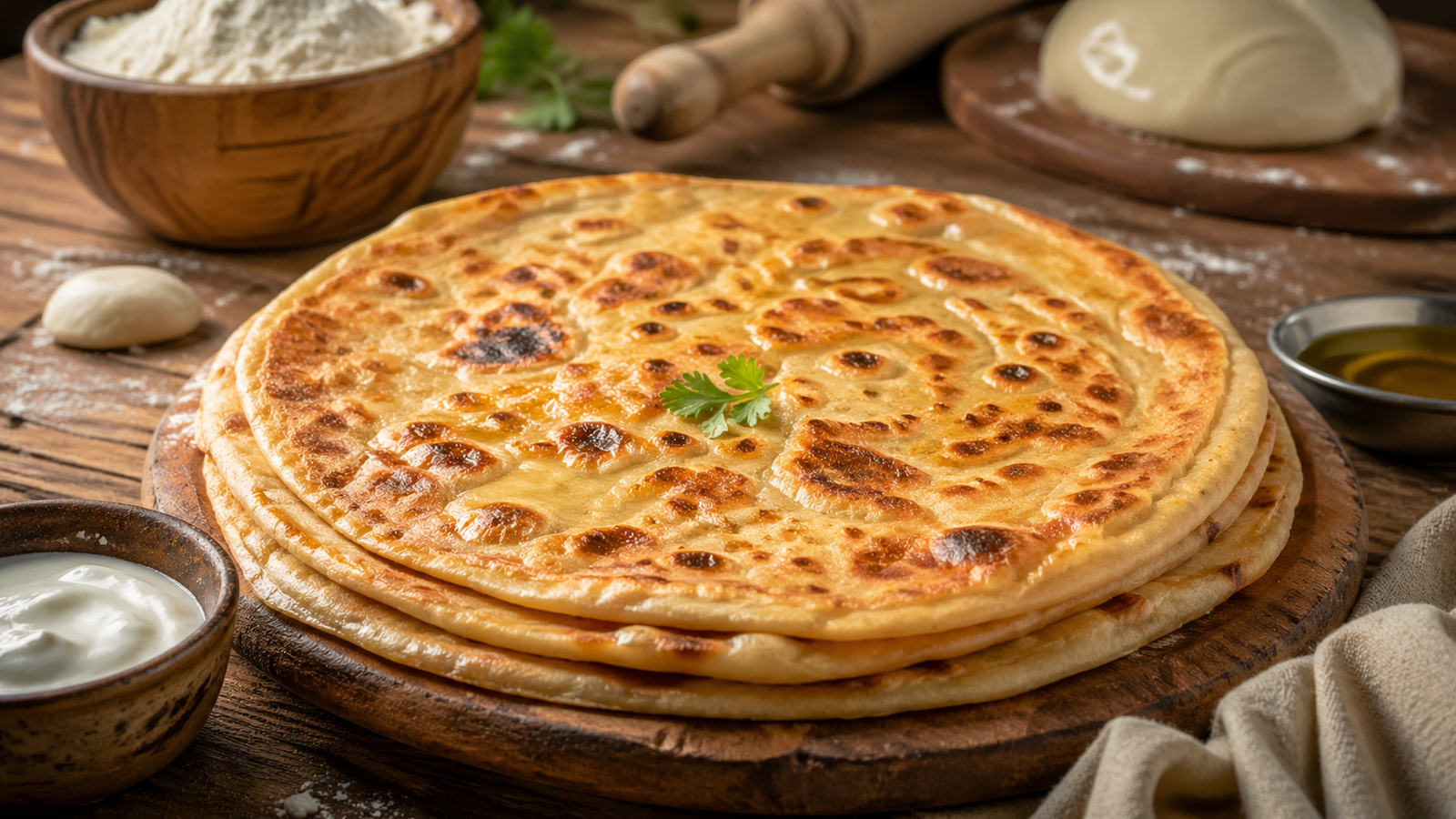
I Add 1 Spoonful of Curd to My Paratha Dough, and It Turns Out Softer Every Time is a simple kitchen trick that can make everyday parathas noticeably softer, smoother, and more enjoyable. Parathas are often made with only whole wheat flour, salt, water, and a little fat, but adding just one spoonful of fresh curd changes the dough in a gentle and useful way. The curd adds moisture, mild acidity, and tenderness, helping the flour come together into a softer dough that rolls easily and cooks into flexible, comforting parathas.
This method is especially helpful if your parathas often become firm after cooling. Many homemade parathas taste good when hot, but once packed in a lunch box or kept aside for an hour, they can turn dry or chewy. Curd helps reduce that problem. It keeps the dough supple and gives the cooked parathas a softer bite. The taste does not become sour when only one spoonful is used. Instead, the parathas get a mild richness that works beautifully with pickle, chutney, dal, sabzi, curd, or even a simple cup of tea.
The best part is that this technique does not require any special ingredient or complicated method. A spoonful of fresh curd is enough for a small batch of dough. You still knead, rest, roll, and cook the parathas in the usual way, but the final texture feels more balanced. The dough becomes easier to handle, the parathas puff better in places, and the cooked layers stay soft without needing too much ghee. This recipe focuses on a plain soft curd paratha, but the same dough can be used for many variations once you understand the basic texture.
Recipe Information
- Recipe name: Soft Curd Paratha
- Preparation time: 20 minutes
- Cooking time: 20 minutes
- Total time: 40 minutes
- Recipe category: Breakfast, lunch, dinner, flatbread
- Recipe cuisine: Indian
- Yield: 6 medium parathas
- Serving size: 2 parathas per person
- Main ingredient: Whole wheat flour
- Special ingredient: 1 spoonful of fresh curd
- Cooking method: Tawa cooking
- Texture: Soft, flexible, lightly flaky
- Best served with: Pickle, yogurt, chutney, dal, curry, or vegetable sabzi
The preparation time includes mixing, kneading, and resting the dough. Resting is important because whole wheat flour needs time to absorb moisture properly. When the dough rests, it becomes smoother and easier to roll. The curd also blends better into the flour during this time, helping the parathas turn soft without making the dough loose or sticky.
The cooking time is based on making six medium parathas on a hot tawa. Each paratha needs to be cooked until both sides have golden spots and the inside is fully done. The total time is 40 minutes, which is exactly the preparation time plus the cooking time. This makes the recipe practical for breakfast, dinner, or meal prep when you want something homemade and satisfying without spending too long in the kitchen.
This recipe uses a small amount of curd because balance matters. Too much curd can make the dough sticky, tangy, or difficult to roll. One heaped tablespoon for two cups of flour gives softness without changing the character of the paratha. The result is still a classic wheat paratha, only softer and more reliable.
Ingredients
- 2 cups whole wheat flour
- 1 heaped tablespoon fresh curd
- 1 teaspoon oil or ghee for the dough
- 1/2 teaspoon salt, or as needed
- 1/2 teaspoon sugar, optional
- 3/4 cup water, added gradually as needed
- 2 to 3 tablespoons ghee or oil for cooking the parathas
- Extra dry flour for rolling
Use fresh curd that is mild and not overly sour. Homemade curd works very well, but plain store-bought yogurt can also be used. Avoid flavored or sweetened yogurt because it can affect the taste of the paratha. If your curd is watery, stir it first and use the thicker portion. Thick curd blends better into the flour and helps create a smooth dough.
Whole wheat flour is the main ingredient, so choose fresh atta if possible. Older flour can absorb more water and sometimes gives a drier texture. Since different flours absorb water differently, add water slowly instead of pouring it all at once. The dough should feel soft, moist, and pliable, but it should not be so sticky that it becomes difficult to roll.
Salt gives flavor, while a teaspoon of oil or ghee makes the dough more tender. Sugar is optional, but a very small amount helps with gentle browning and balances the taste. It will not make the paratha sweet. For cooking, ghee gives the richest flavor and aroma, while oil gives a lighter everyday version. You can also use a mix of both.
Preparation
Take the whole wheat flour in a wide mixing bowl. Add salt and optional sugar, then mix with your fingers or a spoon so the dry ingredients are evenly distributed. Add one heaped tablespoon of fresh curd to the flour. Rub the curd into the flour with your fingertips until it spreads through the mixture. This step is useful because it prevents the curd from staying in one place and helps the dough become evenly soft.
Add one teaspoon of oil or ghee and mix again. Start adding water slowly, two or three tablespoons at a time. Bring the flour together using your fingers. At first, the mixture will look rough and uneven, but that is normal. Keep adding water gradually until most of the flour gathers into a dough. Do not rush this step, because curd already adds moisture and the dough can become sticky if too much water is added at once.
Once the dough comes together, begin kneading. Press it with the base of your palm, fold it back, and press again. Continue kneading for about 4 to 5 minutes. The dough should become smooth and soft. If it feels too dry or cracks at the edges, wet your fingers and knead again. If it feels too sticky, sprinkle a small amount of dry flour and continue gently. Avoid adding too much dry flour, as that can make the parathas firm.
Shape the kneaded dough into a ball and rub a few drops of oil over the surface. Cover the bowl with a plate or a damp cloth. Let the dough rest for 15 minutes. This resting period makes a big difference. It allows the flour to hydrate, the gluten to relax, and the curd to soften the dough naturally. A rested dough rolls more smoothly and cooks into softer parathas.
After resting, knead the dough again for about 30 seconds. Divide it into 6 equal portions and shape each portion into a smooth ball. Keep the dough balls covered while you work so they do not dry out. Heat a tawa or flat pan on medium-high heat. The tawa should be hot before the paratha goes on it. If the tawa is not hot enough, the paratha will take longer to cook and may become dry.
Take one dough ball and dust it lightly with dry flour. Flatten it with your fingers and roll it into a round paratha, about 6 to 7 inches wide. Use light pressure while rolling. Heavy pressure can make the paratha dense. Dust only as needed, because too much dry flour can burn on the tawa and create a dry surface.
Place the rolled paratha on the hot tawa. Let it cook until small bubbles appear and the underside develops light spots. Flip it and cook the second side briefly. Apply a little ghee or oil on the top, flip again, and press gently with a spatula around the edges. Apply ghee or oil on the other side and flip once more. Cook until both sides have golden brown spots and the paratha looks fully cooked.
Remove the paratha from the tawa and place it in a covered container or wrap it in a clean kitchen cloth. This traps gentle steam and keeps the paratha soft. Repeat the same process with the remaining dough balls. Serve the parathas hot, or let them cool slightly before packing them for later.
Tips
- Use only one heaped tablespoon of curd for two cups of flour to keep the dough balanced.
- Choose fresh, mild curd instead of very sour curd.
- Add water gradually because curd already adds moisture to the dough.
- Keep the dough soft but not wet.
- Rest the dough for at least 15 minutes before rolling.
- Use very little dry flour while rolling to avoid dryness.
- Cook on medium-high heat so the paratha cooks quickly without losing moisture.
- Store cooked parathas covered to maintain softness.
The most important tip is to avoid making a tight dough. A tight dough may seem easier to handle, but it usually gives hard parathas. Soft dough needs a little more patience, but it produces a much better texture. If the dough feels slightly sticky during kneading, do not panic. After resting, it usually becomes easier to manage.
Another important point is heat control. A properly heated tawa helps the paratha cook quickly and evenly. If the heat is too low, the paratha stays on the pan for too long and dries out. If the heat is too high, the outside browns before the inside cooks. Medium-high heat is usually best. Adjust slightly depending on your stove and pan.
For lunch boxes, cook the parathas until soft and lightly golden rather than crisp. Let them cool for a minute before packing, so they do not become soggy from trapped steam. Then wrap them in foil, parchment, or a clean cloth. The curd in the dough helps them stay flexible even after cooling.
Variations
For ajwain curd paratha, add 1/2 teaspoon ajwain to the flour before kneading. Ajwain gives a warm, earthy flavor and makes the paratha taste especially good with pickle or plain curd. This version is also nice for breakfast because it feels light and aromatic.
For methi curd paratha, add 1/2 cup finely chopped fresh fenugreek leaves to the flour. The curd balances the slight bitterness of methi and keeps the dough tender. Since fresh leaves release moisture, add water carefully. This variation is excellent with butter, curd, or mango pickle.
For masala curd paratha, add a pinch of turmeric, 1/2 teaspoon red chili powder, 1/2 teaspoon cumin powder, and chopped coriander. This makes the paratha flavorful enough to eat on its own. Keep the spices moderate so the paratha remains soft and balanced.
For layered curd paratha, roll a dough ball into a circle, spread a few drops of ghee, fold it into a triangle or square, and roll again. Cook it the same way on the tawa. The curd keeps the layers tender, while the ghee gives a light flaky texture.
For a lighter everyday version, cook the parathas with very little oil and brush them lightly with ghee after removing them from the tawa. For a richer version, use ghee while cooking both sides. Both methods work because the dough itself is already soft.
Conclusion
Adding one spoonful of curd to paratha dough is a small change, but it gives a clear improvement in texture. The dough becomes smoother, the parathas roll more easily, and the cooked parathas stay soft for longer. This is especially useful for families who make parathas regularly and want them to taste fresh even after cooling.
The key is to use fresh curd, add water slowly, knead the dough well, rest it properly, and cook the parathas on a hot tawa. These steps work together to create soft, flexible, flavorful parathas without needing too much fat. Once you try this method, it can easily become your regular way of preparing paratha dough at home.