
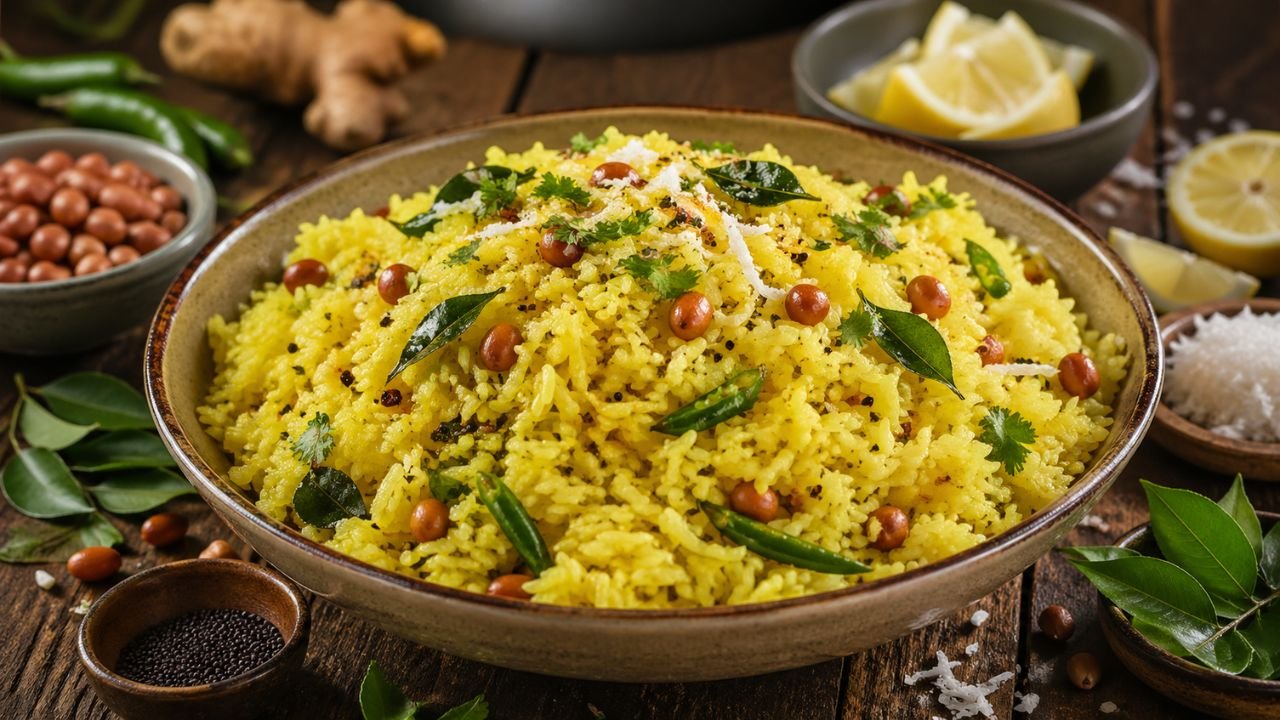
There is a particular kind of comfort in lemon rice: bright, fragrant, gently spiced, and somehow both modest and memorable. It is the sort of dish that can sit quietly beside a bowl of yogurt or grilled vegetables, yet still carry the entire meal with its clean citrus perfume and golden, tempered warmth. In my kitchen, it began as a practical way to turn leftover rice into something lively. Over time, it became a family ritual.
The small twist I add is a spoonful of toasted coconut and crushed roasted peanuts folded in at the end. It sounds simple, almost too simple, but it changes the dish beautifully. The coconut lends a soft, nutty sweetness, while the peanuts bring crunch and depth. Against the sharpness of lemon, the heat of green chile, the perfume of curry leaves, and the earthy touch of turmeric, this finish gives lemon rice a fuller, rounder character.
This is the rice I make when lunch needs to feel effortless but not ordinary. It travels well, tastes wonderful warm or at room temperature, and has the elegant balance of a dish shaped by repetition: citrus, spice, texture, and restraint. Once you learn how to season the oil properly and add the lemon at the right moment, lemon rice becomes less of a recipe and more of a reliable culinary instinct.
Recipe Information
- Recipe Name: Lemon Rice with Toasted Coconut and Peanuts
- Description: A fragrant South Indian-inspired lemon rice finished with toasted coconut and roasted peanuts for a subtle nutty twist, bright citrus balance, and delicate texture.
- Servings: 4 servings
- Preparation Time: 15 minutes
- Cooking Time: 15 minutes
- Total Time: 30 minutes
- Difficulty: Easy
- Recipe Category: Main dish, side dish, lunch
- Cuisine: Indian-inspired, South Indian-style
- Cooling Time: 10 minutes if cooking rice fresh; not included in Total Time
Ingredients
For the rice
- 3 cups cooked long-grain rice, preferably cooled
- 2 tablespoons fresh lemon juice, plus more to taste
- 1 teaspoon finely grated lemon zest
- 3/4 teaspoon fine sea salt, or to taste
- 1/4 teaspoon ground turmeric
For the tempering
- 2 tablespoons neutral oil, such as sunflower or peanut oil
- 1 teaspoon black mustard seeds
- 1 teaspoon split urad dal
- 1 teaspoon chana dal
- 10 to 12 fresh curry leaves
- 2 green chiles, slit lengthwise
- 1 dried red chile, broken in half
- 1/4 teaspoon asafoetida, optional but traditional
- 1 tablespoon finely chopped fresh ginger
For the small twist
- 1/3 cup roasted peanuts, lightly crushed
- 1/4 cup unsweetened shredded coconut
- 2 tablespoons chopped fresh cilantro
- 1 teaspoon sesame seeds, optional
Kitchen Tools
- Wide skillet or sauté pan
- Small dry pan for toasting coconut
- Wooden spoon or silicone spatula
- Microplane or fine grater
- Mixing bowl
- Fork for fluffing rice
- Citrus juicer
Preparation
Preparing the rice
- Start with the right texture: The best lemon rice begins with cooked rice that is separate, cool, and not overly moist. Leftover rice is ideal because the grains have had time to firm up. If cooking rice fresh, spread it on a tray after cooking and let it cool for 10 minutes so the steam can escape.
- Place the cooked rice in a wide bowl and gently fluff it with a fork. Sprinkle over the turmeric and salt, but do not add the lemon juice yet. Mixing the turmeric into the rice before it enters the pan helps distribute the color evenly without overworking the grains.
- Note: Avoid pressing or stirring the rice too aggressively. Lemon rice should feel light and loose, with each grain carrying a little oil, spice, and citrus.
Toasting the coconut and peanuts
- Set a small dry pan over medium-low heat and add the shredded coconut. Toast it gently for 2 to 3 minutes, stirring often, until it turns pale golden and smells warm and nutty. Remove it immediately from the pan so it does not continue browning.
- Lightly crush the roasted peanuts with the side of a knife or the bottom of a cup. They should remain coarse, not powdered. This small texture contrast is what makes the twist so pleasing: little bursts of crunch against the soft rice.
- If using sesame seeds, toast them briefly in the same dry pan for about 30 seconds, just until fragrant. Keep them aside with the coconut and peanuts.
Making the tempering
- Warm the oil in a wide skillet over medium heat. Add the mustard seeds and let them crackle. This step is essential because the seeds release their nutty sharpness into the oil, creating the foundation of flavor.
- Add the urad dal and chana dal. Stir for 1 to 2 minutes, until they turn golden. Watch carefully; they should taste crisp and roasted, never bitter. Add the curry leaves, green chiles, dried red chile, asafoetida, and ginger.
- Tip: Curry leaves may splutter when they touch the hot oil, so stand back slightly. Their aroma should bloom immediately, giving the dish its unmistakable savory fragrance.
- Lower the heat and stir for another 30 to 45 seconds, just until the ginger softens. Do not let it brown too deeply, as harshness can disturb the clean lemon flavor.
Finishing the lemon rice
- Add the prepared rice to the skillet and fold it through the tempering with a gentle lifting motion. The aim is to coat the grains without breaking them. Cook for 2 to 3 minutes, just until the rice is warmed and evenly tinted with turmeric.
- Turn off the heat before adding the lemon juice and lemon zest. This is important: fresh lemon loses its brightness when boiled. Folding it in off the heat keeps the citrus vivid, aromatic, and clean.
- Add the toasted coconut, crushed peanuts, sesame seeds if using, and cilantro. Fold once more, then taste. Adjust with a little more lemon juice or salt as needed. The final flavor should be bright but not sour, savory but not heavy, with a gentle nuttiness lingering at the end.
- Texture check: A well-made lemon rice should not be wet or oily. The grains should be separate, lightly glossy, and punctuated by crisp dal, peanuts, and toasted coconut.
Serving Suggestions
Serve this lemon rice warm, lightly warm, or at room temperature. It is especially lovely spooned into a shallow bowl and finished with a few extra curry leaves, a scattering of peanuts, and a small wedge of lemon on the side. The presentation should feel relaxed but intentional: golden rice, green herbs, pale coconut, and the occasional glint of chile.
For a simple meal, pair it with plain yogurt, cucumber raita, papad, or a lightly spiced vegetable stir-fry. It also works beautifully beside grilled paneer, roasted cauliflower, sautéed greens, or a mild lentil dish. Because the rice has citrus and texture built into it, it does not need a heavy sauce. In fact, its charm is clearest when the accompaniments are cool, crisp, or gently savory.
This is also an excellent lunchbox dish. The lemon keeps the flavor lively, while the coconut and peanuts prevent it from feeling plain after a few hours. If packing ahead, let the rice cool completely before closing the container so the grains stay loose rather than steaming into softness.
Chef Tips
Use cooled rice whenever possible
Freshly cooked rice can work, but it must be cooled before it is added to the pan. Hot rice is more delicate and tends to clump. Cooled rice gives you the refined, separate-grain texture that makes lemon rice so satisfying.
Add lemon off the heat
The most common mistake is cooking the lemon juice too long. Heat dulls acidity and can make citrus taste slightly bitter. By adding the juice after turning off the heat, you preserve the fragrance and brightness that define the dish.
Balance the crunch
The toasted coconut and peanuts are the small twist, but they should support the rice rather than dominate it. Use enough to create interest in every few bites, not so much that the dish becomes heavy. The best version feels balanced: crisp dal, soft rice, bright lemon, and a mellow nutty finish.
Season with confidence
Lemon rice needs enough salt to make the citrus sing. If the dish tastes flat, it usually needs a pinch more salt before it needs more lemon. Adjust gradually and taste after each addition.
Storage and Make-Ahead Tips
Lemon rice keeps well in an airtight container in the refrigerator for up to 3 days. Let it cool completely before storing. To reheat, sprinkle a teaspoon or two of water over the rice and warm it gently in a covered pan over low heat, fluffing with a fork once heated through. Avoid microwaving for too long, as the rice can become dry.
For make-ahead preparation, cook and cool the rice up to a day in advance. The coconut can also be toasted ahead and stored in a small airtight jar. The tempering, however, is best made fresh, because the aroma of mustard seeds, curry leaves, ginger, and chile is most vivid in the first few minutes after it blooms in hot oil.
If packing for lunch, keep a small wedge of lemon separate and squeeze it over just before eating. This refreshes the entire dish and brings back the lively top note that makes the recipe so appealing.
Additional Information
Lemon rice has deep roots in South Indian home cooking, where rice dishes often rely on the skillful use of tempering rather than elaborate sauces. Mustard seeds, dals, curry leaves, chiles, and turmeric create a fragrant oil that seasons the rice from the outside in. The lemon then cuts through with brightness, giving the dish its signature clarity.
What I love about this version is that it respects the spirit of the original while adding a quiet layer of texture. Coconut is a natural companion to curry leaves and chile, and peanuts are already a beloved element in many regional variations. Toasting the coconut separately before folding it in gives the dish a more polished finish, almost like a chef’s final seasoning.
This is why my family asks for it every week. It is familiar but never dull, economical but elegant, and quick enough for a weekday while still feeling thoughtfully made. The small twist does not reinvent lemon rice; it simply brings its best qualities into sharper focus: brightness, warmth, fragrance, and the kind of texture that makes everyone reach for one more spoonful.