
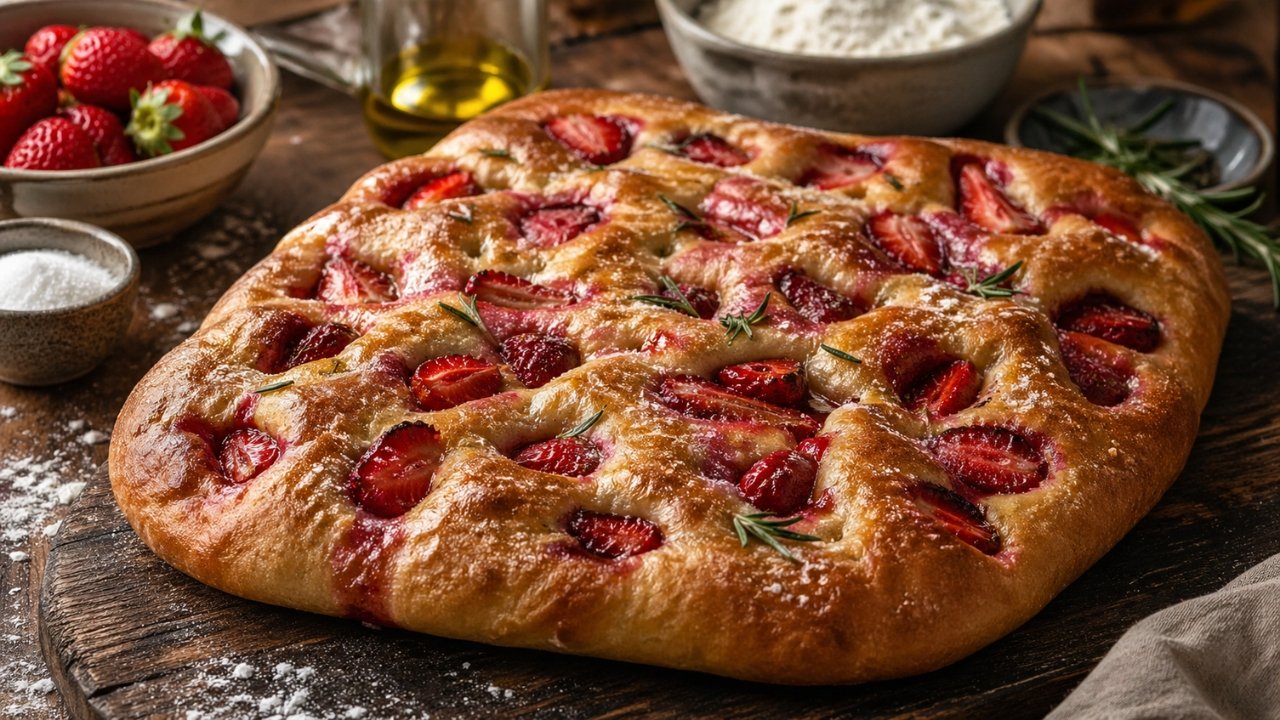
There are recipes that make immediate sense, and then there are recipes that ask for a small act of trust. Strawberry focaccia belongs to the second kind. At first glance, the idea seems almost too playful: a savory Italian-style bread, dimpled with olive oil, carrying pockets of warm, jammy strawberries. Yet the first bite explains everything. The crumb is tender and airy, the edges turn golden and lightly crisp, and the berries collapse just enough to perfume the bread without making it heavy.
Recipe Overview
Recipe Name: Strawberry Focaccia
Description: A soft, olive oil-rich focaccia topped with fresh strawberries, rosemary, flaky salt, and a delicate honey finish for a refined sweet-savory bread.
Servings: 8 pieces
Preparation Time: 25 minutes
Cooking Time: 28 minutes
Total Time: 53 minutes
Rising Time: 1 hour 45 minutes
Difficulty: Moderate
Recipe Category: Bread
Cuisine: Italian-inspired
Ingredients
For the Dough
- 3 1/2 cups bread flour, plus extra for handling
- 1 1/2 teaspoons fine sea salt
- 2 teaspoons instant yeast
- 1 1/2 cups lukewarm water
- 2 tablespoons extra virgin olive oil, plus more for the bowl and pan
- 1 teaspoon honey
For the Strawberry Topping
- 1 1/2 cups fresh strawberries, hulled and halved or quartered if large
- 1 tablespoon extra virgin olive oil
- 1 tablespoon honey, plus extra for finishing
- 1 teaspoon finely chopped fresh rosemary
- 1/2 teaspoon flaky sea salt
- Freshly cracked black pepper, optional but excellent
For Finishing
- 1 tablespoon extra virgin olive oil
- A few small rosemary leaves
- 1 to 2 teaspoons honey, warmed slightly
Kitchen Tools
- Large mixing bowl
- Wooden spoon or dough whisk
- 9 by 13-inch baking pan
- Clean kitchen towel or plastic wrap
- Small bowl for the strawberries
- Cooling rack
How to Make Strawberry Focaccia
Make the Dough
- Start with the dry ingredients: In a large bowl, combine the bread flour, fine sea salt, and instant yeast. Stir well so the yeast is evenly distributed and the salt does not sit in one concentrated pocket.
- Add moisture and olive oil: In a separate cup, stir the honey into the lukewarm water, then pour it into the flour mixture with 2 tablespoons of olive oil. Mix until a shaggy, sticky dough forms. Focaccia dough should feel wetter than standard sandwich bread dough; that moisture is what gives the finished bread its open, tender crumb.
- Develop the dough gently: With lightly oiled hands, fold the dough over itself several times in the bowl. Pull one side up, stretch it gently, and fold it toward the center. Turn the bowl and repeat 8 to 10 times. The dough will become smoother but should remain soft and elastic.
- First rise: Coat the bowl lightly with olive oil, cover it, and let the dough rise in a warm place for about 1 hour, or until noticeably puffed and nearly doubled. This rising time is inactive and is not included in the total time.
Prepare the Pan and Strawberries
- Oil the pan generously: Pour a thin layer of olive oil into a 9 by 13-inch baking pan, making sure the base and corners are coated. This encourages a crisp, burnished underside and prevents sticking.
- Transfer the risen dough into the pan. Turn it once so it is lightly coated in oil, then use your fingertips to gently stretch it toward the corners. If the dough resists, let it rest for 10 minutes before continuing. Dough relaxes with time; forcing it can tighten the crumb.
- Season the berries: In a small bowl, toss the strawberries with olive oil, honey, chopped rosemary, and a small pinch of flaky salt. The honey helps the berries gloss and caramelize, while rosemary keeps the flavor from becoming overly sweet.
- Second rise: Cover the pan and let the dough rise for 45 minutes, until pillowy and relaxed. The surface should look slightly bubbly and alive.
Dimple, Top, and Bake
- Preheat the oven to 425°F. When the dough is ready, drizzle the surface with 1 tablespoon olive oil. Press your fingertips deeply into the dough to create the classic focaccia dimples, reaching almost to the bottom of the pan without tearing it.
- Texture check: The dough should wobble slightly and hold the impressions from your fingers. If it springs back sharply, give it another 10 minutes of rest before topping.
- Scatter the strawberries over the dough, pressing some gently into the dimples while leaving others on the surface. Spoon over any rosemary-honey juices from the bowl. Sprinkle with flaky sea salt, a few rosemary leaves, and a little black pepper if using.
- Bake for 26 to 28 minutes, until the focaccia is deeply golden at the edges, the berries are softened and glossy, and the center is cooked through. The bread should sound slightly hollow when lifted from the pan and tapped underneath.
- Finish with restraint: Let the focaccia cool for at least 10 minutes, then brush or drizzle with a small amount of warm honey. This final touch should enhance the strawberries, not turn the bread into dessert.
Serving Suggestions
Serve strawberry focaccia warm or at room temperature, cut into generous squares. I like it best when the crumb is still soft and fragrant, with the edges slightly crisp from the olive oil. It is beautiful on a brunch table with ricotta, mascarpone, or whipped goat cheese. For a more savory presentation, serve it beside prosciutto, burrata, or a peppery arugula salad dressed simply with lemon and olive oil.
For a polished finish, place the pieces on a wooden board and add a small bowl of softened butter or fresh cheese. A few extra strawberries on the side make the presentation feel intentional and seasonal without becoming fussy.
Chef Notes and Helpful Tips
Choose Fragrant, Firm Strawberries
Very soft berries can release too much juice and weigh down the dough. Look for strawberries that smell sweet and feel ripe but still hold their shape. If they are especially large, quarter them so they settle neatly into the focaccia.
Use Bread Flour for Better Structure
Bread flour gives the dough enough strength to support the fruit while still baking into a tender, airy crumb. All-purpose flour will work, but the focaccia may be slightly softer and less chewy.
Do Not Under-Oil the Pan
Focaccia depends on olive oil for flavor, texture, and that irresistible golden base. A cautious drizzle will not create the same result. The oil should coat the pan confidently, though not pool excessively.
Balance Sweetness with Salt
The flaky salt is not decorative; it is essential. It sharpens the strawberries, deepens the bread’s flavor, and keeps the honey from becoming too dominant.
Storage and Make-Ahead Tips
This focaccia is at its best the day it is baked, when the edges are crisp and the berries are bright. Store leftovers in an airtight container at room temperature for up to 1 day. Because strawberries contain moisture, avoid wrapping the bread while it is still warm, or the crust will soften too quickly.
To refresh, place pieces in a 350°F oven for 6 to 8 minutes. The crumb will soften again and the edges will regain some crispness. I do not recommend refrigerating the bread, as the texture becomes firm and less fragrant.
For a make-ahead approach, mix the dough the night before and let it rise slowly in the refrigerator after the first folding. Bring it to room temperature before stretching it into the pan, then continue with the second rise and topping.
A Little Background and Inspiration
Traditional focaccia is a bread of generosity: olive oil, salt, patience, and heat working together to create something greater than its modest ingredients. While classic versions often lean savory with herbs, olives, onions, or tomatoes, fruit-topped focaccia has a long and natural logic. Grapes, figs, and stone fruits have all found their way into regional breads because their sweetness concentrates beautifully in the oven.
Strawberries bring a more delicate perfume, which is why they need a careful hand. Too much sugar makes the bread feel like pastry; too little seasoning leaves the berries tasting separate from the dough. Rosemary, olive oil, honey, and salt create the bridge. The result is a bread that feels familiar and unexpected at once, which is exactly why it tends to win people over after the first slice.
That was the surprise of this recipe for me. What sounded unusual became the bread my family remembered, requested, and now expects when strawberries are at their best. It is proof that a small culinary risk, handled with good technique and balanced ingredients, can become a new household favorite.